

½ penny – United Kingdom
Add to wishlist
United Kingdom
Context
Years: 1928–1936
Issuer: United Kingdom
Ruler: George V
Currency:
(1158—1970)
Demonetization: 1 August 1969
Total mintage: 143,186,400
Material
References
KM: #
Numista: #4004
Obverse
Description:
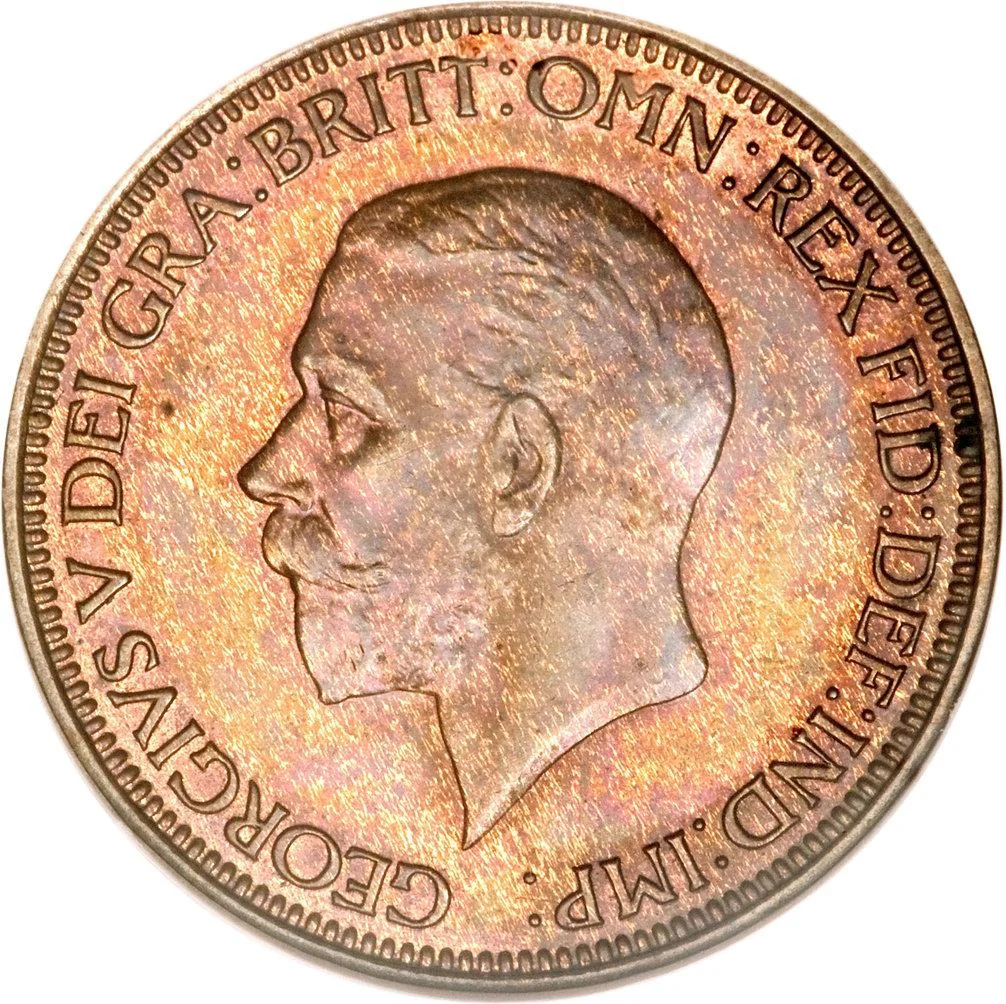
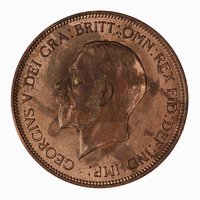
King George V left-facing portrait, legend encircling.
Inscription:
GEORGIVS V DEI GRA:BRITT:OMN:REX FID:DEF:IND:IMP
Translation:
George V by the Grace of God King of all the Britains Defender of the Faith Emperor of India
Script: Latin
Language: Latin
Engraver: Edgar Bertram MacKennal
Reverse
Description:
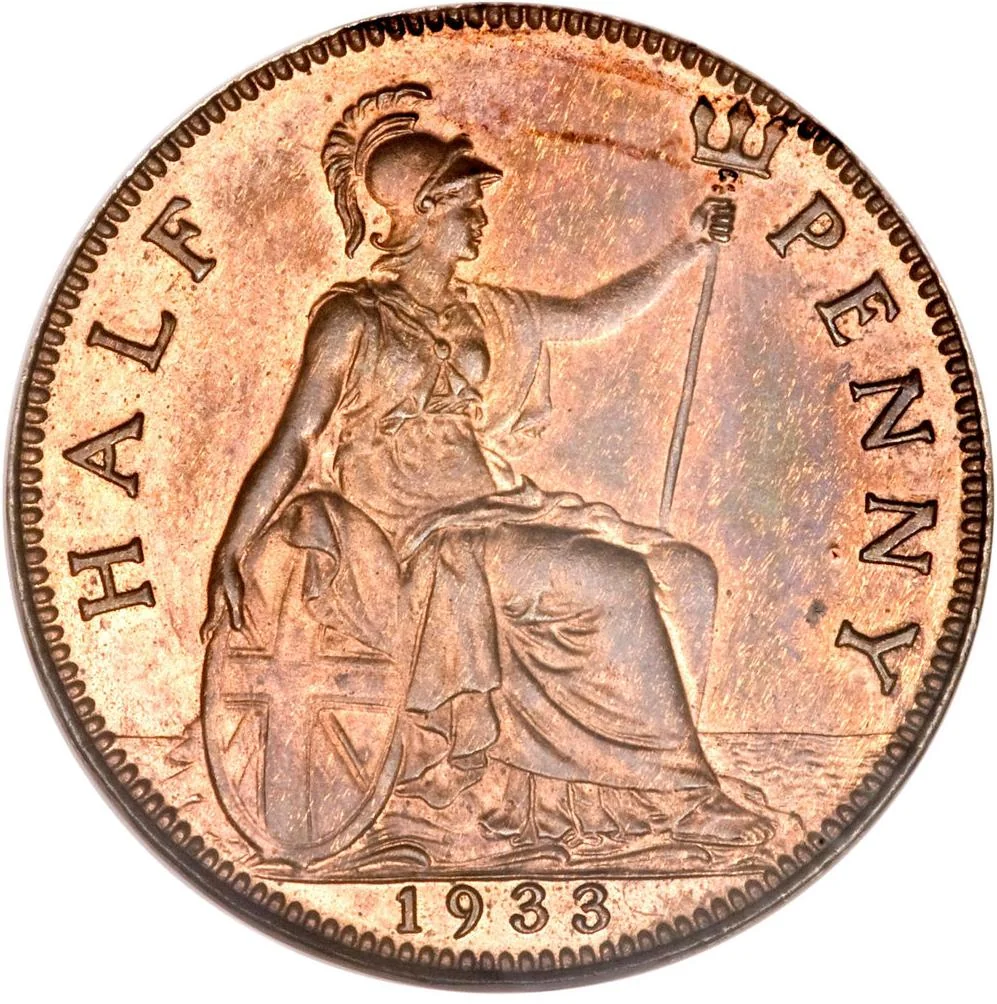
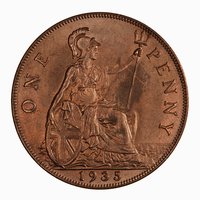
Britannia seated right, holding trident and shield with Union flag, sea background, denomination around, date below.
Inscription:
HALF PENNY
1933
1933
Script: Latin
Engraver: Leonard Charles Wyon
Edge
Plain
Mints
| Name | Mark |
|---|---|
| Royal Mint (Tower Hill) | — |
Mintings
| Year | Mint Mark | Mintage | Quality | Collection |
|---|---|---|---|---|
| 1928 | — | 20,935,200 | ||
| 1928 | — | — | Proof | |
| 1929 | — | 25,680,000 | ||
| 1929 | — | — | Proof | |
| 1930 | — | 12,532,800 | ||
| 1930 | — | — | Proof | |
| 1931 | — | 16,137,600 | ||
| 1931 | — | — | Proof | |
| 1932 | — | — | Proof | |
| 1932 | — | 14,448,000 | ||
| 1933 | — | 10,560,000 | ||
| 1933 | — | — | Proof | |
| 1934 | — | 7,704,000 | ||
| 1934 | — | — | Proof | |
| 1935 | — | 12,180,000 | ||
| 1935 | — | — | Proof | |
| 1936 | — | 23,008,800 | ||
| 1936 | — | — | Proof |
Historical background
In 1928, the United Kingdom's currency situation was defined by the aftermath of the First World War and the pivotal, yet controversial, return to the Gold Standard in 1925. Chancellor of the Exchequer Winston Churchill had restored the pre-war gold parity of £1 = $4.86, a rate that overvalued sterling by an estimated 10%. This decision was intended to restore London's financial prestige and global confidence, but it rendered British exports expensive and uncompetitive, exacerbating deflationary pressures and contributing to stagnant growth and high unemployment, particularly in industrial regions. The economy operated under a "gold bullion standard," where banknotes were convertible only into large bars of gold, not coins, restricting domestic circulation and tying the money supply to the Bank of England's gold reserves.
The monetary landscape was dominated by the Bank of England, which held the sole right of note issue in England and Wales, a monopoly formalised by the 1928 Currency and Bank Notes Act. This landmark legislation also ended the practice of Treasury Notes ("Bradburys") issued during the war, consolidating all note issuance under the Bank. While providing stability, the system was rigid. The Bank was obligated to buy and sell gold at the fixed price, meaning interest rates were primarily used to protect the gold reserves from outflow rather than to manage the domestic economy, often at the cost of industrial investment.
Consequently, 1928 found the UK in a period of uneasy monetary stability masking deep economic strains. The pound was strong internationally, bolstering the City of London's role as a financial centre, but this came at a severe domestic cost. The overvalued currency crippled export industries like coal, steel, and textiles, locking the country into a deflationary cycle that would soon be severely tested. Within a year, the onset of the Great Depression would expose the fragility of this arrangement, leading to a catastrophic loss of gold reserves and ultimately forcing the UK to abandon the Gold Standard entirely in September 1931.
The monetary landscape was dominated by the Bank of England, which held the sole right of note issue in England and Wales, a monopoly formalised by the 1928 Currency and Bank Notes Act. This landmark legislation also ended the practice of Treasury Notes ("Bradburys") issued during the war, consolidating all note issuance under the Bank. While providing stability, the system was rigid. The Bank was obligated to buy and sell gold at the fixed price, meaning interest rates were primarily used to protect the gold reserves from outflow rather than to manage the domestic economy, often at the cost of industrial investment.
Consequently, 1928 found the UK in a period of uneasy monetary stability masking deep economic strains. The pound was strong internationally, bolstering the City of London's role as a financial centre, but this came at a severe domestic cost. The overvalued currency crippled export industries like coal, steel, and textiles, locking the country into a deflationary cycle that would soon be severely tested. Within a year, the onset of the Great Depression would expose the fragility of this arrangement, leading to a catastrophic loss of gold reserves and ultimately forcing the UK to abandon the Gold Standard entirely in September 1931.
🌱 Very Common