

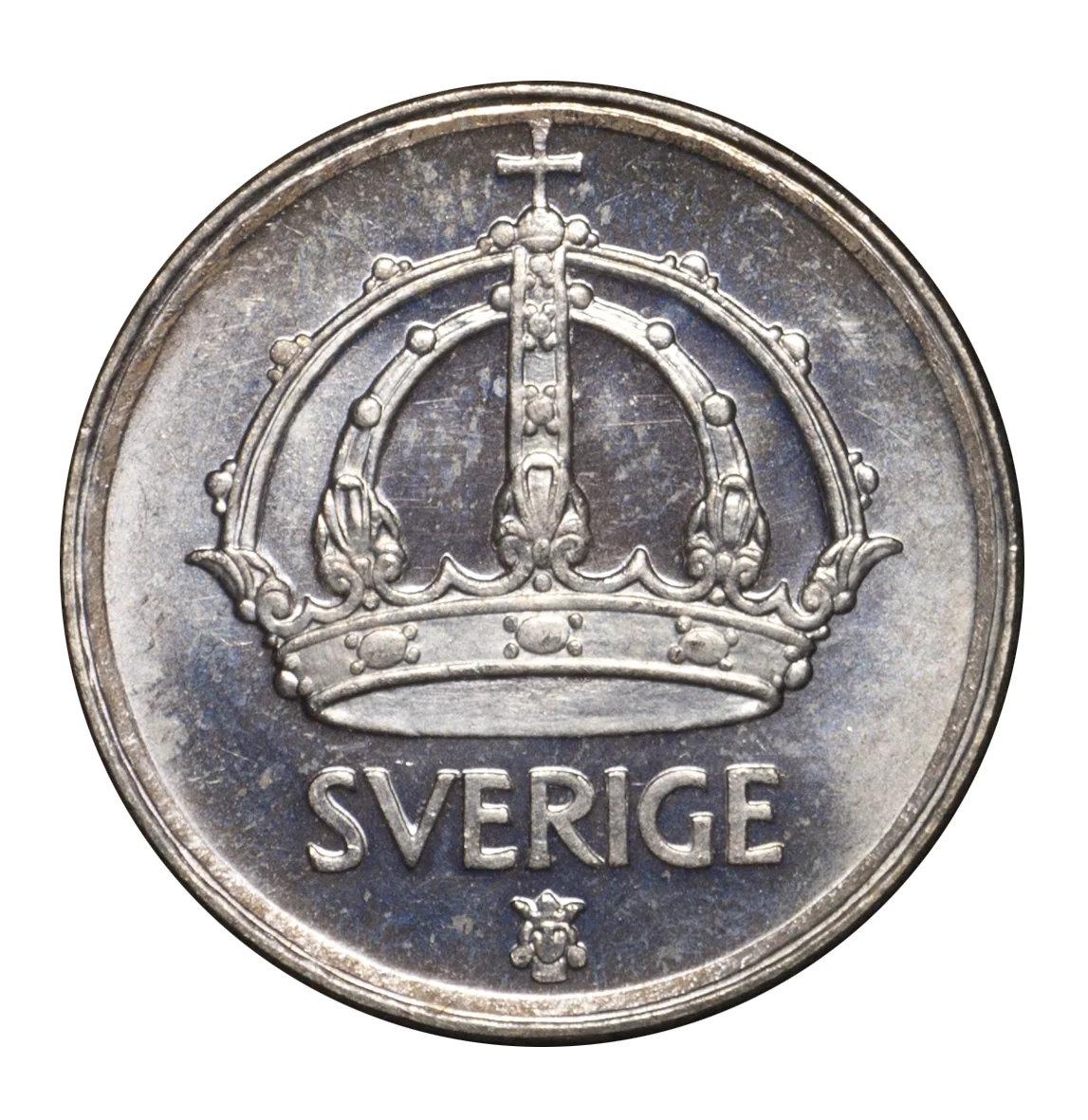
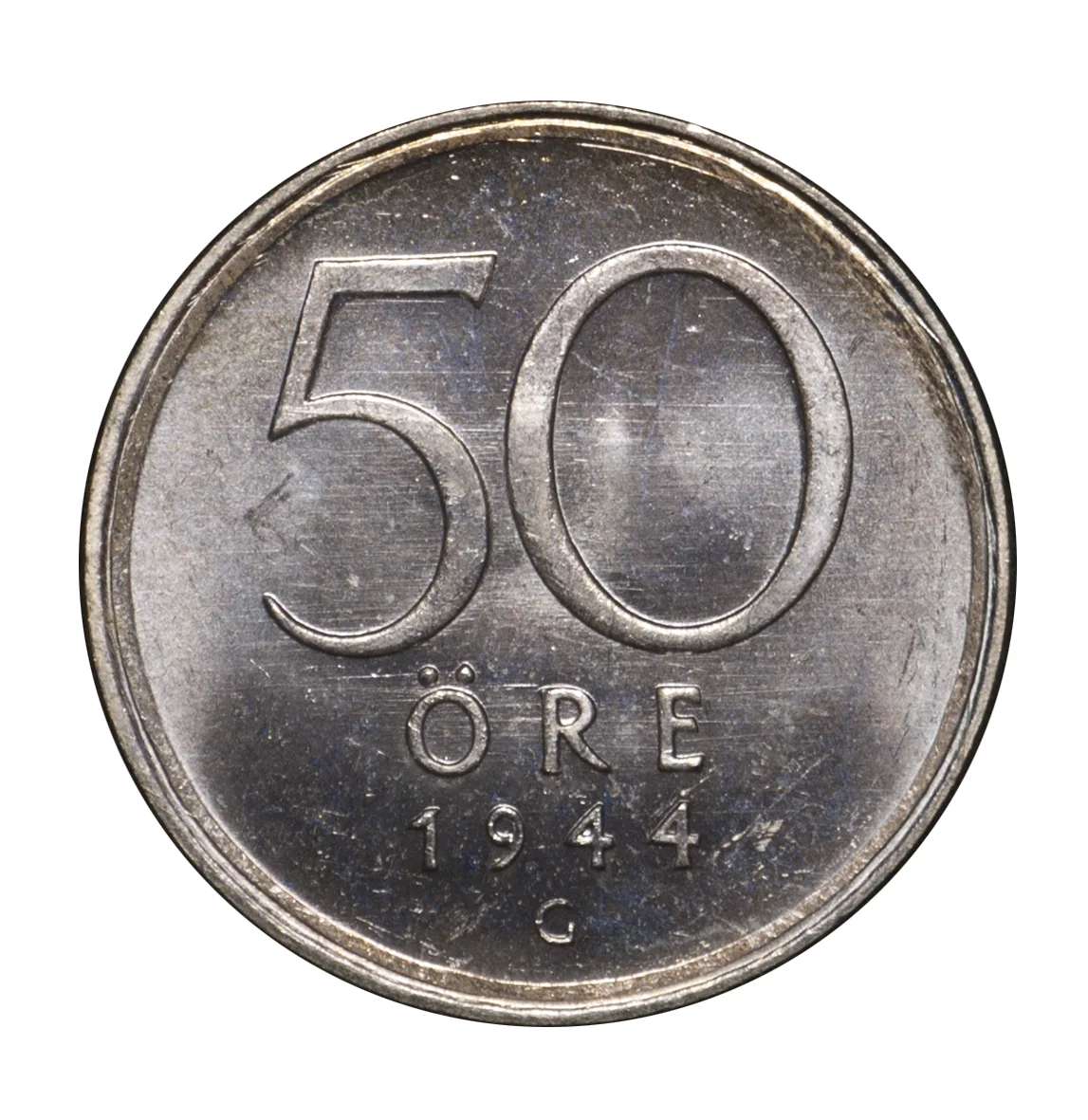
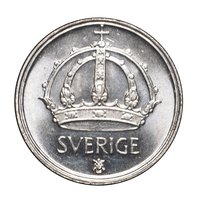
Obverse
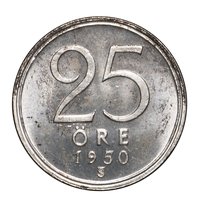
Reverse
Edge
Plain
Mints
| Name | Mark |
|---|---|
| Kungliga Myntet | — |
Mintings
| Year | Mint Mark | Mintage | Quality | Collection |
|---|---|---|---|---|
| 1943 | — | 784,700 | ||
| 1944 | — | 1,540,296 | ||
| 1945 | — | 2,584,800 | ||
| 1946 | — | 1,091,000 | ||
| 1947 | — | 1,770,500 | ||
| 1948 | — | 1,731,400 | ||
| 1949 | — | 1,883,100 | ||
| 1950 | — | 3,353,620 |
Historical background
In 1943, Sweden’s currency situation was fundamentally shaped by its precarious position as a neutral nation surrounded by the battlefields and blockades of World War II. The Swedish krona was not freely convertible, and its value was strictly managed through a comprehensive system of exchange controls and bilateral trade agreements. These measures, instituted at the war's outset, were designed to conserve foreign currency reserves, prevent capital flight, and ensure the stability essential for importing vital goods like fuel, food, and raw materials, which were in critically short supply due to the Allied naval blockade of Nazi-occupied Europe.
The core of Sweden’s monetary policy was its clearing agreements, most significantly with Nazi Germany. This system allowed for trade without the use of gold or hard currency; instead, import and export values were balanced in accounting ledgers. By 1943, Germany was deeply indebted within this clearing system, accumulating a large "clearing debt" to Sweden as it continued to demand Swedish iron ore, ball bearings, and machinery. This created a complex financial dilemma for Sweden: the krona credits piling up in Berlin were essentially frozen and unusable for purchases elsewhere, distorting trade and creating inflationary pressures at home as the money supply increased.
Internally, the Riksbank enforced strict regulations, including licensing for all foreign exchange transactions and fixed exchange rates pegged to the US dollar. Rationing and price controls on consumer goods were widespread to manage scarcity and suppress inflation. Thus, the 1943 currency situation was one of constrained stability—a managed, insulated system that successfully navigated the immediate perils of war finance but at the cost of economic autonomy and with growing, war-related imbalances that would require significant resolution in the postwar period.
The core of Sweden’s monetary policy was its clearing agreements, most significantly with Nazi Germany. This system allowed for trade without the use of gold or hard currency; instead, import and export values were balanced in accounting ledgers. By 1943, Germany was deeply indebted within this clearing system, accumulating a large "clearing debt" to Sweden as it continued to demand Swedish iron ore, ball bearings, and machinery. This created a complex financial dilemma for Sweden: the krona credits piling up in Berlin were essentially frozen and unusable for purchases elsewhere, distorting trade and creating inflationary pressures at home as the money supply increased.
Internally, the Riksbank enforced strict regulations, including licensing for all foreign exchange transactions and fixed exchange rates pegged to the US dollar. Rationing and price controls on consumer goods were widespread to manage scarcity and suppress inflation. Thus, the 1943 currency situation was one of constrained stability—a managed, insulated system that successfully navigated the immediate perils of war finance but at the cost of economic autonomy and with growing, war-related imbalances that would require significant resolution in the postwar period.
🌱 Very Common