

Obverse
Description:
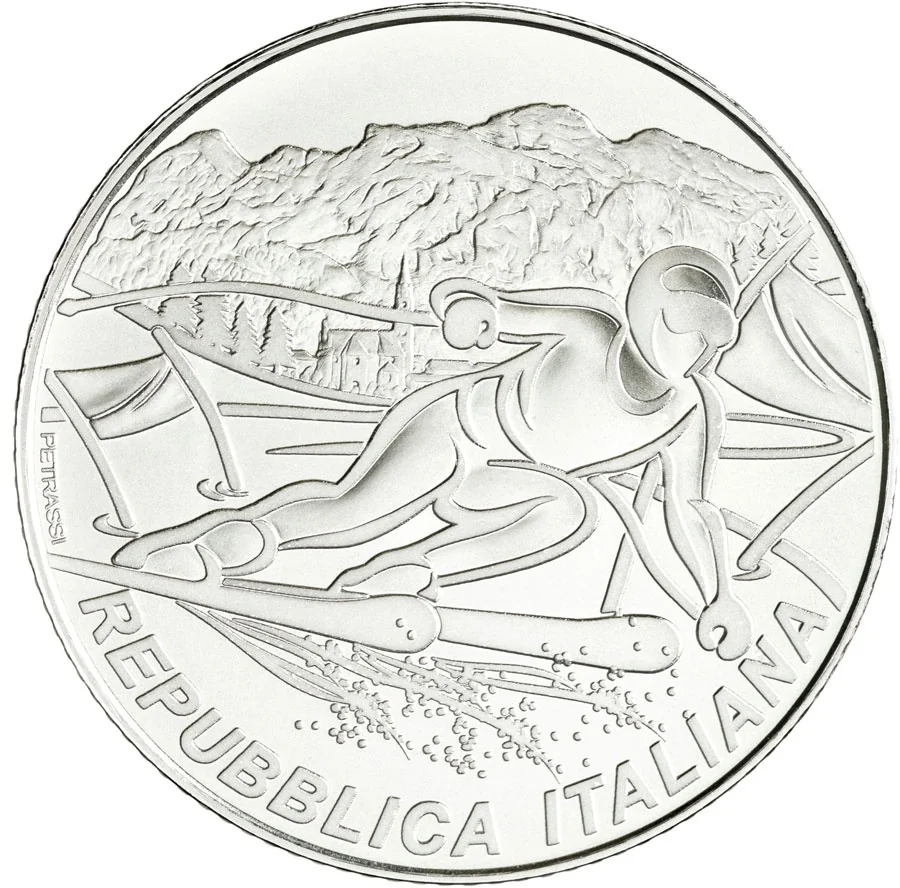
A skier in a giant slalom, with the Tofane massif in the background. Below, "REPUBBLICA ITALIANA"; left, "PETRASSI".
Inscription:
PETRASSI
REPUBBLICA ITALIANA
REPUBBLICA ITALIANA
Translation:
Italian Republic
Script: Latin
Language: Italian
Designer: Silvia Petrassi
Reverse
Description:
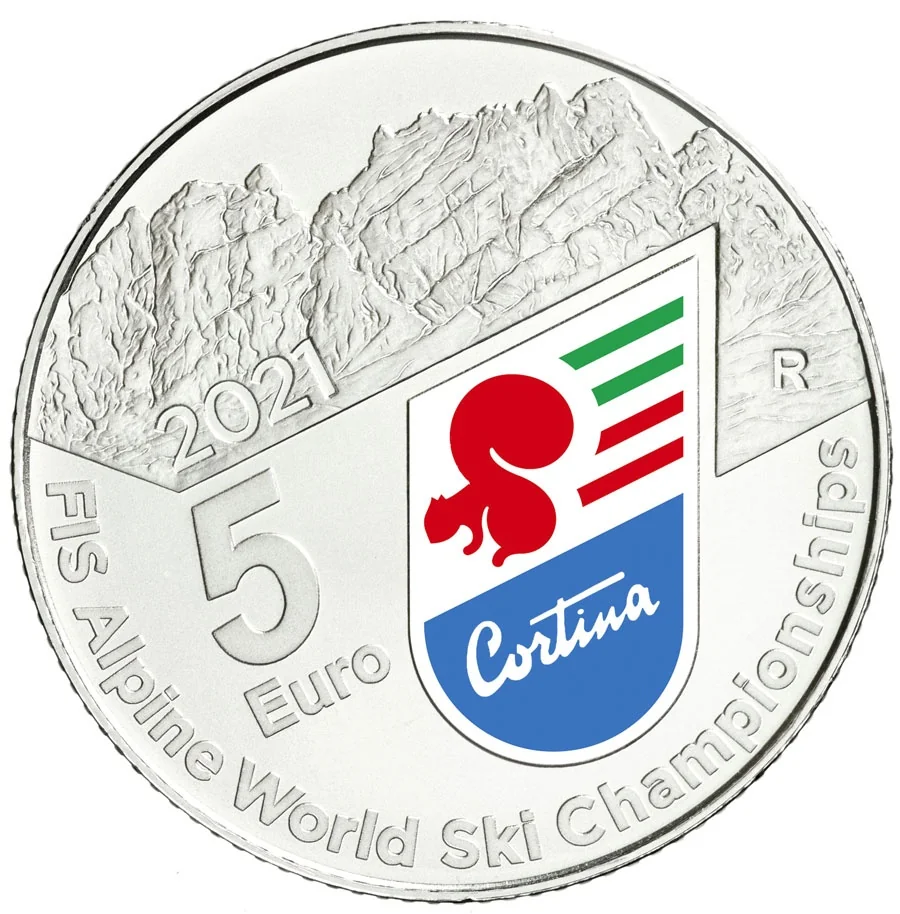
The central logo of the Alpine World Ski Championships in Cortina d'Ampezzo is flanked by "5 EURO" on the left and the Rome Mint "R" on the right. Above are the Dolomites and the year "2021"; below, the arched inscription "FIS ALPINE WORLD SKI CHAMPIONSHIPS".
Inscription:
2021
R
5
Euro
Cortina
FIS Alpine World Ski Championships
R
5
Euro
Cortina
FIS Alpine World Ski Championships
Designer: Silvia Petrassi
Edge
Mints
| Name | Mark |
|---|---|
| Rome | R |
Mintings
| Year | Mint Mark | Mintage | Quality | Collection |
|---|---|---|---|---|
| 2021 | R | 5,000 |
Historical background
In 2021, Italy remained a full member of the Eurozone, using the euro (€) as its official currency. The macroeconomic situation was dominated by the ongoing recovery from the COVID-19 pandemic, which had caused Italy's GDP to contract by 8.9% in 2020—one of the sharpest declines in the European Union. The year was characterized by the rollout of the EU's landmark €750 billion Next Generation EU (NGEU) recovery fund, from which Italy was set to be the primary beneficiary, receiving approximately €191.5 billion in grants and loans. This prospect helped stabilize government bond yields and provided a crucial fiscal lifeline, easing immediate pressures on the national debt, which exceeded 150% of GDP.
Domestically, the currency situation was stable in terms of monetary policy, which was firmly under the control of the European Central Bank (ECB). The ECB's continued accommodative stance, including its Pandemic Emergency Purchase Programme (PEPP), ensured favorable financing conditions and kept fragmentation risks within the Eurozone in check. This was vital for Italy, allowing the government to finance its substantial deficit at historically low interest rates despite the high public debt burden. Inflation began to rise in the latter half of the year, primarily driven by surging energy costs, but annual average inflation for 2021 was a moderate 1.9%, not yet triggering major monetary policy tightening.
Underlying these conditions were persistent structural challenges. Italy's high public debt, low productivity growth, and political uncertainties surrounding the implementation of the National Recovery and Resilience Plan (PNRR) posed long-term risks to economic stability and, by extension, to confidence in the euro within the country. While no serious political movement to exit the euro gained mainstream traction in 2021, debates about the constraints and benefits of the single currency continued, often framed around the need for greater EU fiscal integration to support member states during asymmetric shocks like the pandemic.
Domestically, the currency situation was stable in terms of monetary policy, which was firmly under the control of the European Central Bank (ECB). The ECB's continued accommodative stance, including its Pandemic Emergency Purchase Programme (PEPP), ensured favorable financing conditions and kept fragmentation risks within the Eurozone in check. This was vital for Italy, allowing the government to finance its substantial deficit at historically low interest rates despite the high public debt burden. Inflation began to rise in the latter half of the year, primarily driven by surging energy costs, but annual average inflation for 2021 was a moderate 1.9%, not yet triggering major monetary policy tightening.
Underlying these conditions were persistent structural challenges. Italy's high public debt, low productivity growth, and political uncertainties surrounding the implementation of the National Recovery and Resilience Plan (PNRR) posed long-term risks to economic stability and, by extension, to confidence in the euro within the country. While no serious political movement to exit the euro gained mainstream traction in 2021, debates about the constraints and benefits of the single currency continued, often framed around the need for greater EU fiscal integration to support member states during asymmetric shocks like the pandemic.


✨ Legendary