

10 Piastres – Egypt
Circulating commemorative coins
Commemoration: Cairo International Agricultural Fair
Egypt
Context
Year: 1969
Islamic (Hijri) Year: 1389
Issuer: Egypt 
Period:
(1958—1971)
Currency:
(since 1916)
Demonetized: Yes
Total mintage: 500,000
Material
Diameter: 27 mm
Weight: 6 g
Thickness: 1.5 mm
Shape: Round
Composition: Copper-nickel
Technique: Milled
Alignment: Medal alignment
flip
References
KM: #Click to copy to clipboard419
Numista: #10271
Value
Exchange value: 0.10 EGP
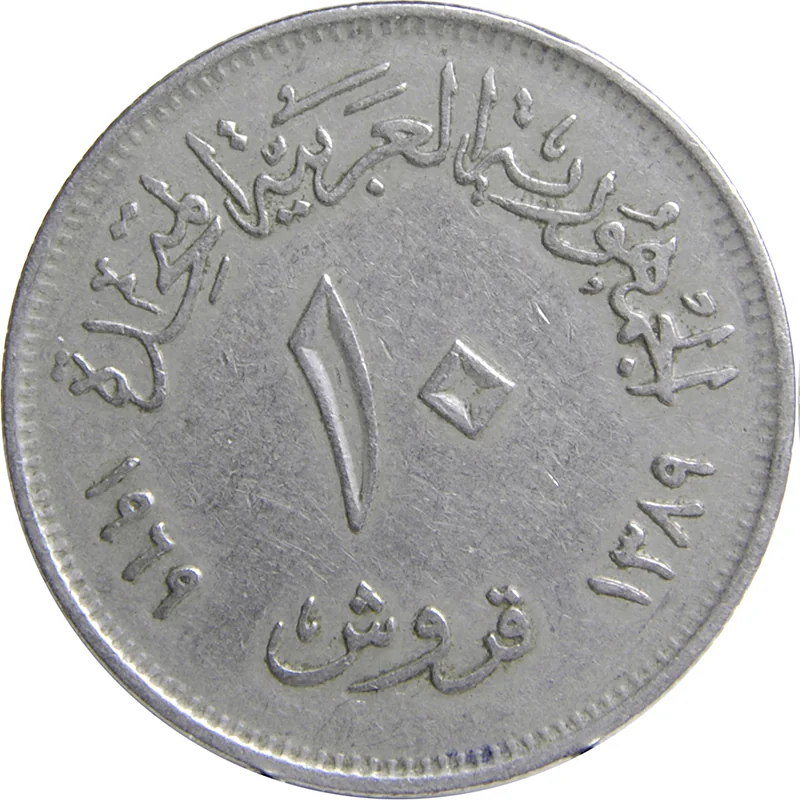
Obverse
Description:
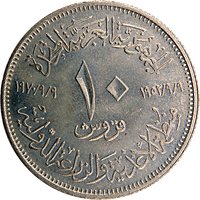
Denominations split dates.
Inscription:
الجمهورية العربية المتحدة
١٠
١٣٨٩-١٩٦٩
قروش
١٠
١٣٨٩-١٩٦٩
قروش
Translation:
United Arab Republic
10
1389-1969
Qirsh
10
1389-1969
Qirsh
Language: Arabic
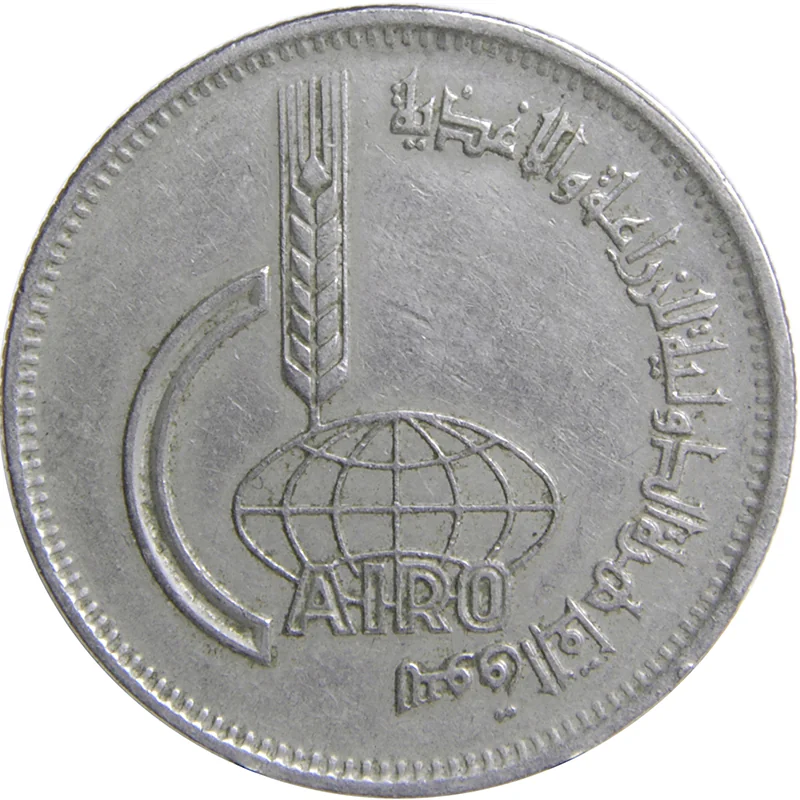
Reverse
Description:
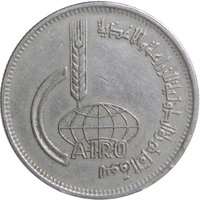
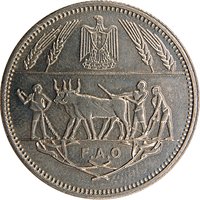
Cairo International Agricultural Fair 1969 logo: a grain spike and stylized globe.
Inscription:
CAIRO
سوق القاهرة الدولية الزراعة والغذية
سوق القاهرة الدولية الزراعة والغذية
Translation:
Cairo International Agriculture and Food Fair
Language: Arabic
Edge
Reeded
Mints
| Name | Mark |
|---|---|
| Egyptian Mint Authority | — |
Mintings
| Year | Mint Mark | Mintage | Quality | Collection |
|---|---|---|---|---|
| 1969 | — | 500,000 |
Historical background
In 1969, Egypt's currency situation was characterized by a tightly controlled and overvalued official exchange rate, a legacy of Gamal Abdel Nasser's socialist policies. The Egyptian pound was pegged at a rate of £E 1 to US$ 2.30, a valuation that did not reflect the country's economic realities. This official rate was accessible only for government-approved imports, such as essential foodstuffs, machinery, and raw materials, creating a significant disparity with the black market where the pound traded for less than half its official value due to scarcity and high demand for foreign currency.
The economy was strained by the immense costs of the ongoing War of Attrition with Israel, which diverted resources and exacerbated a chronic trade deficit. Furthermore, the loss of the Suez Canal revenues since the 1967 Six-Day War and a heavy reliance on imports, particularly food, placed severe pressure on foreign exchange reserves. The government maintained strict exchange controls, limiting the amount of currency Egyptians could take abroad and requiring central bank approval for most foreign transactions, which stifled private sector trade and encouraged a flourishing illegal market for hard currency.
This rigid system created distortions, incentivizing smuggling and under-invoicing of exports while making Egyptian goods uncompetitive internationally. The situation was unsustainable, setting the stage for the economic liberalization policies (Infitah) that would follow under Anwar Sadat in the 1970s. By the end of the decade, the pressures of war financing and stagnant production would force a fundamental reconsideration of Egypt's monetary and exchange rate policies.
The economy was strained by the immense costs of the ongoing War of Attrition with Israel, which diverted resources and exacerbated a chronic trade deficit. Furthermore, the loss of the Suez Canal revenues since the 1967 Six-Day War and a heavy reliance on imports, particularly food, placed severe pressure on foreign exchange reserves. The government maintained strict exchange controls, limiting the amount of currency Egyptians could take abroad and requiring central bank approval for most foreign transactions, which stifled private sector trade and encouraged a flourishing illegal market for hard currency.
This rigid system created distortions, incentivizing smuggling and under-invoicing of exports while making Egyptian goods uncompetitive internationally. The situation was unsustainable, setting the stage for the economic liberalization policies (Infitah) that would follow under Anwar Sadat in the 1970s. By the end of the decade, the pressures of war financing and stagnant production would force a fundamental reconsideration of Egypt's monetary and exchange rate policies.
🌱 Common