

½ Dollar – United States
Non-circulating coins
Commemoration: Greatest Generation
United States
Context
Year: 2024
Issuer: United States 
Period:
(since 1776)
Currency:
(since 1785)
Subdivision: ½ Dollar = 50 Cents
Material
References
KM: #Click to copy to clipboard794
Numista: #394414
Value
Exchange value: ½ USD = $0.50
Inflation-adjusted value: 0.53 USD
Obverse
Description:
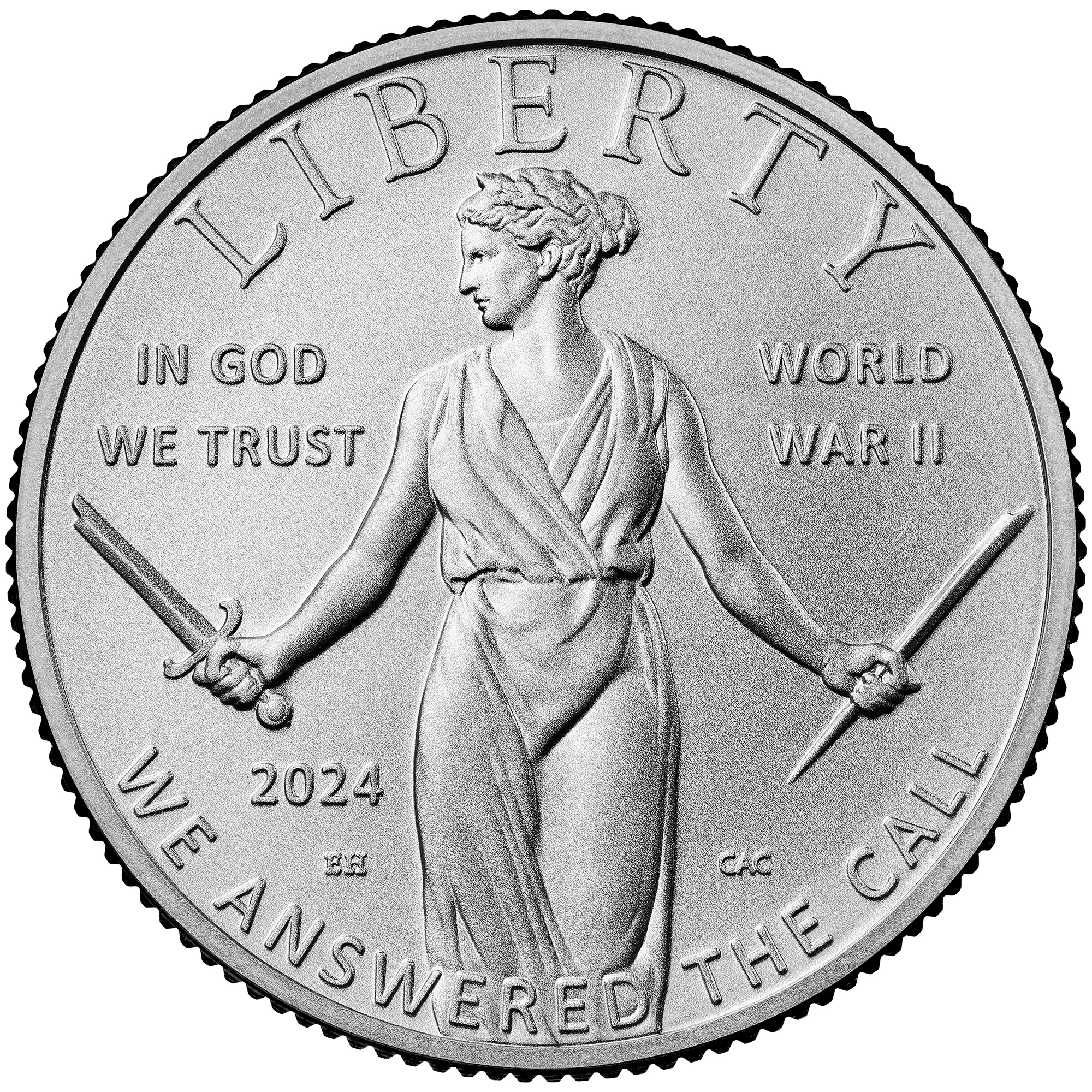
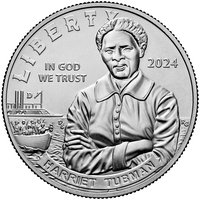
The obverse reimagines the WWII Victory Medal, depicting Liberation holding a broken sword to symbolize the war's end.
Inscription:
LIBERTY
IN GOD
WE TRUST
WORLD WAR
II
2024
WE ANSWERED THE CALL
IN GOD
WE TRUST
WORLD WAR
II
2024
WE ANSWERED THE CALL
Script: Latin
Engraver: Craig Campbell
Designer: Elana Hagler
Reverse
Description:
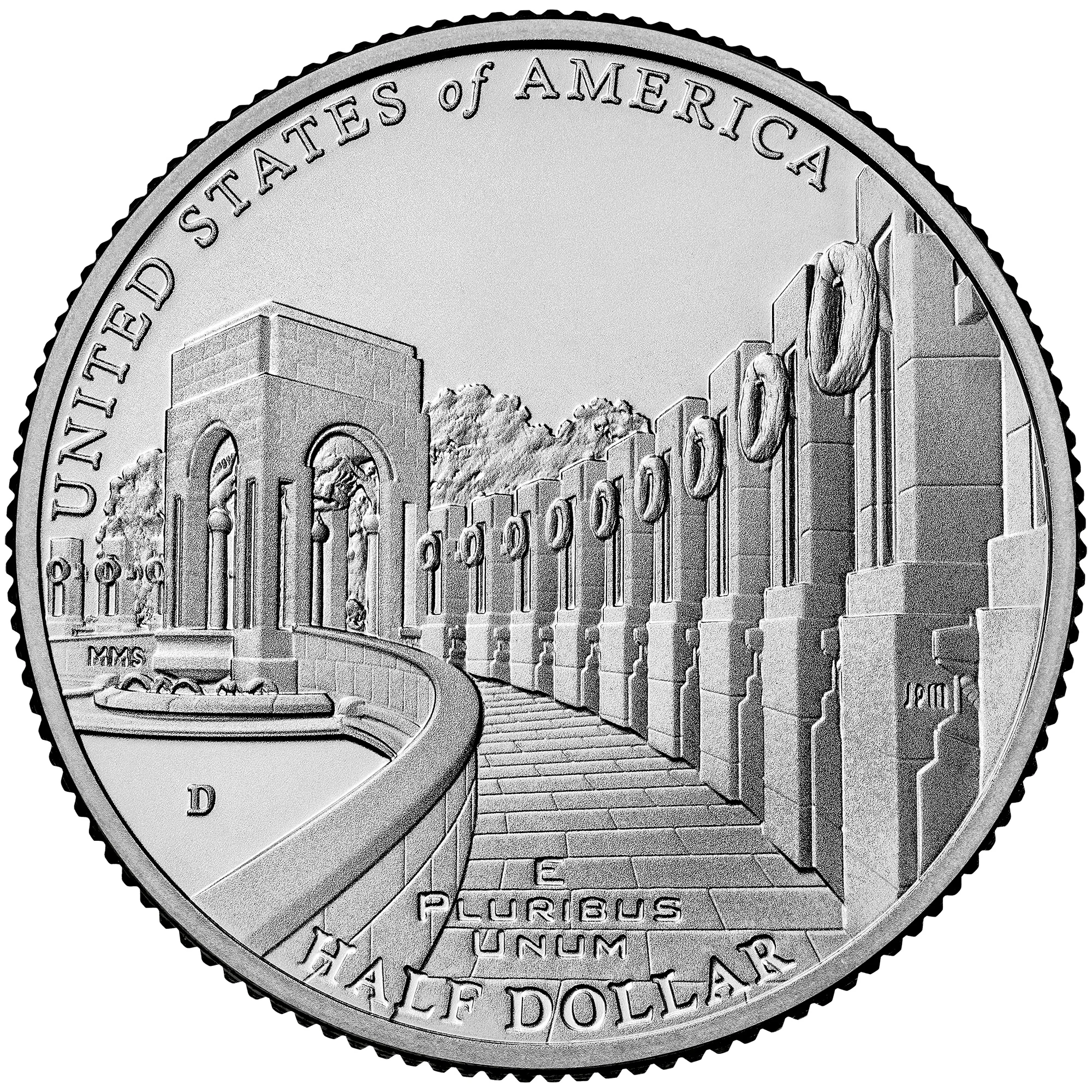
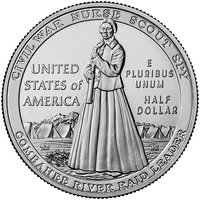
The reverse (tails) shows the WWII Memorial as seen from the ascending ramp toward a tower.
Inscription:
UNITED STATES OF AMERICA
E PLURIBUS UNUM
HALF DOLLAR
E PLURIBUS UNUM
HALF DOLLAR
Translation:
UNITED STATES OF AMERICA
OUT OF MANY, ONE
HALF DOLLAR
OUT OF MANY, ONE
HALF DOLLAR
Script: Latin
Engraver: John McGraw
Designer: Matt Swaim
Edge
Reeded
Mints
| Name | Mark |
|---|---|
| United States Mint of Denver | D |
| United States Mint of San Francisco | S |
Historical background
The United States enters 2024 navigating a complex currency landscape defined by the Federal Reserve's ongoing battle against inflation. After aggressive interest rate hikes throughout 2022 and 2023, inflation has moderated from its four-decade peak but remains stubbornly above the Fed's 2% target. This has led to a "higher-for-longer" interest rate posture, strengthening the U.S. dollar (USD) through much of the period. A strong dollar has global repercussions, making imports cheaper for Americans but increasing debt burdens for foreign nations and companies that borrow in USD, while also weighing on the earnings of U.S. multinational corporations.
Domestically, the primary focus remains on the dollar's purchasing power and its impact on consumers. While wage growth has recently outpaced price increases, providing some relief, the cumulative effect of high inflation since 2021 continues to strain household budgets, particularly for essentials like housing, food, and transportation. This economic pressure is a central issue in the 2024 presidential election, with debates centering on fiscal policy, government spending, and the appropriate timeline for potential rate cuts by the Fed to avoid triggering a recession.
Looking forward, the dollar's trajectory hinges on the Fed's policy decisions amid competing risks. Markets are closely watching economic data for signals that could prompt a shift toward rate cuts, which would likely weaken the dollar. However, persistent inflation or unexpected economic strength could delay such easing. Furthermore, the U.S. dollar's status as the world's dominant reserve currency remains unchallenged in the near term, bolstered by geopolitical instability and the lack of a credible alternative, but long-term concerns about the nation's rising debt levels and the use of the dollar as a geopolitical tool continue to simmer in the background.
Domestically, the primary focus remains on the dollar's purchasing power and its impact on consumers. While wage growth has recently outpaced price increases, providing some relief, the cumulative effect of high inflation since 2021 continues to strain household budgets, particularly for essentials like housing, food, and transportation. This economic pressure is a central issue in the 2024 presidential election, with debates centering on fiscal policy, government spending, and the appropriate timeline for potential rate cuts by the Fed to avoid triggering a recession.
Looking forward, the dollar's trajectory hinges on the Fed's policy decisions amid competing risks. Markets are closely watching economic data for signals that could prompt a shift toward rate cuts, which would likely weaken the dollar. However, persistent inflation or unexpected economic strength could delay such easing. Furthermore, the U.S. dollar's status as the world's dominant reserve currency remains unchallenged in the near term, bolstered by geopolitical instability and the lack of a credible alternative, but long-term concerns about the nation's rising debt levels and the use of the dollar as a geopolitical tool continue to simmer in the background.

💎 Very Rare