

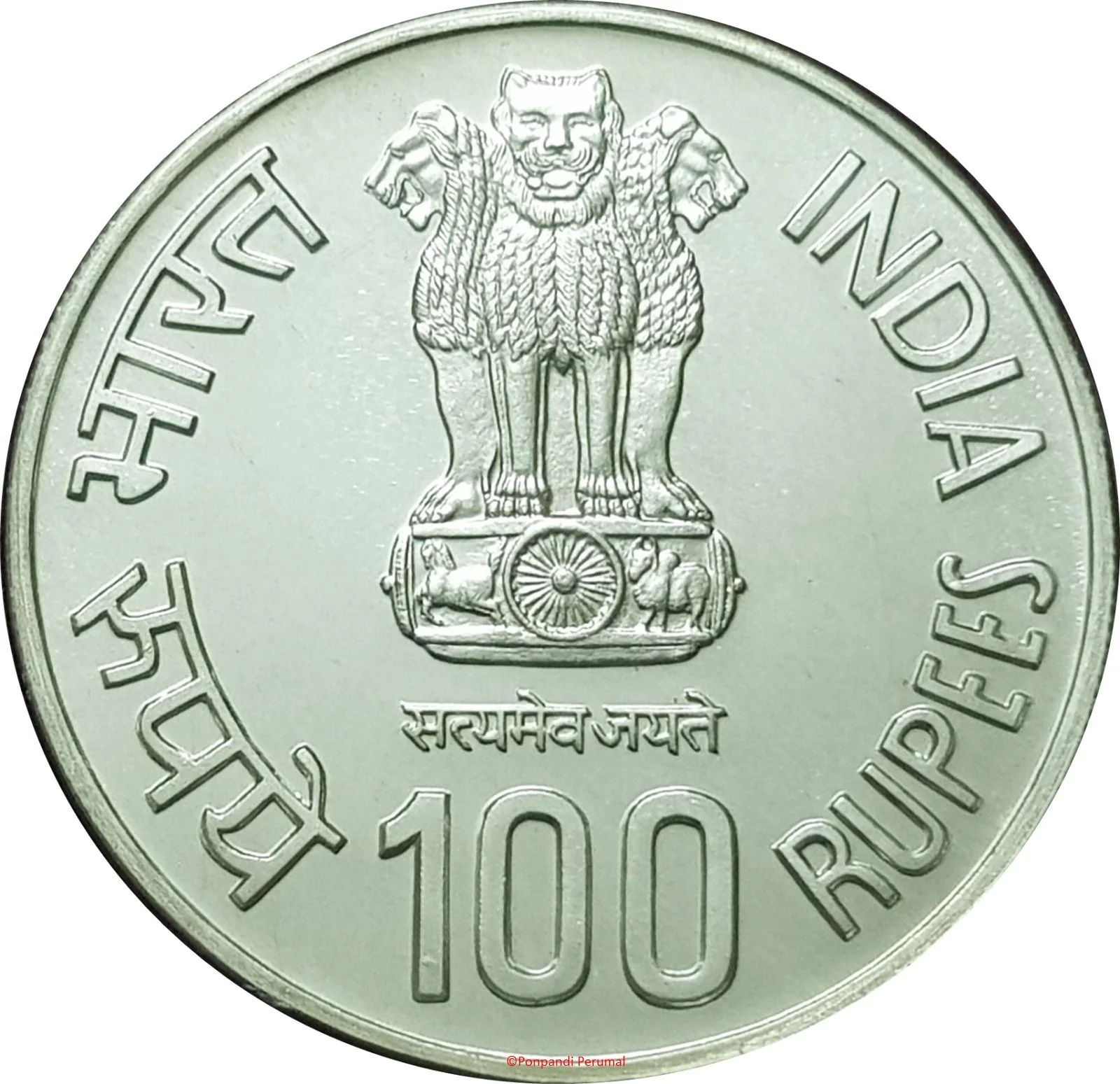
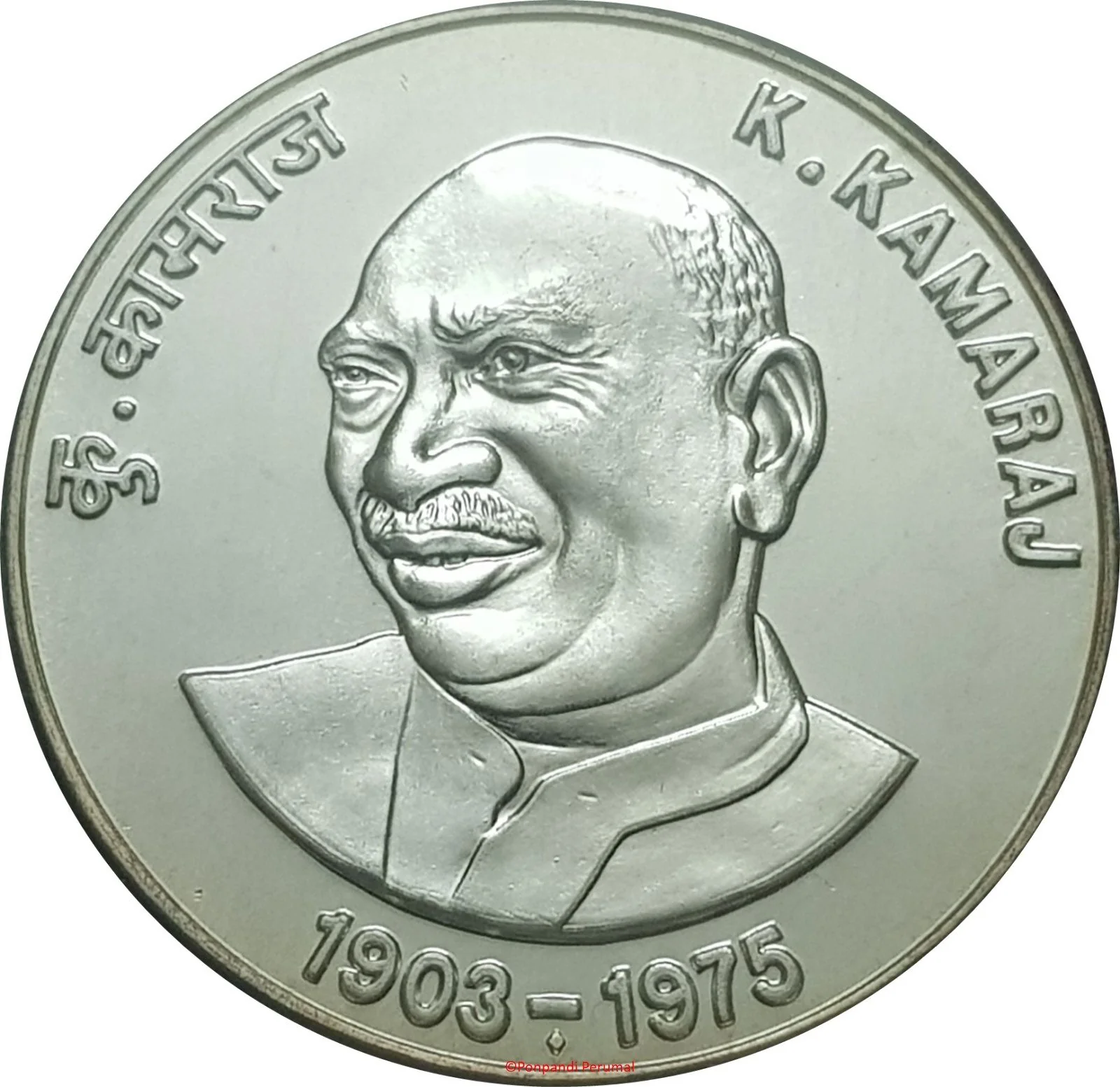
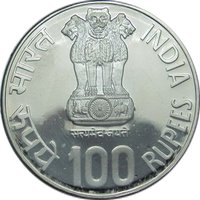
100 Rupees (Kumarasami Kamaraj) – India
Non-circulating coins
Commemoration: 100th Anniversary of Birth of Kumarasami Kamaraj
India

Material
References
KM: #Click to copy to clipboard318
Numista: #39307
Value
Exchange value: 100 INR = $1.10
Bullion value: $50.69
Inflation-adjusted value: 404.74 INR
Obverse
Reverse
Edge
Milled - 200 Serrations
Mints
| Name | Mark |
|---|---|
| Mumbai / Bombay | ♦ |
| Mumbai / Bombay | M |
Historical background
In 2003, India's currency situation was characterized by a period of relative stability and strategic accumulation of foreign exchange reserves, following a decade of significant economic reforms. The Indian Rupee (INR) was on a managed float regime, where the Reserve Bank of India (RBI) intervened in the foreign exchange market to curb excessive volatility without targeting a specific exchange rate. After the economic liberalization of 1991 and the subsequent transition to a market-determined exchange rate, the rupee had experienced phases of pressure, but by 2003, it was stable, trading in a range of approximately 45-48 INR per US Dollar. This stability was underpinned by robust capital inflows, particularly foreign direct investment (FDI) and portfolio investments, reflecting growing international confidence in India's economic prospects.
A defining feature of the 2003 landscape was the RBI's active intervention to build up foreign exchange reserves, which crossed the $100 billion mark for the first time in that year. This reserve accumulation served multiple purposes: it acted as a crucial buffer against external shocks, provided confidence to global markets, and helped sterilize the inflationary impact of capital inflows. The policy was largely a response to the lessons learned from the 1991 balance of payments crisis, ensuring India would not face a similar currency crunch. The strong reserve position also gave the RBI greater leverage to manage the rupee's exchange rate, preventing an appreciation that could hurt the competitiveness of India's burgeoning export sector.
The broader economic context was one of optimism, with India posting strong GDP growth and integrating further into the global economy. However, this also presented challenges, such as managing the "impossible trinity" of maintaining a stable exchange rate, allowing free capital movement, and conducting an independent monetary policy. While the currency situation was calm, debates persisted about the optimal level of reserves and the costs of sterilization. Overall, 2003 represented a year of consolidation in India's currency management, setting a foundation of resilience that would be tested in the global financial turbulence later in the decade.
A defining feature of the 2003 landscape was the RBI's active intervention to build up foreign exchange reserves, which crossed the $100 billion mark for the first time in that year. This reserve accumulation served multiple purposes: it acted as a crucial buffer against external shocks, provided confidence to global markets, and helped sterilize the inflationary impact of capital inflows. The policy was largely a response to the lessons learned from the 1991 balance of payments crisis, ensuring India would not face a similar currency crunch. The strong reserve position also gave the RBI greater leverage to manage the rupee's exchange rate, preventing an appreciation that could hurt the competitiveness of India's burgeoning export sector.
The broader economic context was one of optimism, with India posting strong GDP growth and integrating further into the global economy. However, this also presented challenges, such as managing the "impossible trinity" of maintaining a stable exchange rate, allowing free capital movement, and conducting an independent monetary policy. While the currency situation was calm, debates persisted about the optimal level of reserves and the costs of sterilization. Overall, 2003 represented a year of consolidation in India's currency management, setting a foundation of resilience that would be tested in the global financial turbulence later in the decade.
⭐ Rare