

1 penny – New Zealand
Add to wishlist
New Zealand
Context
Years: 1949–1952
Issuer: New Zealand
Ruler: George VI
Currency:
(1840—1967)
Demonetized: Yes
Total mintage: 25,488,000
Material
References
KM: #
Numista: #3919
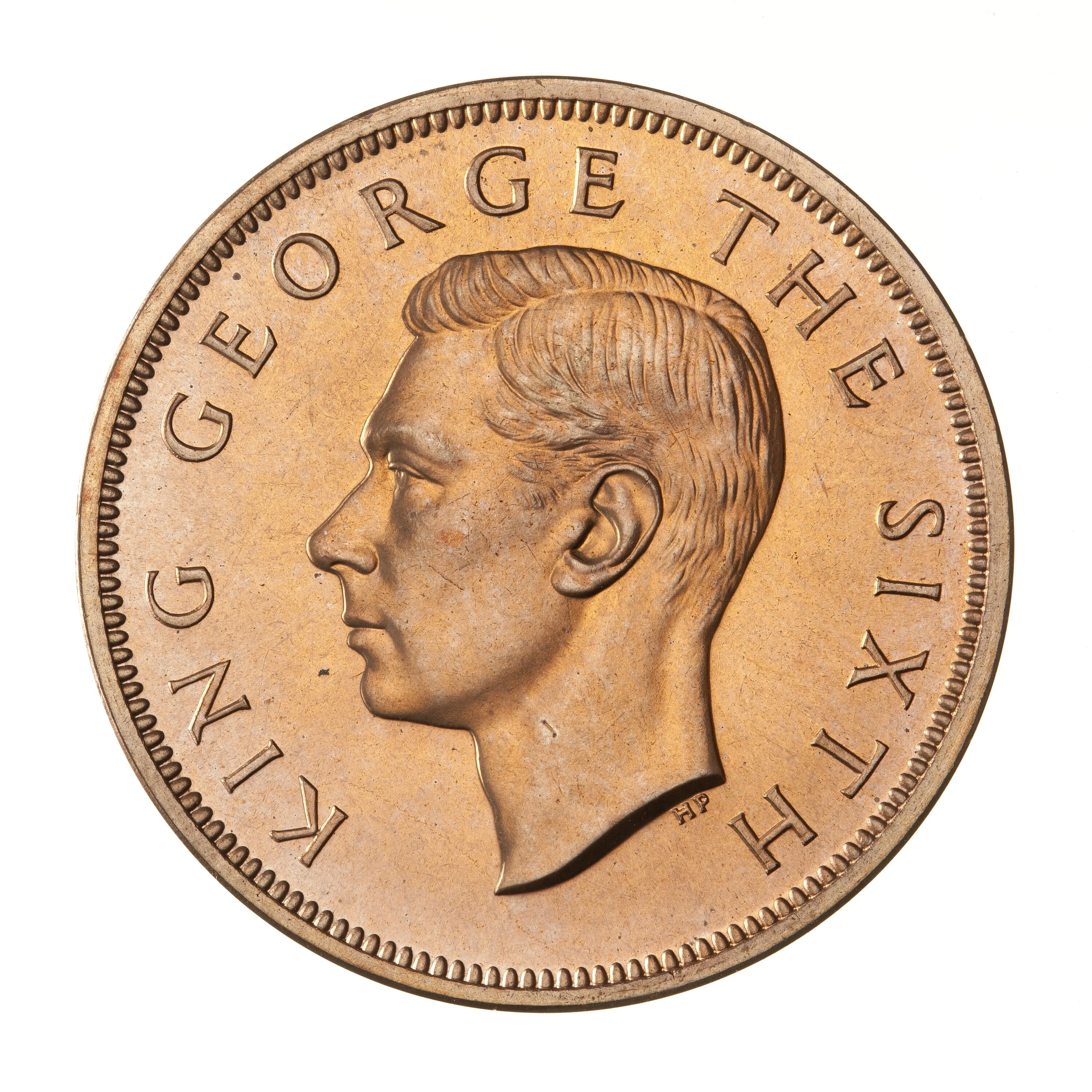
Obverse
Description:
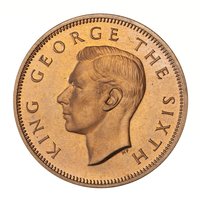
King George VI, uncrowned, left-facing portrait, legend encircling.
Inscription:
KING GEORGE THE SIXTH
Translation:
KING GEORGE THE SIXTH
Script: Latin
Language: English
Engraver: Thomas Humphrey Paget
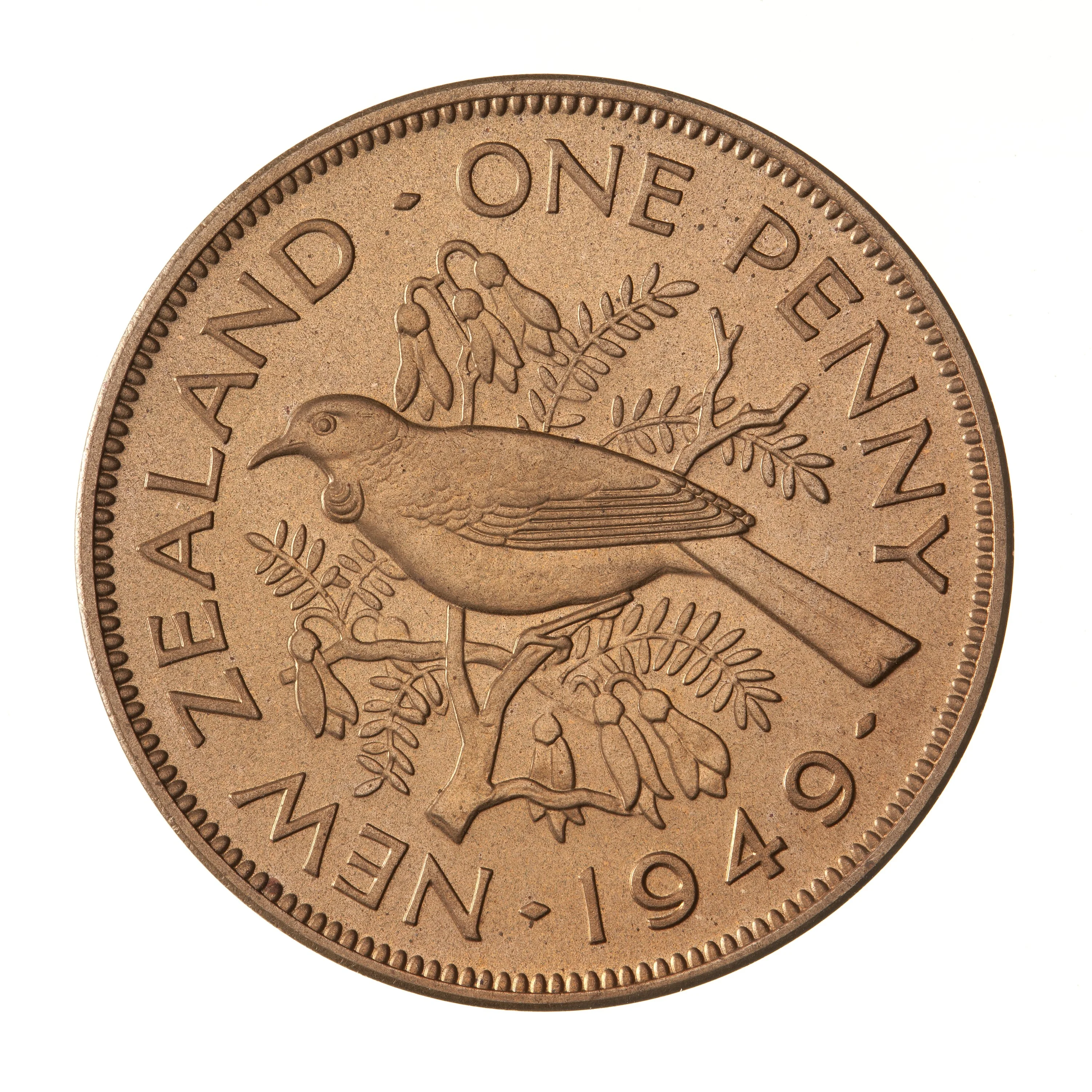
Reverse
Description:
Tūī bird in a kōwhai tree, encircled by legend with date below.
Inscription:
NEW ZEALAND·ONE PENNY
·1951·
·1951·
Script: Latin
Engraver: L. C. Mitchell
Edge
Plain
Mints
| Name | Mark |
|---|---|
| Royal Mint (Tower Hill) | — |
Mintings
| Year | Mint Mark | Mintage | Quality | Collection |
|---|---|---|---|---|
| 1949 | — | 2,016,000 | ||
| 1949 | — | — | Proof | |
| 1950 | — | 5,784,000 | ||
| 1950 | — | — | Proof | |
| 1951 | — | — | Proof | |
| 1951 | — | 6,888,000 | ||
| 1952 | — | 10,800,000 | ||
| 1952 | — | — | Proof |
Historical background
In 1949, New Zealand operated under a strict system of exchange and import controls, a legacy of the Second World War and the economic philosophy of the First Labour Government (1935–1949). The country was a member of the Sterling Area, meaning its reserves were held in British pounds in London, and its currency, the New Zealand pound, was pegged to sterling. This arrangement was managed by the Reserve Bank of New Zealand, which exerted tight control over all foreign exchange transactions. The primary goal was to conserve scarce overseas funds, protect the balance of payments, and direct imports towards essential goods to support post-war reconstruction and full employment.
The economic situation was one of constraint and shortage. Import licensing, introduced in 1938 and intensified during the war, dictated what could be brought into the country, creating a protected but often uncompetitive domestic industry. Consumers faced limited choices, and businesses struggled to access necessary machinery and materials from abroad. This "insulationist" policy aimed to shield New Zealand from external economic shocks and foster local manufacturing, but it also led to inefficiencies, higher costs, and a growing sense of economic stagnation by the late 1940s.
The currency and exchange controls became a central political issue in the 1949 general election. The incumbent Labour government defended the controls as necessary for stability and social objectives. In contrast, the opposition National Party, led by Sidney Holland, campaigned on a platform of "freer enterprise," promising to relax import controls and streamline exchange regulations to stimulate growth and trade. National's victory in December 1949 signalled a public desire for change, setting the stage for a gradual, though cautious, liberalisation of New Zealand's currency and trade regime in the following decade.
The economic situation was one of constraint and shortage. Import licensing, introduced in 1938 and intensified during the war, dictated what could be brought into the country, creating a protected but often uncompetitive domestic industry. Consumers faced limited choices, and businesses struggled to access necessary machinery and materials from abroad. This "insulationist" policy aimed to shield New Zealand from external economic shocks and foster local manufacturing, but it also led to inefficiencies, higher costs, and a growing sense of economic stagnation by the late 1940s.
The currency and exchange controls became a central political issue in the 1949 general election. The incumbent Labour government defended the controls as necessary for stability and social objectives. In contrast, the opposition National Party, led by Sidney Holland, campaigned on a platform of "freer enterprise," promising to relax import controls and streamline exchange regulations to stimulate growth and trade. National's victory in December 1949 signalled a public desire for change, setting the stage for a gradual, though cautious, liberalisation of New Zealand's currency and trade regime in the following decade.
🌱 Very Common