

2500 Dobras – São Tomé and Príncipe
Non-circulating coins
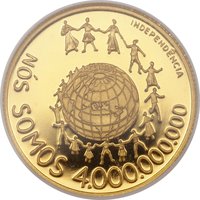
Commemoration: Independence
Sao Tome and Principe
Context
Year: 1977
Country: Sao Tome and Principe 
Issuer: São Tomé and Príncipe
Period:
(since 1975)
Currency:
(1977—2017)
Demonetized: Yes
Total mintage: 270
Material
References
KM: #Click to copy to clipboard37
Numista: #39184
Value
Exchange value: 2500 STD
Bullion value: $974.15
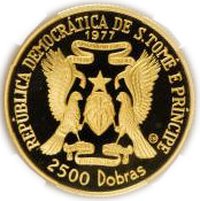
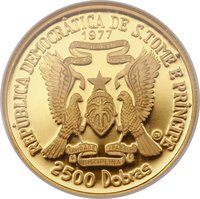
Obverse
Description:
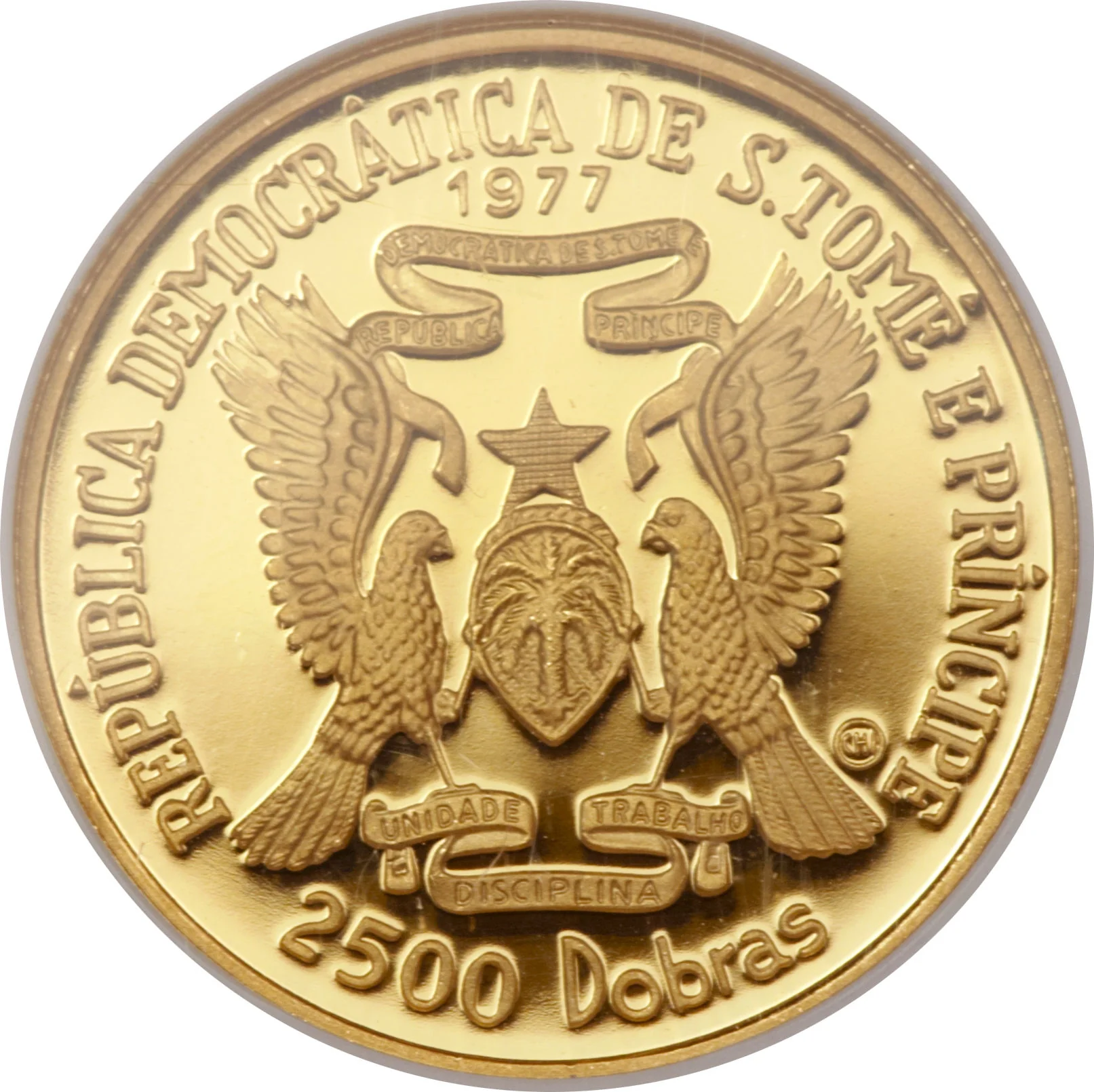
São Tomé and Príncipe's coat of arms.
Inscription:
REPÚBLICA DEMOCRÀTICA DE S.TOMÉ E PRÍNCIPE
REPÚBLICA DEMOCRÀTICA DE S.TOMÉ E PRÍNCIPE
UNIDADE DISCIPLINA TRABALHO
1977
2500 Dobras
REPÚBLICA DEMOCRÀTICA DE S.TOMÉ E PRÍNCIPE
UNIDADE DISCIPLINA TRABALHO
1977
2500 Dobras
Translation:
DEMOCRATIC REPUBLIC OF SÃO TOMÉ AND PRÍNCIPE
DEMOCRATIC REPUBLIC OF SÃO TOMÉ AND PRÍNCIPE
DISCIPLINE UNITY WORK
1977
2500 Dobras
DEMOCRATIC REPUBLIC OF SÃO TOMÉ AND PRÍNCIPE
DISCIPLINE UNITY WORK
1977
2500 Dobras
Script: Latin
Language: Portuguese
Reverse
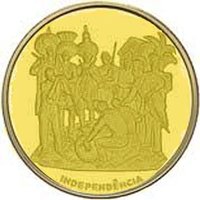
Inscription:
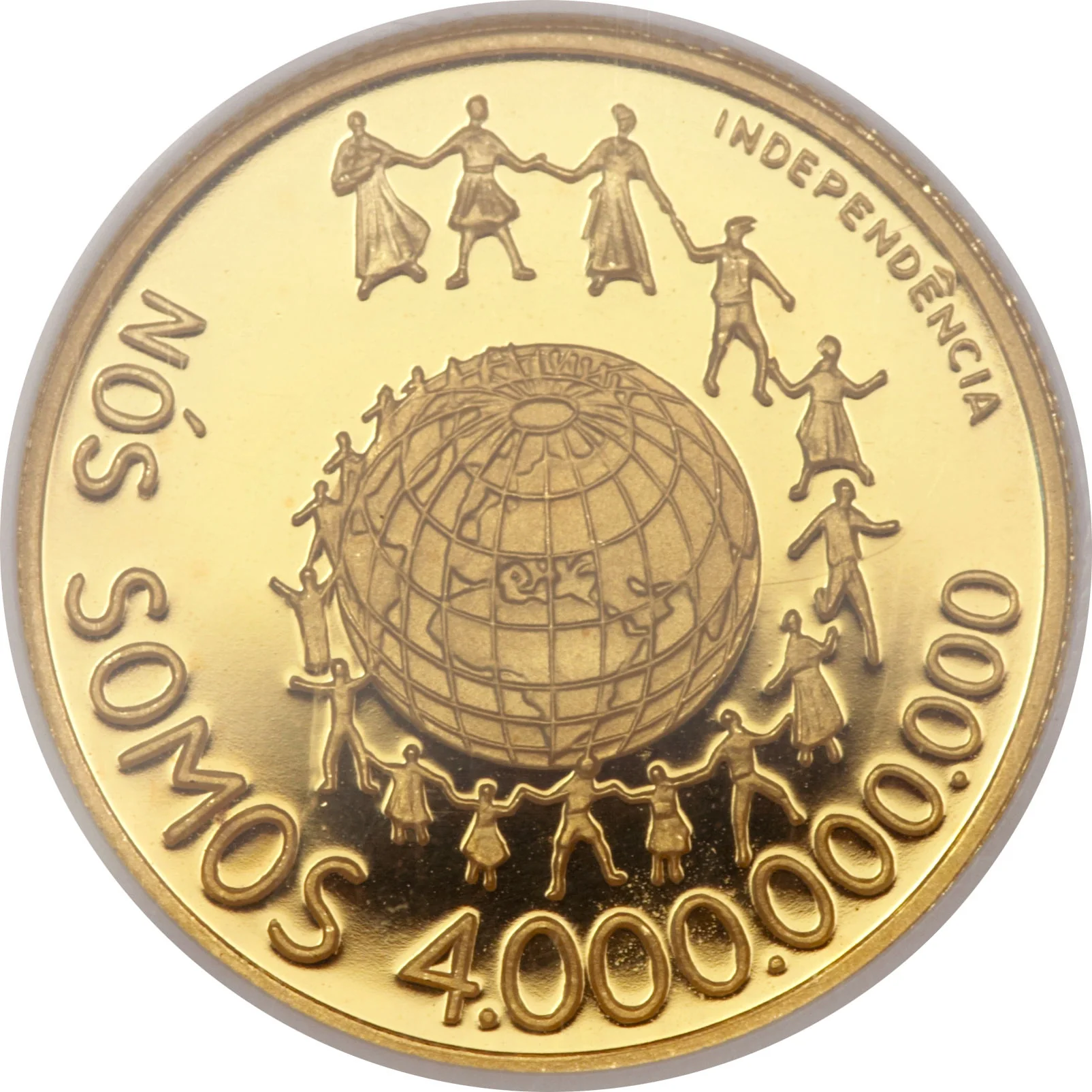
INDEPENDÊNCIA
NÓS SOMOS 4.000.000.000
NÓS SOMOS 4.000.000.000
Translation:
INDEPENDENCE
WE ARE 4,000,000,000
WE ARE 4,000,000,000
Script: Latin
Language: Portuguese
Edge
Mintings
| Year | Mint Mark | Mintage | Quality | Collection |
|---|---|---|---|---|
| 1977 | — | 100 | ||
| 1977 | — | 170 | Proof |
Historical background
In 1977, São Tomé and Príncipe was navigating the complex early years of independence, having achieved sovereignty from Portugal just two years prior. The nation inherited the Portuguese escudo as its currency, which was pegged to the Portuguese currency system. This arrangement created immediate practical and symbolic challenges, as the new Marxist-Leninist government under President Manuel Pinto da Costa sought to assert economic autonomy and break from the colonial financial structures. The escudo's peg also tied the country's monetary policy to Portugal's, limiting the government's ability to manage its own economy.
The primary economic backdrop was one of severe strain. The country's economy was overwhelmingly dependent on cocoa exports from nationalized plantations, but it faced falling world prices and declining production. This led to chronic trade deficits and a heavy reliance on foreign aid, particularly from sympathetic states like Libya and the Eastern Bloc. The fixed exchange rate, combined with a lack of foreign reserves, created distortions, making imports expensive and contributing to shortages of essential goods. There was growing internal pressure to address these monetary constraints as part of a broader socialist transformation.
Consequently, 1977 was a pivotal year of transition. The government passed legislation to introduce a new national currency, the dobra, which was officially launched on September 30, 1977. This move was a definitive act of economic sovereignty, replacing the colonial escudo at par (1 dobra = 1 escudo). The initial dobra was pegged to a basket of currencies, but the fundamental weaknesses of the export-dependent economy persisted. Thus, the currency change was more a political milestone than an immediate economic solution, setting the stage for the monetary challenges the dobra would face in the decades to follow.
The primary economic backdrop was one of severe strain. The country's economy was overwhelmingly dependent on cocoa exports from nationalized plantations, but it faced falling world prices and declining production. This led to chronic trade deficits and a heavy reliance on foreign aid, particularly from sympathetic states like Libya and the Eastern Bloc. The fixed exchange rate, combined with a lack of foreign reserves, created distortions, making imports expensive and contributing to shortages of essential goods. There was growing internal pressure to address these monetary constraints as part of a broader socialist transformation.
Consequently, 1977 was a pivotal year of transition. The government passed legislation to introduce a new national currency, the dobra, which was officially launched on September 30, 1977. This move was a definitive act of economic sovereignty, replacing the colonial escudo at par (1 dobra = 1 escudo). The initial dobra was pegged to a basket of currencies, but the fundamental weaknesses of the export-dependent economy persisted. Thus, the currency change was more a political milestone than an immediate economic solution, setting the stage for the monetary challenges the dobra would face in the decades to follow.
✨ Legendary