

20 dollars (Prince Edward Island Joining Confederation) – Canada
Add to wishlist
Non-circulating coins
Commemoration: 150ᵗʰ Anniversary of Prince Edward Island Joining Confederation
Canada
Context
Material
Diameter: 38 mm
Weight: 31.39 g
Silver Weight:: 31.39 g
Shape: Round
Composition: 99.99% Silver
Standard: Silver ounce
Magnetic: No
Technique: Milled
Alignment: Medal alignment
flip
References
KM: #
Numista: #390994
Value
Exchange value: 20 CAD
Bullion value: $76.39
Inflation-adjusted value: 21.40 CAD
Obverse
Description:
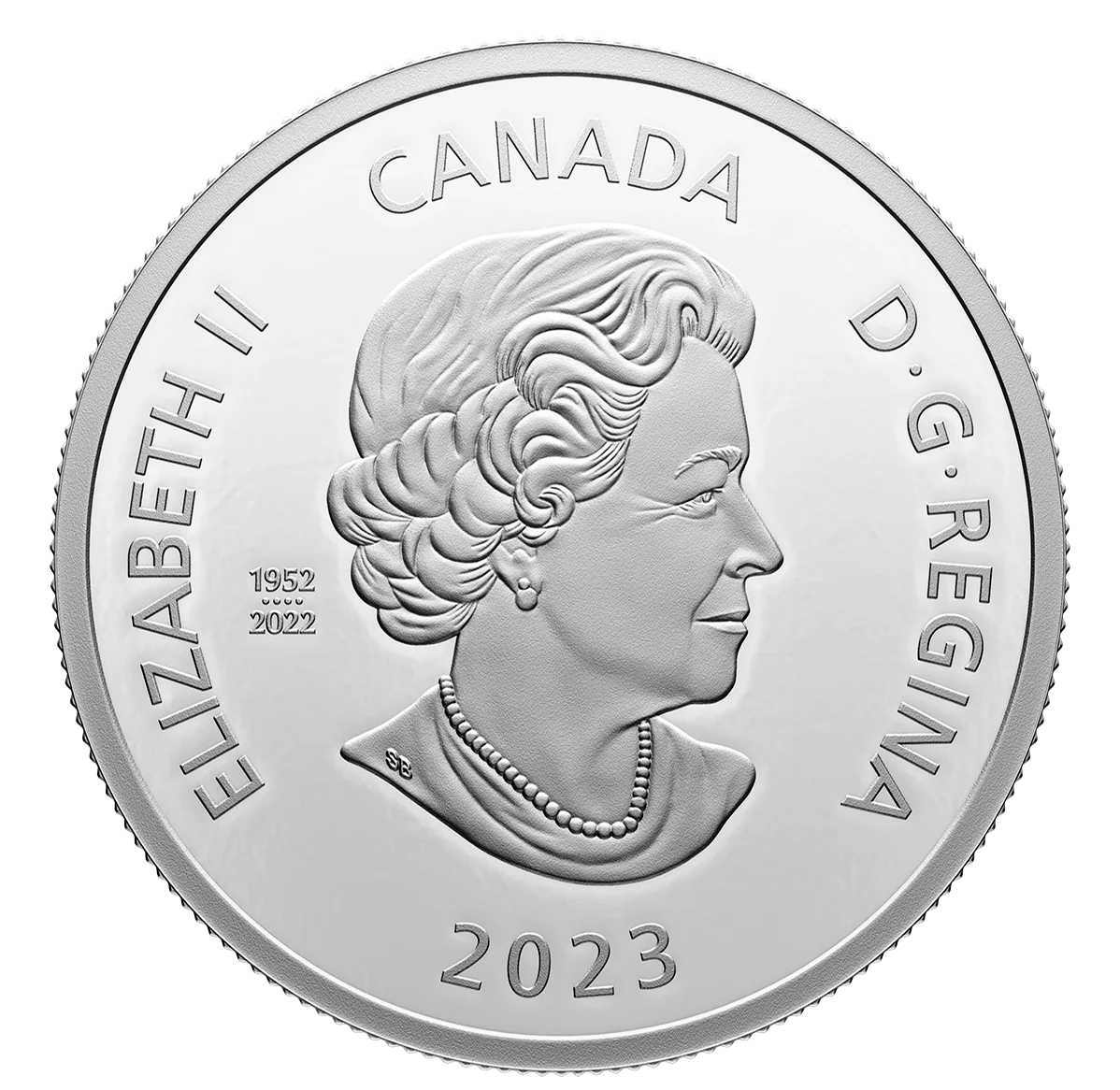
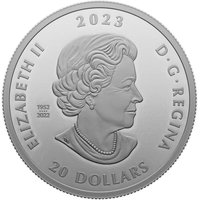
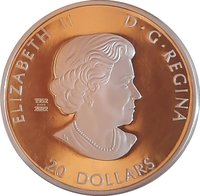
Queen Elizabeth II at 77, facing right, wearing a necklace and earrings. The effigy includes the dates "1952" and "2022," separated by four pearls representing her four Canadian coin portraits.
Inscription:
ELIZABETH II CANADA 2023 D·G·REGINA
1952
••••
2022
SB
1952
••••
2022
SB
Translation:
Elizabeth II by the Grace of God Queen Canada 2023
1952
••••
2022
SB
1952
••••
2022
SB
Script: Latin
Engraver: Susan Taylor
Designer: Susanna Blunt
Reverse
Description:
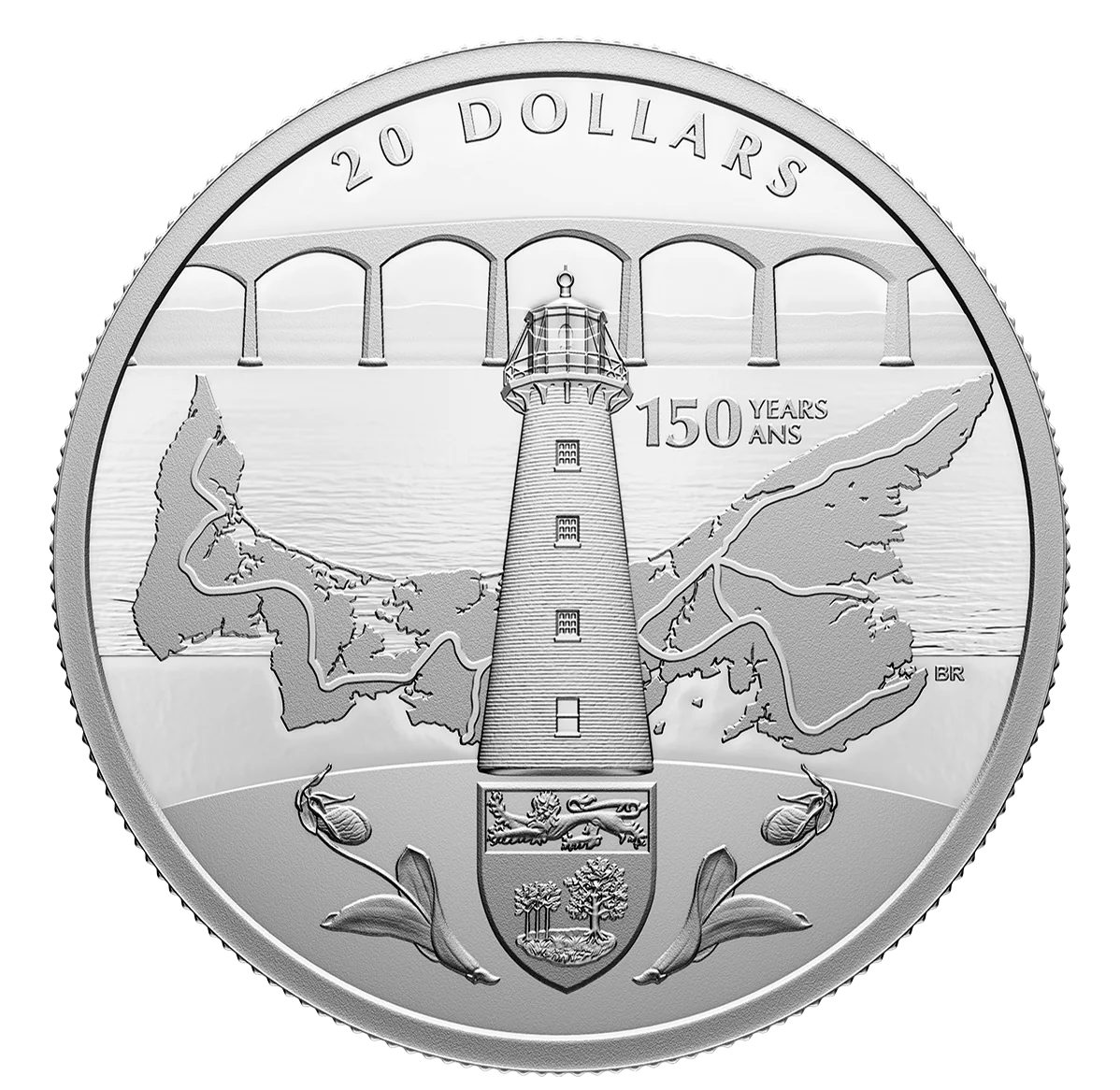
The reverse depicts iconic provincial symbols and landmarks, from heritage lighthouses to the Confederation Bridge, representing over 150 years of P.E.I. history.
Inscription:
20 DOLLARS
150 YEARS
ANS
BR
150 YEARS
ANS
BR
Script: Latin
Designer: Bonnie Ross
Edge
Serrated
Categories
| Building> Bridge |
| Building> Lighthouse |
| Map |
| Symbols> Coat of Arms |
Mints
| Name | Mark |
|---|---|
| Royal Canadian Mint of Ottawa | — |
Mintings
| Year | Mint Mark | Mintage | Quality | Collection |
|---|---|---|---|---|
| 2023 | — | 5,000 | Proof |
Historical background
In 2023, Canada's currency situation was defined by a prolonged period of elevated inflation and the Bank of Canada's aggressive monetary policy response. The year began with the Canadian dollar (CAD) under pressure, trading around 73.5 US cents, as markets priced in a potential pause in the U.S. Federal Reserve's rate hikes. However, the dominant narrative was the Bank of Canada's (BoC) ongoing battle to rein in inflation, which had peaked at 8.1% in mid-2022 but remained stubbornly above the 2% target. The central bank implemented a series of interest rate increases, bringing its key policy rate to a 22-year high of 5.0% by July 2023, creating a tight monetary environment.
This high-interest-rate policy had a dual impact on the loonie. On one hand, it provided fundamental support by attracting foreign capital seeking yield, helping the CAD recover to trade in a range of roughly 72 to 76 US cents for much of the year. On the other hand, the strength was capped by broader global factors, including a stronger U.S. dollar driven by robust American economic data and persistent geopolitical uncertainty. Domestically, concerns about slowing economic growth and a cooling housing market, both consequences of the high-rate environment, created headwinds that prevented a more dramatic appreciation.
By the end of 2023, the currency landscape was in a holding pattern. Inflation showed signs of moderating, dropping to 3.1% in November, which led the BoC to hold rates steady in its final meetings of the year. The market's focus shifted from rate hikes to the timing of future rate cuts, with expectations building for 2024. Consequently, the Canadian dollar closed the year relatively flat against the U.S. dollar, reflecting a balance between domestic economic resilience, cautious optimism on inflation, and a wait-and-see approach from the central bank as it navigated the path toward a soft economic landing.
This high-interest-rate policy had a dual impact on the loonie. On one hand, it provided fundamental support by attracting foreign capital seeking yield, helping the CAD recover to trade in a range of roughly 72 to 76 US cents for much of the year. On the other hand, the strength was capped by broader global factors, including a stronger U.S. dollar driven by robust American economic data and persistent geopolitical uncertainty. Domestically, concerns about slowing economic growth and a cooling housing market, both consequences of the high-rate environment, created headwinds that prevented a more dramatic appreciation.
By the end of 2023, the currency landscape was in a holding pattern. Inflation showed signs of moderating, dropping to 3.1% in November, which led the BoC to hold rates steady in its final meetings of the year. The market's focus shifted from rate hikes to the timing of future rate cuts, with expectations building for 2024. Consequently, the Canadian dollar closed the year relatively flat against the U.S. dollar, reflecting a balance between domestic economic resilience, cautious optimism on inflation, and a wait-and-see approach from the central bank as it navigated the path toward a soft economic landing.


✨ Legendary