

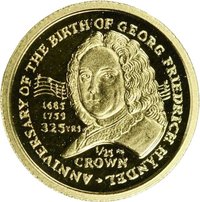
½ crown (Georg F. Händel) – Isle of Man
Add to wishlist
Non-circulating coins
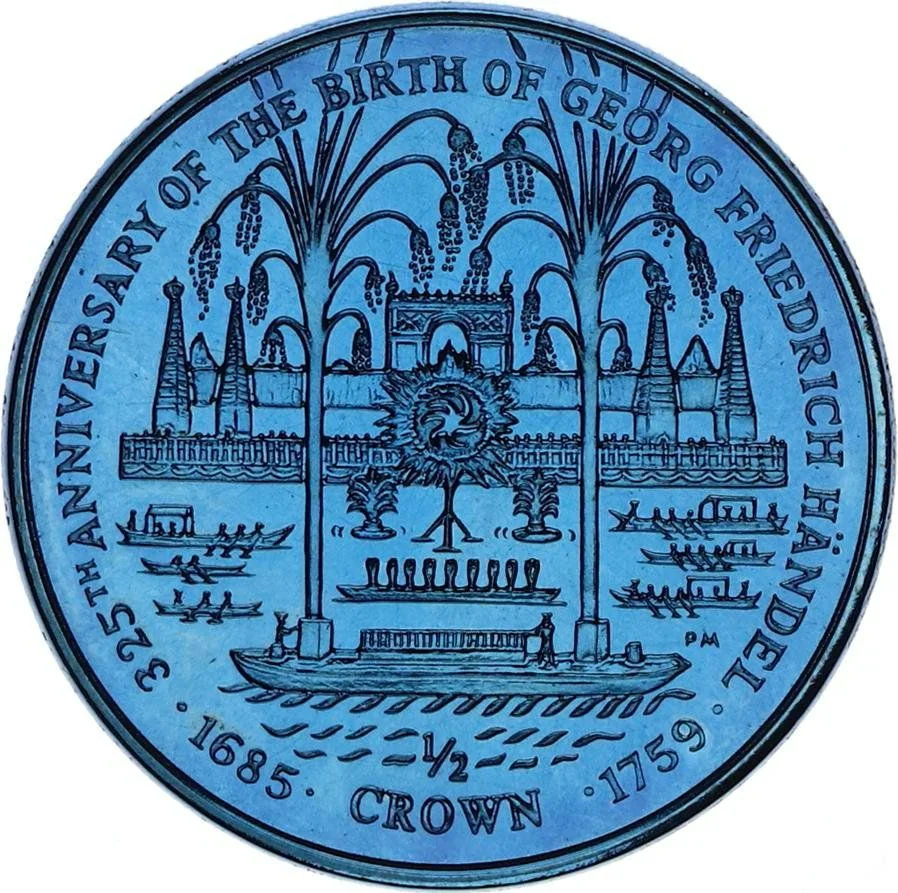
Commemoration: 325th Anniversary of the Birth of Georg F. Händel
Context
Year: 2010
Country: British Crown dependencies
Issuer: Isle of Man
Ruler: Elizabeth II
Currency:
(since 1971)
Total mintage: 1,000
Material
References
KM: #
Numista: #39092
Value
Exchange value: 0.125 IMP
Obverse
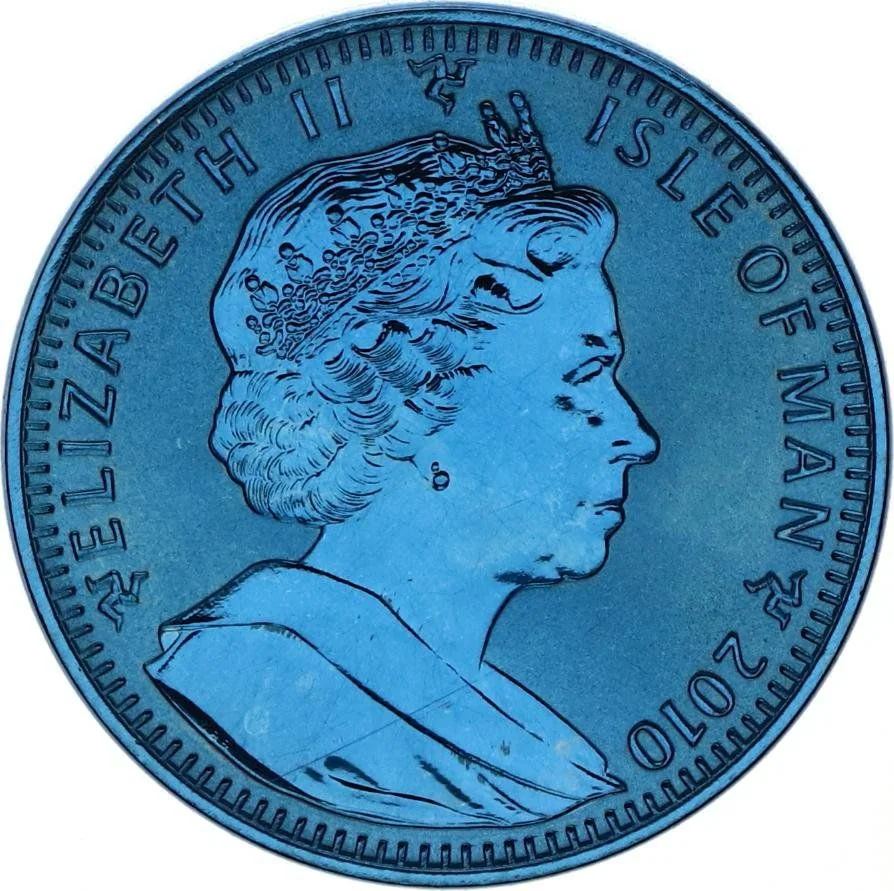
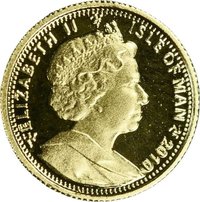
Description:
King facing right.
Inscription:
ELIZABETH II ISLE OF MAN 2010
IRB
IRB
Translation:
ELIZABETH II ISLE OF MAN 2010
IRB
IRB
Script: Latin
Languages: Manx Gaelic, English
Designer: Ian Rank-Broadley
Reverse
Edge
Reeded
Categories
| Art> Music |
| Event> Birth anniversary |
| Transportation> Watercraft |
Mints
| Name | Mark |
|---|---|
| Pobjoy Mint | (PM) |
Mintings
| Year | Mint Mark | Mintage | Quality | Collection |
|---|---|---|---|---|
| 2010 | PM | 1,000 |
Historical background
In 2010, the Isle of Man's currency situation was defined by its unique constitutional position and its response to the global financial crisis. As a self-governing British Crown Dependency, the island issued its own sterling-denominated currency, the Manx pound (IMP), which was not legal tender in the United Kingdom but maintained a fixed 1:1 parity with Pound Sterling (GBP). This arrangement provided monetary stability while allowing for distinctive Manx banknotes and coins that served as symbols of national identity. The island's banking sector, a significant part of its economy, remained heavily exposed to the UK financial system, making its currency's value entirely dependent on the stability of Sterling.
The aftermath of the 2008 crisis continued to shape the economic landscape in 2010. While the Isle of Man's government had not needed to bail out its banks directly, it faced significant pressure on its public finances due to reduced tax revenues from the financial sector and a costly compensation scheme for depositors in the failed local branch of an Icelandic bank. Consequently, the government implemented spending cuts and drew from its reserves to maintain its budget, all while ensuring the continued credibility and parity of the Manx pound. There was no serious discussion of abandoning the Sterling link, as it was seen as a cornerstone of economic confidence for both residents and the important offshore finance industry.
Overall, the currency situation in 2010 was one of stable parity but underlying economic strain. The Manx pound's peg to Sterling held firm, providing a predictable monetary environment. However, the island's broader financial stability was being tested by the lingering recession, prompting a period of fiscal consolidation to safeguard its long-term economic model and the credibility of its currency system amidst a challenging global climate.
The aftermath of the 2008 crisis continued to shape the economic landscape in 2010. While the Isle of Man's government had not needed to bail out its banks directly, it faced significant pressure on its public finances due to reduced tax revenues from the financial sector and a costly compensation scheme for depositors in the failed local branch of an Icelandic bank. Consequently, the government implemented spending cuts and drew from its reserves to maintain its budget, all while ensuring the continued credibility and parity of the Manx pound. There was no serious discussion of abandoning the Sterling link, as it was seen as a cornerstone of economic confidence for both residents and the important offshore finance industry.
Overall, the currency situation in 2010 was one of stable parity but underlying economic strain. The Manx pound's peg to Sterling held firm, providing a predictable monetary environment. However, the island's broader financial stability was being tested by the lingering recession, prompting a period of fiscal consolidation to safeguard its long-term economic model and the credibility of its currency system amidst a challenging global climate.
✨ Legendary