

25 euro (Central Bank of Luxembourg) – Luxembourg
Add to wishlist
Non-circulating coins
Commemoration: 25 years of Central Bank of Luxembourg
Luxembourg
Context
Material
Diameter: 36 mm
Weight: 15.55 g
Gold Weight:: 15.53 g
Shape: Round
Composition: 99.9% Gold
Standard: Silver half ounce
Magnetic: No
Technique: Milled
Alignment: Medal alignment
flip
References
KM: #
Numista: #390656
Value
Exchange value: 25 EUR
Bullion value: $2368.31
Inflation-adjusted value: 27.22 EUR
Obverse
Description:
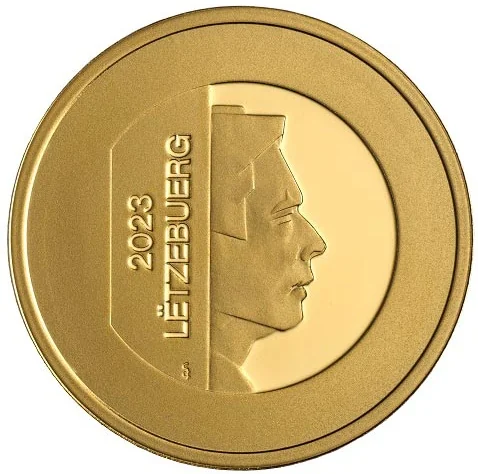
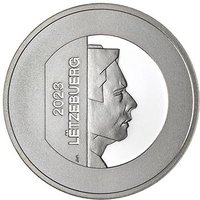
Portrait of Grand Duke Henri, uncluttered.
Inscription:
2023
LËTZEBUERG
CG
LËTZEBUERG
CG
Translation:
Grand Duchy of Luxembourg
2023
2023
Script: Latin
Languages: French, Luxembourgish
Engraver: Yvette Gastauer-Claire
Reverse
Inscription:
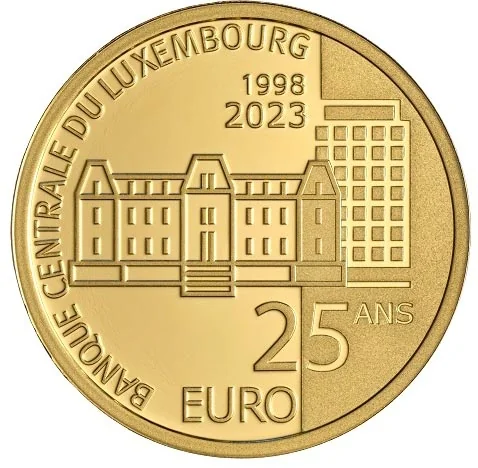
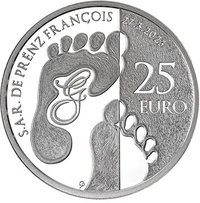
BANQUE CENTRALE DU LUXEMBOURG
1998
2023
25
ANS
EURO
1998
2023
25
ANS
EURO
Translation:
CENTRAL BANK OF LUXEMBOURG
1998
2023
25
YEARS
EURO
1998
2023
25
YEARS
EURO
Script: Latin
Language: French
Engraver: Yvette Gastauer-Claire
Edge
✨ Legendary