Logo Title
obverse
reverse
Fritz Rudolf Künker GmbH & Co. KG, Osnabrück and Lübke & Wiedemann KG, Leonberg

100 Euro (Hereditary Grand Dukes Guillaume's and Stephanie's wedding) – Grand Duchy of Luxembourg

Non-circulating coins
Commemoration: 10th Anniversary of Hereditary Grand Dukes Guillaume's and Stephanie's wedding
Luxembourg
Context
Year: 2022
Country: Luxembourg Country flag
Ruler: Henry
Currency:
(since 2002)
Total mintage: 250
Material
Diameter: 37 mm
Weight: 31.1 g
Gold weight: 31.07 g
Shape: Round
Composition: 99.9% Gold
Standard: Silver ounce
Magnetic: No
Technique: Milled
Alignment: Medal alignment
Obverse
OBVERSE ↑
flip
Reverse
REVERSE ↑
References
Numista: #390655
Value
Exchange value: 100 EUR = $118.14
Bullion value: $5171.84
Inflation-adjusted value: 115.77 EUR

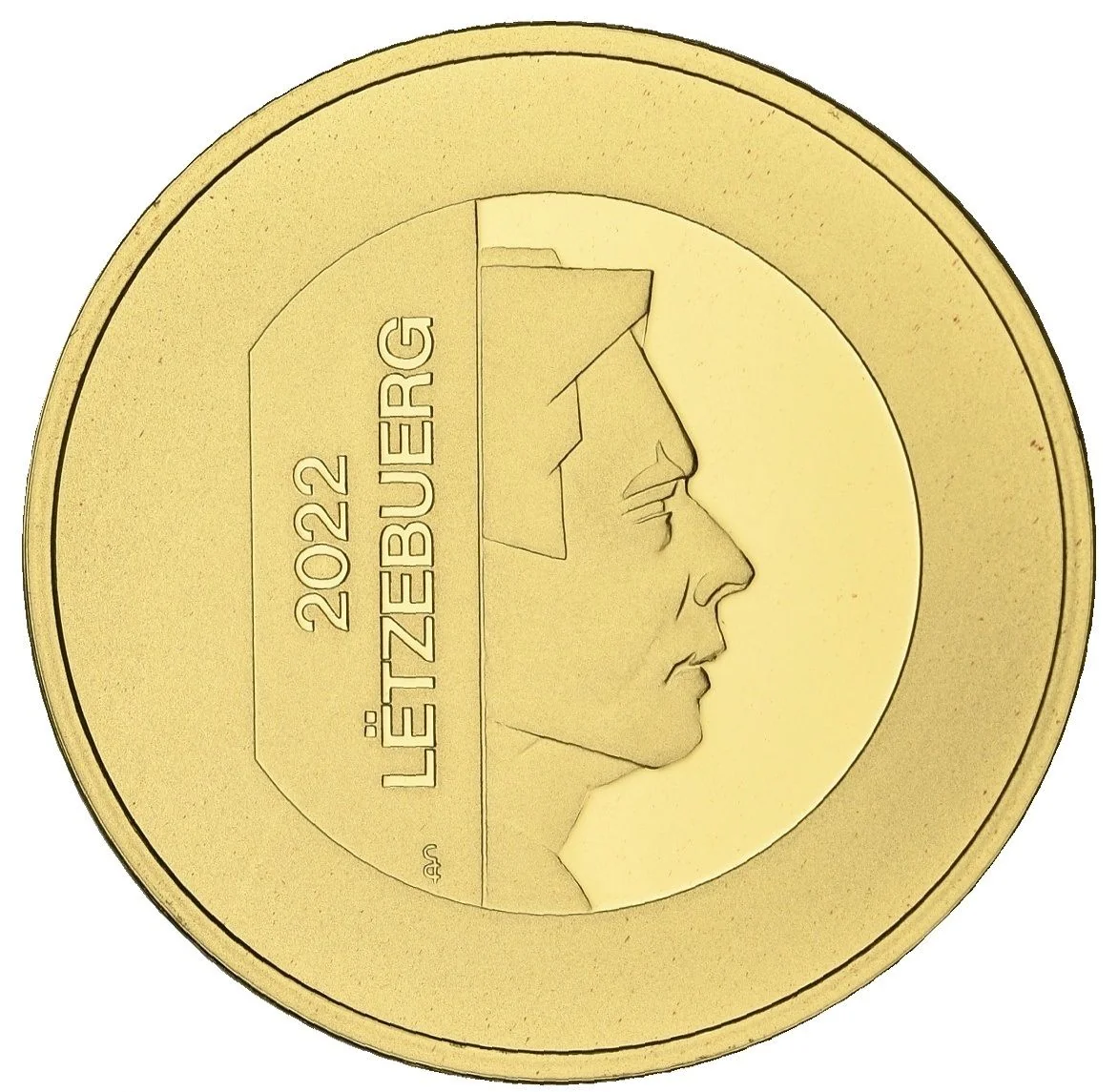
Obverse

Description:
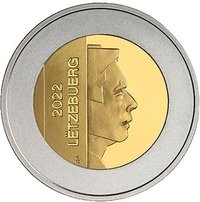
Portrait of Grand Duke Henri, uncluttered.
Inscription:
2022

LËTZEBUERG

CG
Translation:
Luxembourg

CG
Script: Latin
Languages: Luxembourgish, French

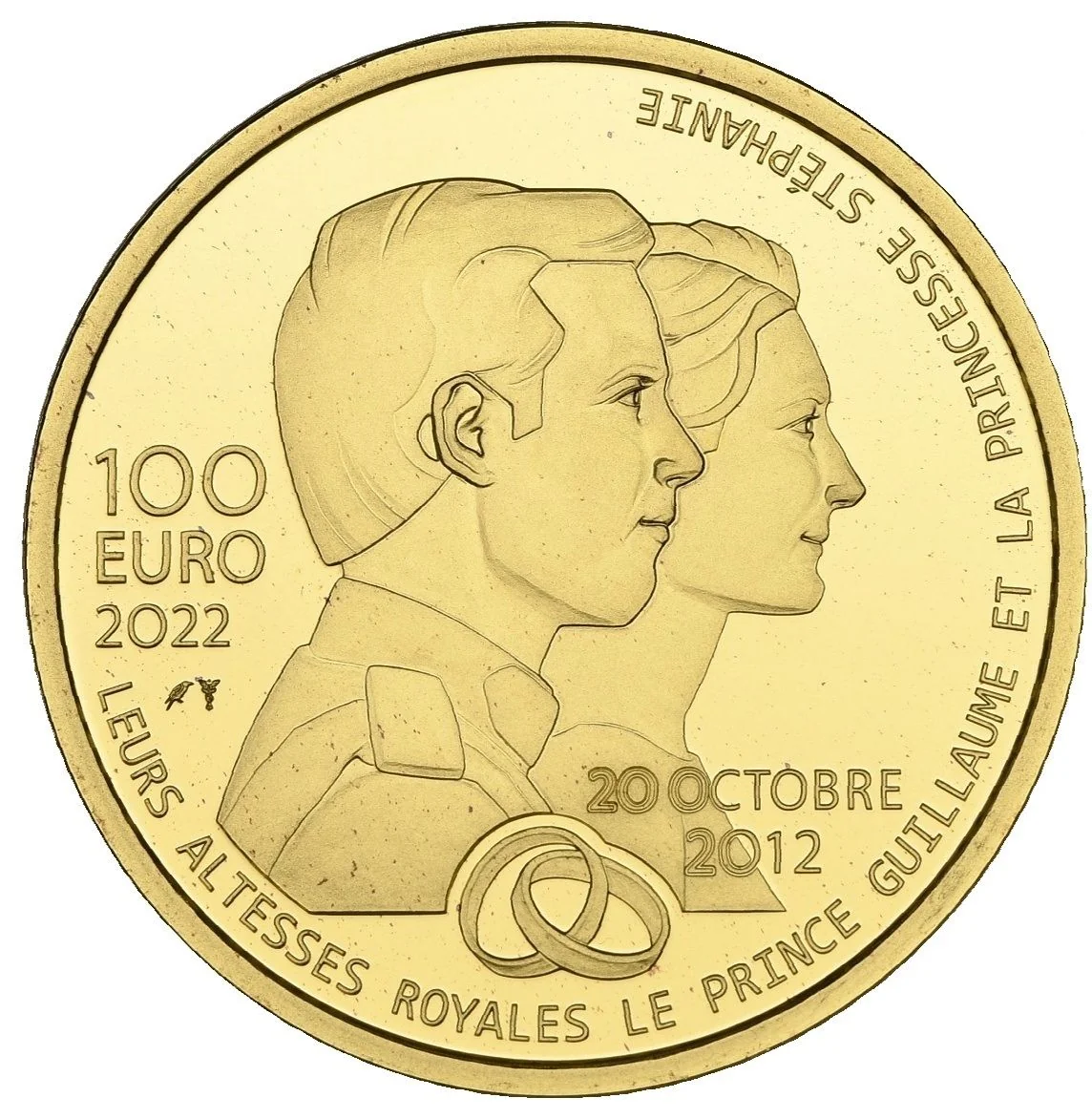
Reverse

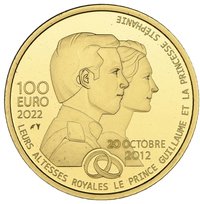
Description:
Guillaume and Stéphanie's wedding portrait, October 20, 2012.
Inscription:
100 EURO

2022

20 OCTOBRE

2012

LEURS ALTESSES ROYALES LE PRINCE GUILLAUME ET LA PRINCESSE STÉPHANIE
Translation:
ONE HUNDRED EURO

2022

20 OCTOBER

2012

THEIR ROYAL HIGHNESSES PRINCE GUILLAUME AND PRINCESS STÉPHANIE
Script: Latin
Languages: French, English

Edge

Categories

Marriage

Mints

NameMark
Royal Dutch Mint

Mintings

YearMint MarkMintageQualityCollection
2022250Proof

Historical background

In 2022, the Grand Duchy of Luxembourg, as a founding member of the Eurozone, continued to use the euro (€) as its sole official currency. This monetary integration, established in 1999 (with banknotes and coins introduced in 2002), meant Luxembourg's national monetary policy was fully delegated to the European Central Bank (ECB). The year was therefore defined by Luxembourg navigating shared Eurozone challenges rather than pursuing an independent currency policy. Key domestic financial actors, including the Central Bank of Luxembourg (BCL), operated within the Eurosystem framework, focusing on financial stability, banking supervision, and contributing to the ECB's decision-making processes aimed at controlling record-high inflation.

The primary monetary background for Luxembourg in 2022 was the ECB's decisive shift away from the ultra-loose monetary policy that had characterized the previous decade. Confronting inflation that surged to a historic 8.2% annual average in the Eurozone, driven by soaring energy prices and supply chain disruptions post-pandemic and exacerbated by the war in Ukraine, the ECB initiated a series of interest rate hikes starting in July. For Luxembourg's highly financialized and open economy, this meant tighter borrowing conditions, impacting mortgages, business investment, and government debt servicing costs, while also aiming to cool inflationary pressures affecting households and businesses.

Despite the shared currency, Luxembourg's unique economic profile shaped its experience of the 2022 currency environment. Its large financial sector, high proportion of cross-border workers, and status as a real economy with significant industrial and service exports meant it felt both the benefits of euro stability and the constraints of a one-size-fits-all policy. Domestically, discussions focused on mitigating inflation's impact through targeted fiscal measures, such as indexation of wages and social benefits—a key national mechanism to preserve purchasing power. Thus, while the currency itself was a stable given, its management and economic consequences formed the critical financial backdrop for the nation throughout the year.
Legendary