

2½ Euro (Construction of the Sagres) – Portugal
Circulating commemorative coins
Commemoration: 75th Anniversary of the Construction of the Sagres
Portugal
Context
Material
Diameter: 28 mm
Weight: 10 g
Shape: Round
Composition: Copper-nickel
Technique: Milled
Alignment: Medal alignment
flip
References
KM: #Click to copy to clipboard831
Numista: #39060
Value
Exchange value: 2.5 EUR = $2.95
Inflation-adjusted value: 3.10 EUR
Obverse
Description:
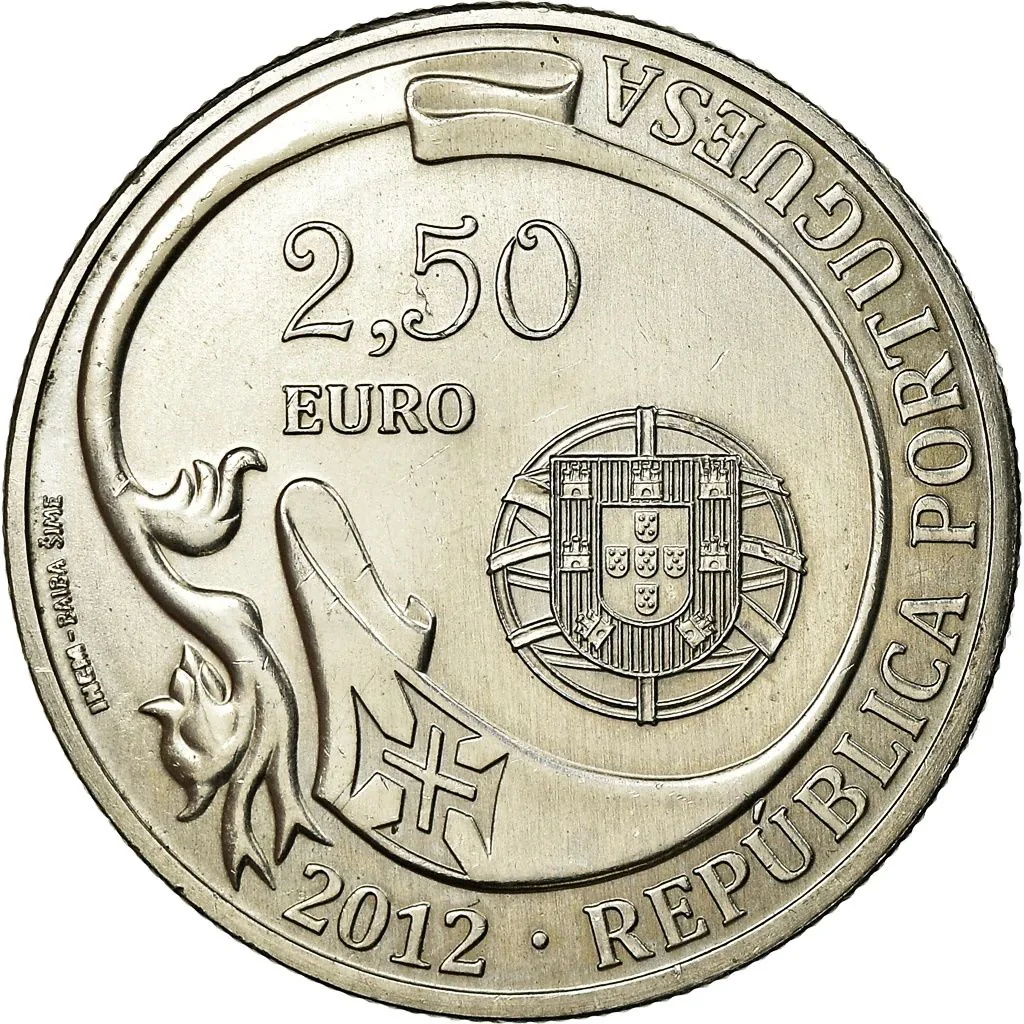
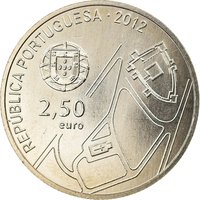
NRP Sagres: 75 anos
Inscription:
2,50 EURO
2012 · REPÚBLICA PORTUGUESA
INCM - BAIBA SÎME
2012 · REPÚBLICA PORTUGUESA
INCM - BAIBA SÎME
Translation:
2.50 EURO
2012 · PORTUGUESE REPUBLIC
INCM - BAIBA SÎME
2012 · PORTUGUESE REPUBLIC
INCM - BAIBA SÎME
Script: Latin
Languages: Portuguese, Romanian
Engraver: Baiba Sîme
Reverse
Description:
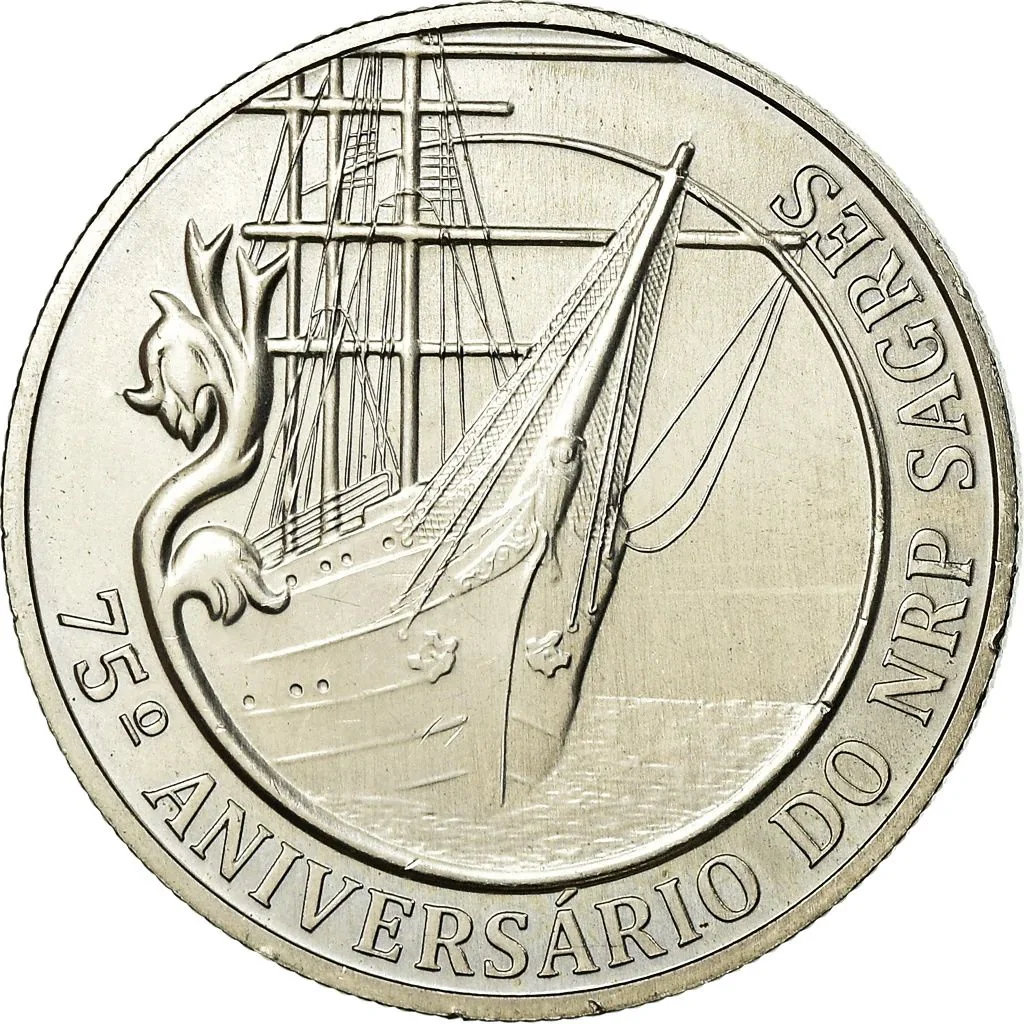
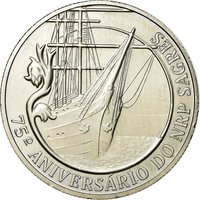
The school ship Sagres with the inscription "75º ANIVERSÁRIO DO NRP SAGRES."
Inscription:
75º ANIVERSÁRIO DO NRP SAGRES
Translation:
75th Anniversary of the NRP Sagres
Script: Latin
Language: Portuguese
Engraver: Baiba Sîme
Edge
Milled
Categories
| Transportation> Watercraft |
Mints
| Name | Mark |
|---|---|
| Imprensa Nacional - Casa da Moeda | INCM |
Mintings
| Year | Mint Mark | Mintage | Quality | Collection |
|---|---|---|---|---|
| 2012 | INCM | 59,166 |
Historical background
In 2012, Portugal was in the midst of a severe sovereign debt crisis, operating under the constraints of the euro as its currency. As a member of the Eurozone, Portugal had relinquished control over its monetary policy to the European Central Bank (ECB), which meant it could not devalue its currency to regain competitiveness or independently set interest rates. This lack of monetary tools proved critical as the country faced soaring borrowing costs, with its 10-year government bond yields peaking at over 17% in early 2012, effectively locking it out of international debt markets.
The crisis culminated in May 2011 when Portugal requested a €78 billion financial assistance package from the so-called "Troika": the European Commission, the European Central Bank, and the International Monetary Fund. In exchange for the bailout, the government was required to implement harsh austerity measures, including deep spending cuts, tax increases, and structural reforms aimed at reducing its budget deficit and restoring economic stability. By 2012, these measures were in full force, leading to a deep recession, record-high unemployment exceeding 17%, and significant social hardship, which sparked widespread public protests.
The currency situation, therefore, was defined by the tension between the perceived stability of the euro and the rigidities it imposed during a national crisis. While the euro prevented a currency collapse and bank run, it forced Portugal to rely solely on painful internal devaluation—lowering wages and prices—to adjust. This period intensified debate within Portugal about the benefits and costs of Eurozone membership, even as the government remained committed to the common currency, seeing it as essential for long-term integration and financial credibility. The situation only began to stabilize in late 2012, following the ECB's announcement of its Outright Monetary Transactions (OMT) program, which calmed bond markets across the Eurozone periphery.
The crisis culminated in May 2011 when Portugal requested a €78 billion financial assistance package from the so-called "Troika": the European Commission, the European Central Bank, and the International Monetary Fund. In exchange for the bailout, the government was required to implement harsh austerity measures, including deep spending cuts, tax increases, and structural reforms aimed at reducing its budget deficit and restoring economic stability. By 2012, these measures were in full force, leading to a deep recession, record-high unemployment exceeding 17%, and significant social hardship, which sparked widespread public protests.
The currency situation, therefore, was defined by the tension between the perceived stability of the euro and the rigidities it imposed during a national crisis. While the euro prevented a currency collapse and bank run, it forced Portugal to rely solely on painful internal devaluation—lowering wages and prices—to adjust. This period intensified debate within Portugal about the benefits and costs of Eurozone membership, even as the government remained committed to the common currency, seeing it as essential for long-term integration and financial credibility. The situation only began to stabilize in late 2012, following the ECB's announcement of its Outright Monetary Transactions (OMT) program, which calmed bond markets across the Eurozone periphery.
🌱 Common