

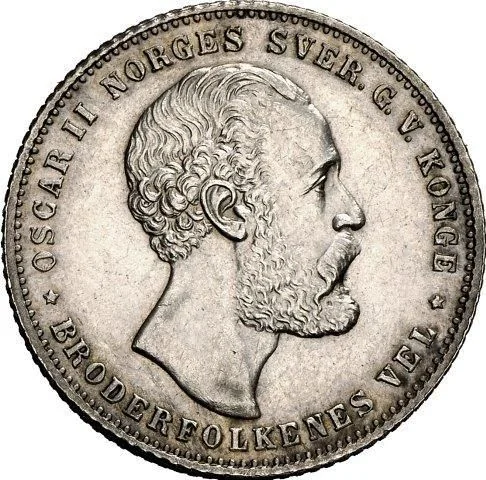
½ speciedaler – Norway
Add to wishlist
Norway
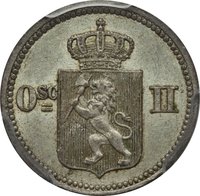
Obverse
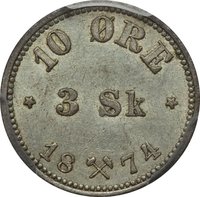
Reverse
Description:
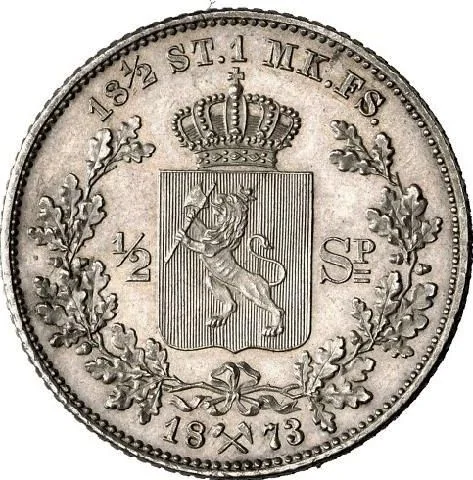
Shield with crowned lion holding a halberd on vertical lines. Value flanking shield, wreath surrounds. Value above crown, date and mintmark below. Beaded rim.
Inscription:
18 ½ ST. 1 MK. FS.
½ | SP=
18 ⚒ 73
½ | SP=
18 ⚒ 73
Script: Latin
Edge
Mints
| Name | Mark |
|---|---|
| Norwegian Mint | — |
Mintings
| Year | Mint Mark | Mintage | Quality | Collection |
|---|---|---|---|---|
| 1873 | — | 4,216 |
Historical background
In 1873, Norway stood at a monetary crossroads, deeply influenced by its political union with Sweden. Both nations shared a king and foreign policy, but maintained separate domestic administrations and currencies. For decades, Norway had used the speciedaler, a silver-based currency, while Sweden used the riksdaler. The differing standards created complexity for trade and finance within the union, prompting a desire for a unified monetary system. Furthermore, the global shift towards the gold standard, led by Germany's adoption in 1871, placed pressure on the Scandinavian economies to modernize or risk isolation in international commerce.
The solution was the Scandinavian Monetary Union (SMU), established in 1873 by Sweden and Denmark, with Norway joining in 1875 after parliamentary approval. This landmark agreement replaced the old silver-based currencies with a new common gold standard unit: the krone (crown), subdivided into 100 øre. The Norwegian speciedaler was demonetized and converted at a rate of 4 kroner to 1 speciedaler. The union guaranteed the free circulation of each member's coins within all three countries, effectively creating a single currency area without a central issuing authority.
The transition was driven by pragmatism and economic ambition. Adopting the gold standard aimed to stabilize exchange rates, attract foreign investment, and integrate Norway more fully into the flourishing North Sea and Baltic trade networks. While the political union with Sweden would dissolve in 1905, the monetary legacy of this period proved enduring. The krone, born from the circumstances of 1873, remains Norway's currency to this day, a testament to a pivotal reform that anchored the nation's economy to the international financial system of the late 19th century.
The solution was the Scandinavian Monetary Union (SMU), established in 1873 by Sweden and Denmark, with Norway joining in 1875 after parliamentary approval. This landmark agreement replaced the old silver-based currencies with a new common gold standard unit: the krone (crown), subdivided into 100 øre. The Norwegian speciedaler was demonetized and converted at a rate of 4 kroner to 1 speciedaler. The union guaranteed the free circulation of each member's coins within all three countries, effectively creating a single currency area without a central issuing authority.
The transition was driven by pragmatism and economic ambition. Adopting the gold standard aimed to stabilize exchange rates, attract foreign investment, and integrate Norway more fully into the flourishing North Sea and Baltic trade networks. While the political union with Sweden would dissolve in 1905, the monetary legacy of this period proved enduring. The krone, born from the circumstances of 1873, remains Norway's currency to this day, a testament to a pivotal reform that anchored the nation's economy to the international financial system of the late 19th century.
✨ Legendary