

25 colones – El Salvador
Add to wishlist
Non-circulating coins
Commemoration: 18th Annual BID/IADB Governors' Assembly
El Salvador
Context
Year: 1977
Issuer: El Salvador
Issuing organization: Central Reserve Bank of El Salvador
Period:
(since 1841)
Currency:
(since 1892)
Demonetization: 1 January 2001
Total mintage: 22,000
Material
References
KM: #
Numista: #38950
Value
Exchange value: 25 SVC
Bullion value: $56.48
Obverse
Description:
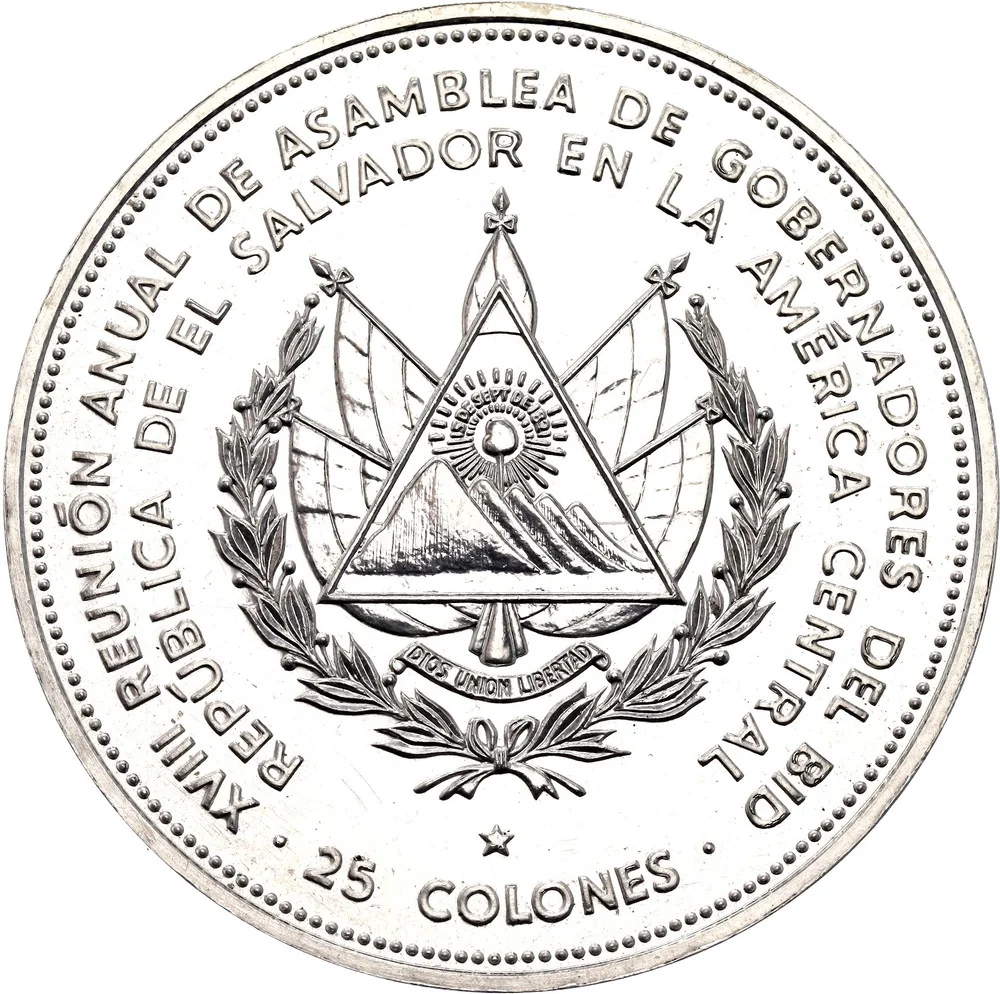
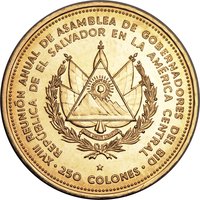
Coat of arms encircled by legend, value below.
Inscription:
XVIII REUNIÓN ANUAL DE ASAMBLEA DE GOBERNADORES D'EL BID.
REPÚBLICA DE EL SALVADOR EN LA AMERICA CENTRAL
25 colones
REPÚBLICA DE EL SALVADOR EN LA AMERICA CENTRAL
25 colones
Translation:
EIGHTEENTH ANNUAL MEETING OF THE BOARD OF GOVERNORS OF THE IDB.
REPUBLIC OF EL SALVADOR IN CENTRAL AMERICA
25 colones
REPUBLIC OF EL SALVADOR IN CENTRAL AMERICA
25 colones
Script: Latin
Language: Spanish
Reverse
Description:
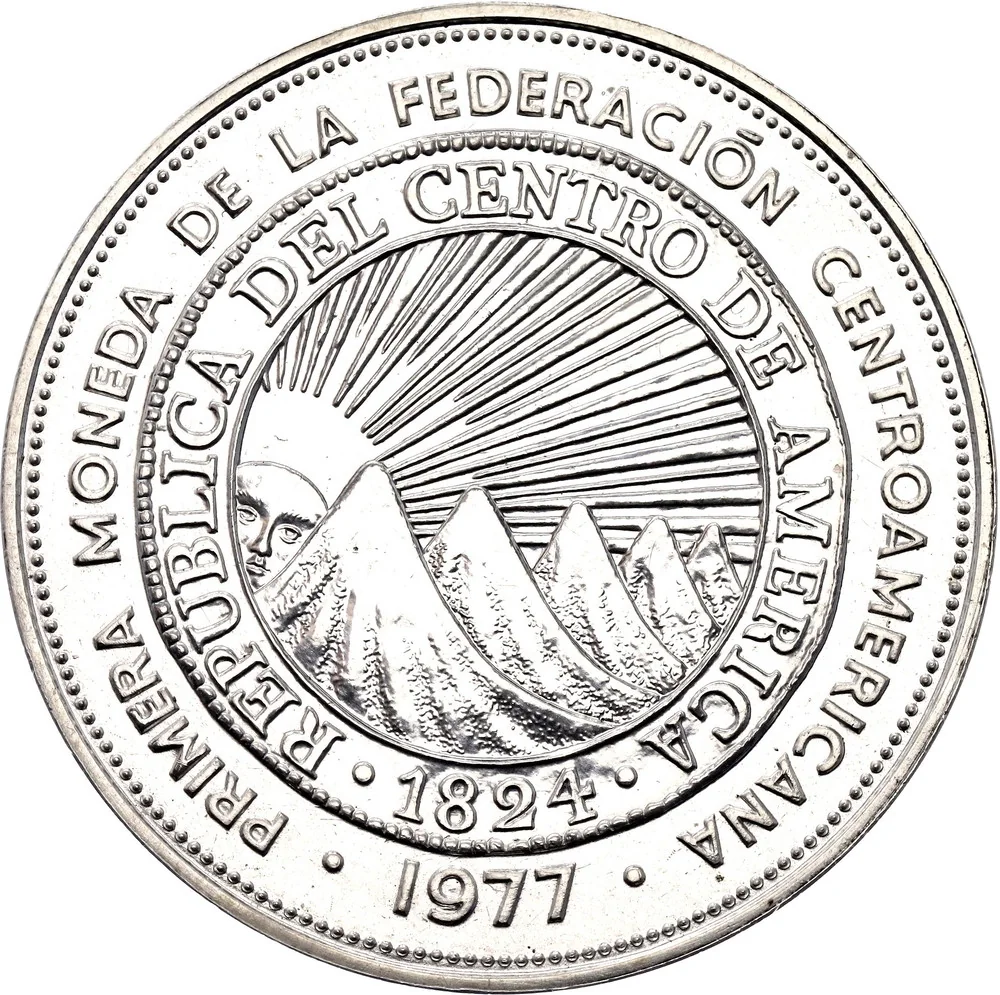
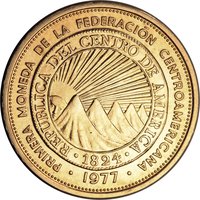
Central American Republic coin design in center, legend and date at bottom.
Inscription:
REPUBLICA DEL CENTRO DE AMERICA
•1824•
PRIMERA MONEDA DE LA FEDERACIÓN CENTROAMERICANA
•1977•
•1824•
PRIMERA MONEDA DE LA FEDERACIÓN CENTROAMERICANA
•1977•
Translation:
REPUBLIC OF CENTRAL AMERICA
•1824•
FIRST COIN OF THE CENTRAL AMERICAN FEDERATION
•1977•
•1824•
FIRST COIN OF THE CENTRAL AMERICAN FEDERATION
•1977•
Script: Latin
Language: Spanish
Edge
Plain with text
Legend:
B. C. R. - LEY 900 - 25 GRS
Translation:
B. C. R. - .900 Silver - 25 Grams
Language: Spanish
Categories
| Symbols> Coat of Arms |
| Currency> Coin depiction |
Mints
| Name | Mark |
|---|---|
| Royal Mint | — |
Mintings
| Year | Mint Mark | Mintage | Quality | Collection |
|---|---|---|---|---|
| 1977 | — | 2,000 | ||
| 1977 | — | 20,000 | Proof |
Historical background
In 1977, El Salvador's currency situation was characterized by the dominance of the Salvadoran colón, which had been pegged to the United States dollar at a fixed rate of 2.5 colones per dollar since 1934. This long-standing peg, managed by the Central Reserve Bank of El Salvador, provided a remarkable degree of monetary stability and low inflation, especially when compared to regional neighbors. The stability was a cornerstone of the economic model favored by the ruling military-civilian junta and the powerful agricultural oligarchy, as it facilitated predictable export revenues from coffee, the country's primary cash crop.
However, this apparent stability masked deep structural economic problems and growing social inequalities. The benefits of the fixed exchange rate and export-led growth were concentrated in the hands of a small elite, while the majority of the population faced poverty and landlessness. By the late 1970s, the economy was beginning to show strains from rising global oil prices and fluctuating coffee prices, which put pressure on the balance of payments. Despite these underlying pressures, the government maintained a strong commitment to the dollar peg, viewing it as an essential anchor for economic credibility, and there was no formal devaluation or currency crisis in 1977 itself.
The currency regime existed within an increasingly tense political climate. The fixed exchange rate symbolized the entrenched, exclusionary economic order that was a key driver of social unrest. As political polarization intensified and the nation moved toward civil war, the colón's stability became increasingly detached from the deteriorating real economy. The fundamental contradictions between a stable currency and a deeply unstable society would eventually culminate in the economic disruptions of the 1980s civil war, though in 1977, the currency itself remained a rare point of formal continuity in a nation on the brink of profound conflict.
However, this apparent stability masked deep structural economic problems and growing social inequalities. The benefits of the fixed exchange rate and export-led growth were concentrated in the hands of a small elite, while the majority of the population faced poverty and landlessness. By the late 1970s, the economy was beginning to show strains from rising global oil prices and fluctuating coffee prices, which put pressure on the balance of payments. Despite these underlying pressures, the government maintained a strong commitment to the dollar peg, viewing it as an essential anchor for economic credibility, and there was no formal devaluation or currency crisis in 1977 itself.
The currency regime existed within an increasingly tense political climate. The fixed exchange rate symbolized the entrenched, exclusionary economic order that was a key driver of social unrest. As political polarization intensified and the nation moved toward civil war, the colón's stability became increasingly detached from the deteriorating real economy. The fundamental contradictions between a stable currency and a deeply unstable society would eventually culminate in the economic disruptions of the 1980s civil war, though in 1977, the currency itself remained a rare point of formal continuity in a nation on the brink of profound conflict.
⭐ Rare