

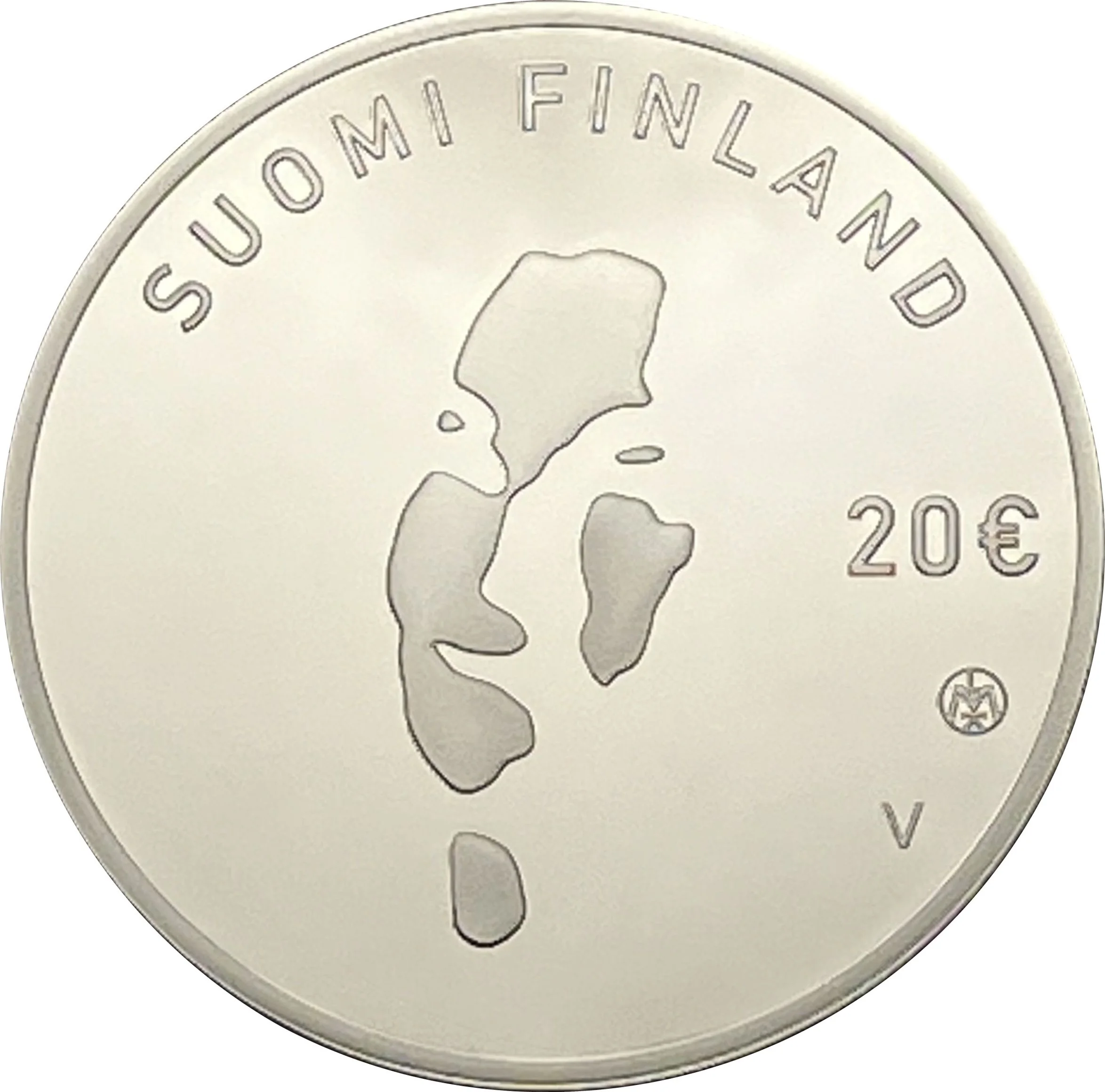
20 Euro – Finland
Non-circulating coins
Commemoration: Health and social services
Finland
Context

Material
References
KM: #Click to copy to clipboard312
Numista: #387931
Value
Exchange value: 20 EUR = $23.63
Bullion value: $66.72
Inflation-adjusted value: 21.95 EUR
Obverse
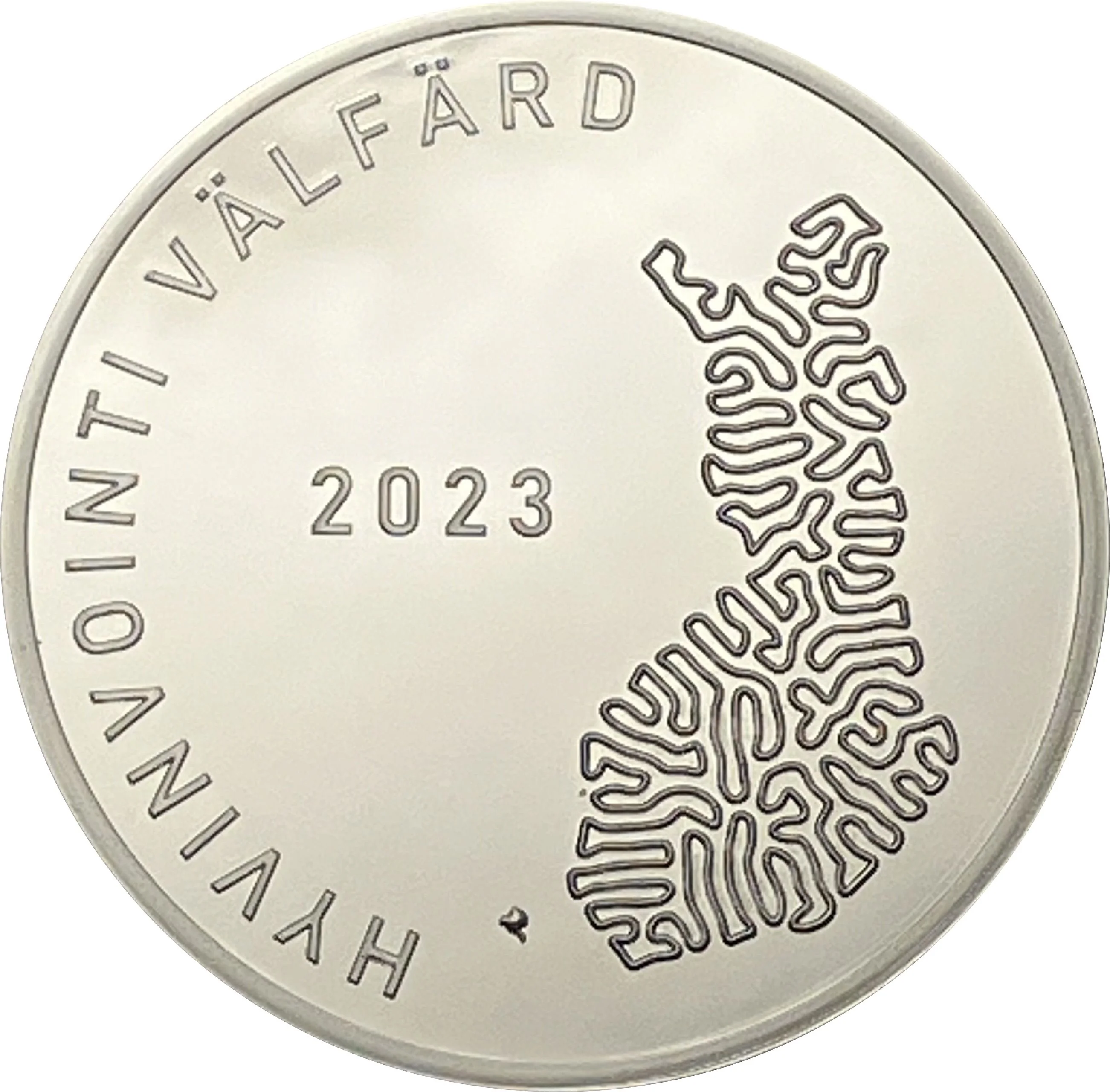
Reverse
Description:
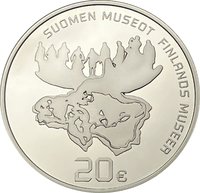
Finland map.
Inscription:
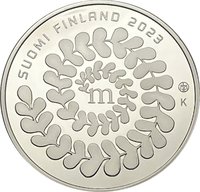
HYVINVOINTI VÄLFÄRD
2023
2023
Translation:
WELL-BEING WELFARE
2023
2023
Script: Latin
Designer: Dario Vidal
Edge
Mints
| Name | Mark |
|---|---|
| Lithuanian Mint | — |
Mintings
| Year | Mint Mark | Mintage | Quality | Collection |
|---|---|---|---|---|
| 2023 | — | 1,400 | Proof |
Historical background
In 2023, Finland's currency situation was fundamentally defined by its membership in the Eurozone, using the euro (€) as its official currency. This meant the country's monetary policy was set by the European Central Bank (ECB), not by a national institution. The year was dominated by the ECB's aggressive response to high inflation, with a series of interest rate hikes that brought the key deposit facility rate from 2% at the start of the year to 4% by September. For Finnish households and businesses, this translated into significantly higher borrowing costs, cooling the housing market and impacting investment.
The national context was marked by particular economic strain. Finland's economy entered a technical recession in 2023, with two consecutive quarters of GDP contraction, driven by high inflation, rising interest rates, and weakened demand from key trading partners. Furthermore, the structure of the Finnish economy, with many households holding variable-rate mortgages, made it especially sensitive to the ECB's rate increases. This created a challenging environment where the common eurozone monetary policy, aimed at curbing inflation across 20 nations, was arguably tighter than what Finland's slowing domestic economy required.
Despite these pressures, the euro provided stability by eliminating currency risk within the Eurozone, which is crucial for Finland's open, export-driven economy. There was no serious political debate about leaving the euro, as its benefits for trade and financial integration are widely accepted. The primary domestic financial discussions in 2023 therefore centered on fiscal policy—government spending and taxation—as the main tools to navigate the recession, rather than on currency matters. The year underscored both the constraints and the protections of sharing a common currency during a period of divergent economic performance within the monetary union.
The national context was marked by particular economic strain. Finland's economy entered a technical recession in 2023, with two consecutive quarters of GDP contraction, driven by high inflation, rising interest rates, and weakened demand from key trading partners. Furthermore, the structure of the Finnish economy, with many households holding variable-rate mortgages, made it especially sensitive to the ECB's rate increases. This created a challenging environment where the common eurozone monetary policy, aimed at curbing inflation across 20 nations, was arguably tighter than what Finland's slowing domestic economy required.
Despite these pressures, the euro provided stability by eliminating currency risk within the Eurozone, which is crucial for Finland's open, export-driven economy. There was no serious political debate about leaving the euro, as its benefits for trade and financial integration are widely accepted. The primary domestic financial discussions in 2023 therefore centered on fiscal policy—government spending and taxation—as the main tools to navigate the recession, rather than on currency matters. The year underscored both the constraints and the protections of sharing a common currency during a period of divergent economic performance within the monetary union.

✨ Legendary