

1000 shillings (Independence) – Uganda
Add to wishlist
Circulating commemorative coins
Commemoration: 50 Years of Independence
Uganda
Context
Year: 2012
Issuer: Uganda
Issuing organization: Bank of Uganda
Period:
(since 1962)
Currency:
(since 1987)
Material
References
KM: #
Numista: #38748
Value
Exchange value: 1000 UGX
Obverse
Reverse
Description:
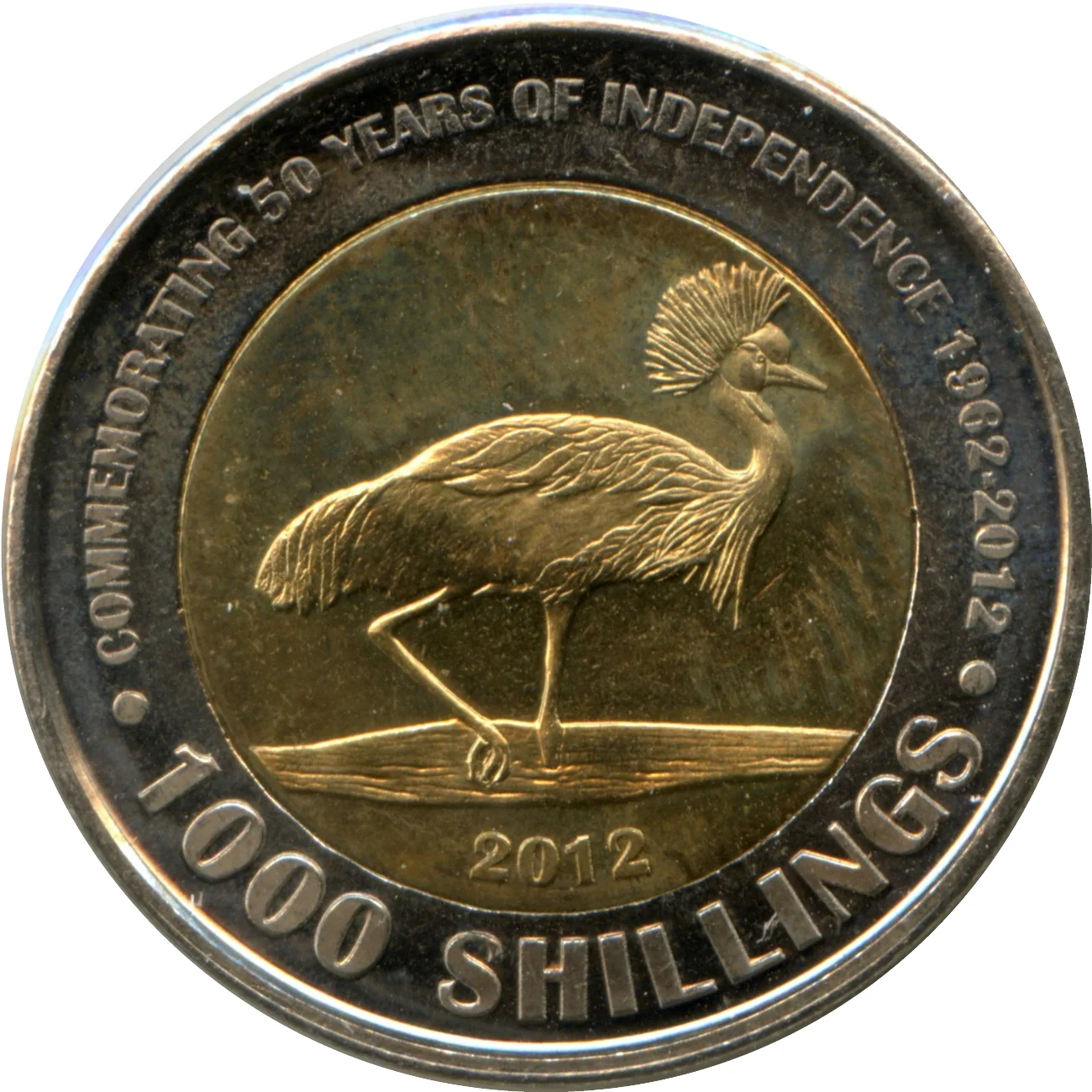
Grey crowned crane in water, facing right.
Inscription:
COMMEMORATING 50 YEARS OF INDEPENDENCE 1962-2012
2012
· 1000 SHILLINGS ·
2012
· 1000 SHILLINGS ·
Script: Latin
Edge
Two reeded edges with a smooth, inscribed groove between. Text repeated seven times.
Legend:
BOU 1000
Categories
| Animal> Bird |
| Event> Independence |
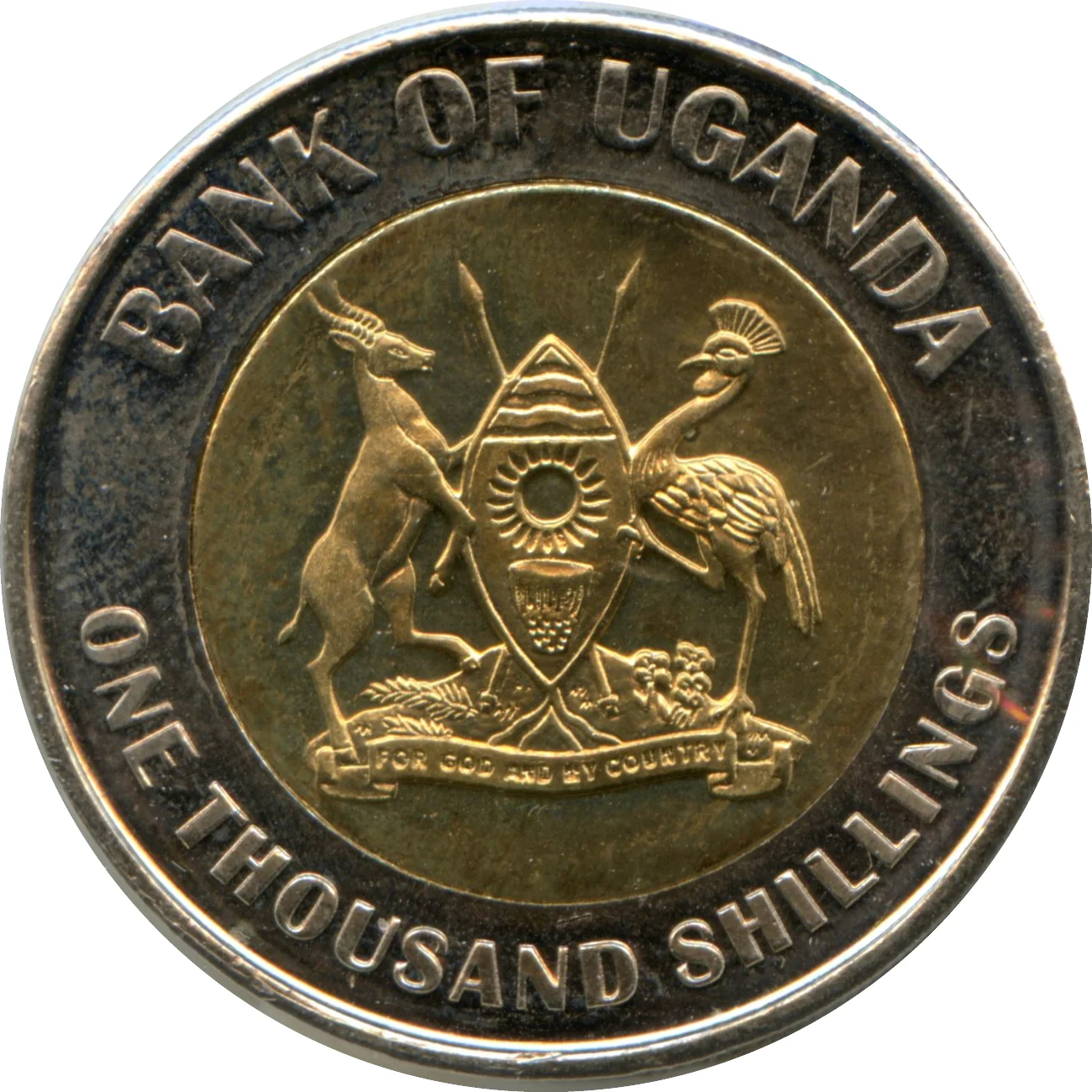
| Symbols> Coat of Arms |
Mintings
| Year | Mint Mark | Mintage | Quality | Collection |
|---|---|---|---|---|
| 2012 | — | — |
Historical background
In 2012, Uganda faced a significant currency crisis characterized by a sharp and rapid depreciation of the Ugandan Shilling (UGX). The shilling had begun weakening in 2011, but the situation intensified in 2012, losing over 20% of its value against the US dollar within the first half of the year. This depreciation was driven by a combination of external shocks and domestic policy challenges. Key factors included high global commodity prices, particularly for oil, which increased Uganda's import bill and widened the current account deficit. Furthermore, a period of high domestic inflation in 2011 had eroded confidence, and political uncertainty stemming from the 2011 elections and controversies surrounding significant public spending contributed to investor unease.
The Bank of Uganda (BoU) responded with a series of aggressive monetary policy measures to stem the decline and curb inflation. The central bank dramatically raised its benchmark interest rate, the Central Bank Rate (CBR), from 13% in mid-2011 to 23% by the end of 2012. It also actively intervened in the foreign exchange market, selling dollars from its reserves to support the shilling. While these tight monetary policies eventually succeeded in stabilizing the currency and bringing down inflation, they came at a high cost. The soaring interest rates severely constrained private sector credit, slowing economic growth and creating hardship for businesses and individuals with loans.
By the close of 2012, the shilling had stabilized and even appreciated slightly from its lowest point, but the episode left a lasting impact. It exposed the vulnerability of Uganda's economy to external shocks and highlighted the challenges of managing inflation and exchange rate stability simultaneously. The crisis prompted broader discussions about the need to diversify the export base, build stronger foreign exchange reserves, and improve fiscal discipline to reduce the economy's susceptibility to similar volatility in the future.
The Bank of Uganda (BoU) responded with a series of aggressive monetary policy measures to stem the decline and curb inflation. The central bank dramatically raised its benchmark interest rate, the Central Bank Rate (CBR), from 13% in mid-2011 to 23% by the end of 2012. It also actively intervened in the foreign exchange market, selling dollars from its reserves to support the shilling. While these tight monetary policies eventually succeeded in stabilizing the currency and bringing down inflation, they came at a high cost. The soaring interest rates severely constrained private sector credit, slowing economic growth and creating hardship for businesses and individuals with loans.
By the close of 2012, the shilling had stabilized and even appreciated slightly from its lowest point, but the episode left a lasting impact. It exposed the vulnerability of Uganda's economy to external shocks and highlighted the challenges of managing inflation and exchange rate stability simultaneously. The crisis prompted broader discussions about the need to diversify the export base, build stronger foreign exchange reserves, and improve fiscal discipline to reduce the economy's susceptibility to similar volatility in the future.
🌱 Common