

100 euro (University of Turku) – Finland
Add to wishlist
Non-circulating coins
Commemoration: University of Turku 100 Years
Finland
Context
Material

References
KM: #
Numista: #387166
Value
Exchange value: 100 EUR
Bullion value: $789.88
Inflation-adjusted value: 120.50 EUR
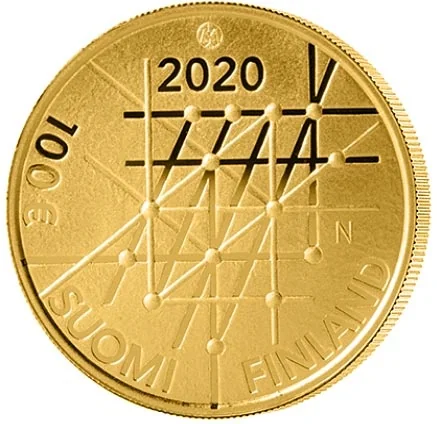
Obverse
Description:
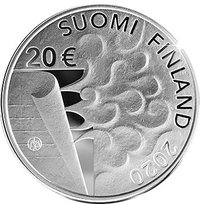
Symbolizing the university's close ties to civil society.
Inscription:
100 €
2020
SUOMI FINLAND
2020
SUOMI FINLAND
Translation:
100 €
2020
SUOMI FINLAND
2020
SUOMI FINLAND
Script: Latin
Designer: Petri Neuvonen
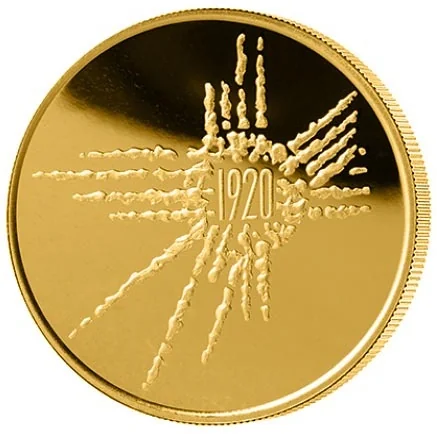
Reverse
Edge
Reeded
Categories
| Education |
Mints
| Name | Mark |
|---|---|
| Lithuanian Mint | — |
Mintings
| Year | Mint Mark | Mintage | Quality | Collection |
|---|---|---|---|---|
| 2020 | — | 1,920 | Proof |
Historical background
In 2020, Finland, as a member of the Eurozone, operated under the common European currency, the euro (€). The monetary policy for the country was therefore set by the European Central Bank (ECB), not by a national central bank. The year was dominated by the unprecedented economic shock of the COVID-19 pandemic, which led to a severe but short-lived recession. In response, the ECB enacted aggressive monetary stimulus measures, including maintaining historically low key interest rates and significantly expanding its Pandemic Emergency Purchase Programme (PEPP) to purchase private and public sector securities. This ensured ample liquidity and favourable borrowing conditions, which were crucial for Finland's government and businesses as they rolled out extensive fiscal support packages.
The domestic currency situation was stable in terms of infrastructure and usage, with a continued strong trend towards digital and card payments, further accelerated by hygiene concerns during the pandemic. However, the euro's external value experienced volatility. Early in the year, the euro faced pressure as a global "safe-haven" rush strengthened the US dollar. Later, as EU leaders agreed on a landmark recovery fund, the euro gained considerable strength against the dollar, reaching a two-year high by the end of 2020. This appreciation had mixed effects, potentially making Finnish exports slightly less competitive while reducing the cost of imports.
Finland's unique position within the Eurozone was also highlighted by ongoing domestic discussions about the pros and cons of the common currency. The euro was widely seen as providing critical stability and access to shared financial firepower during the crisis, insulating the country from potential speculative attacks on a national currency. Yet, some debate persisted regarding the loss of independent monetary policy tools, especially as the ECB's one-size-fits-all approach sometimes differed from Finland's specific cyclical needs. Overall, in 2020, the euro provided a stable transactional framework for Finland, while its management at the European level was a key part of the continent's crisis response.
The domestic currency situation was stable in terms of infrastructure and usage, with a continued strong trend towards digital and card payments, further accelerated by hygiene concerns during the pandemic. However, the euro's external value experienced volatility. Early in the year, the euro faced pressure as a global "safe-haven" rush strengthened the US dollar. Later, as EU leaders agreed on a landmark recovery fund, the euro gained considerable strength against the dollar, reaching a two-year high by the end of 2020. This appreciation had mixed effects, potentially making Finnish exports slightly less competitive while reducing the cost of imports.
Finland's unique position within the Eurozone was also highlighted by ongoing domestic discussions about the pros and cons of the common currency. The euro was widely seen as providing critical stability and access to shared financial firepower during the crisis, insulating the country from potential speculative attacks on a national currency. Yet, some debate persisted regarding the loss of independent monetary policy tools, especially as the ECB's one-size-fits-all approach sometimes differed from Finland's specific cyclical needs. Overall, in 2020, the euro provided a stable transactional framework for Finland, while its management at the European level was a key part of the continent's crisis response.

✨ Legendary