

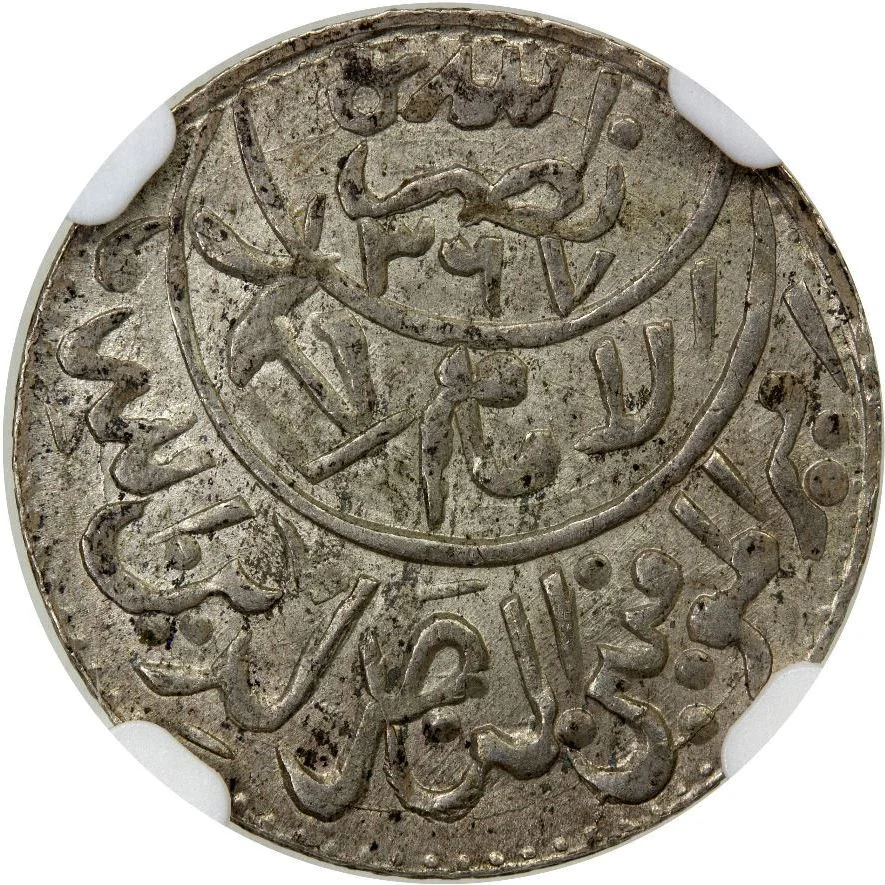
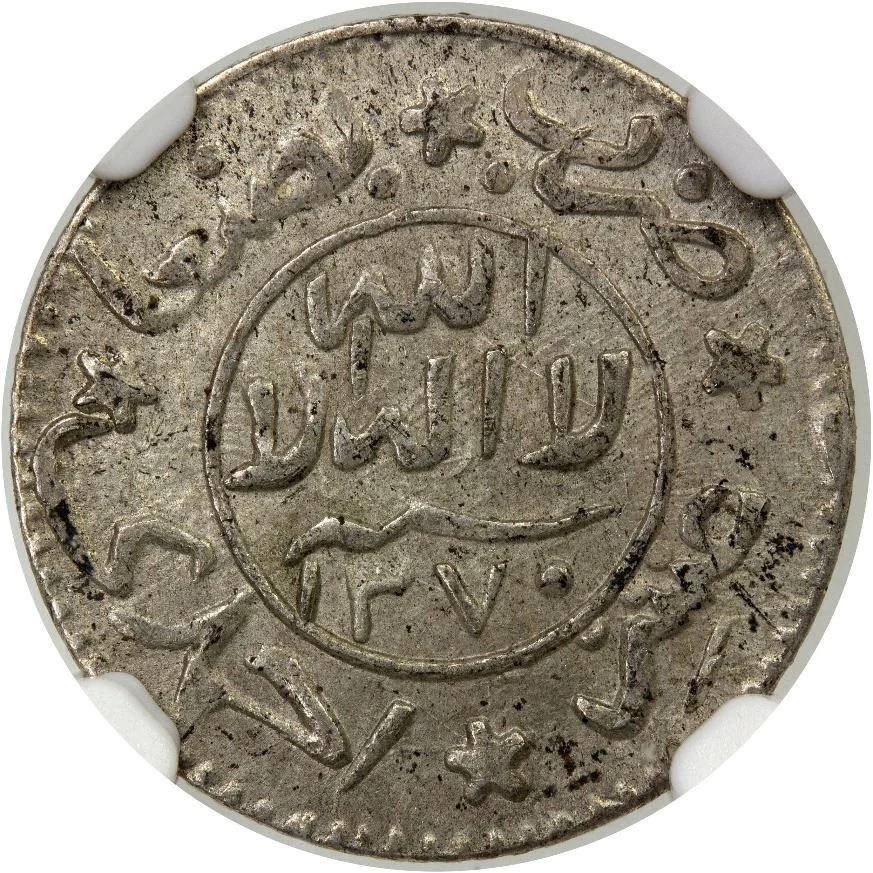
⅒ rial – Mutawakkilite Kingdom
Add to wishlist
Yemen
Context
Year: 1951
Islamic (Hijri) Year:: 1370
Country: Yemen
Issuer: Mutawakkilite Kingdom
Ruler: Ahmad bin Yahya
Currency:
(1918—1974)
Demonetized: Yes
References
Y: #
Numista: #142788
Obverse
Description:
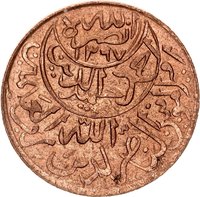
Crescent below AH1367 accession date.
Script: Arabic
Reverse
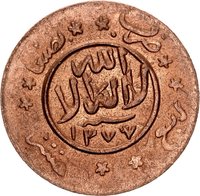
Script: Arabic
Edge
Mintings
| Year | Mint Mark | Mintage | Quality | Collection |
|---|---|---|---|---|
| 1951 | — | — |
Historical background
In 1951, the Mutawakkilite Kingdom of Yemen remained one of the most isolated and economically underdeveloped states in the world, with a currency system that reflected its medieval social structure and limited engagement with the global economy. The primary currency in circulation was the Yemeni Riyal, a large, silver coin first minted in the early 20th century, often referred to externally as the "Maria Theresa thaler" due to its use of that iconic design. This physical silver coinage was the backbone of high-value transactions and state treasury holdings, embodying a traditional, commodity-based monetary system resistant to paper money, which was viewed with deep suspicion by both the Imamic government and the populace.
Alongside the silver riyal, a complex system of local coinage persisted. Lower-value transactions were conducted using copper and bronze coins like the Bogache and Halala, which suffered from inconsistent minting and regional variations. Crucially, there was no central bank or modern financial institution; currency was issued directly by the royal treasury under Imam Ahmad bin Yahya. The kingdom had no paper currency of its own, and foreign banknotes were virtually absent from daily life. This reliance on heavy, physical specie severely constrained commercial activity and made the state treasury vulnerable to fluctuations in the global price of silver.
The currency situation was further complicated by the kingdom's strict isolationism and the Imam's deliberate policy of limiting foreign economic influence. While the silver riyal was stable in terms of its intrinsic metal value, the lack of a fractional paper system and modern banking infrastructure stifled economic development and complicated both internal trade and limited external commerce, which was often conducted through barter or foreign coins in coastal areas like Aden. Consequently, in 1951, Yemen's monetary landscape was an anachronism, representing a pre-modern economy on the cusp of unavoidable, though still resisted, change.
Alongside the silver riyal, a complex system of local coinage persisted. Lower-value transactions were conducted using copper and bronze coins like the Bogache and Halala, which suffered from inconsistent minting and regional variations. Crucially, there was no central bank or modern financial institution; currency was issued directly by the royal treasury under Imam Ahmad bin Yahya. The kingdom had no paper currency of its own, and foreign banknotes were virtually absent from daily life. This reliance on heavy, physical specie severely constrained commercial activity and made the state treasury vulnerable to fluctuations in the global price of silver.
The currency situation was further complicated by the kingdom's strict isolationism and the Imam's deliberate policy of limiting foreign economic influence. While the silver riyal was stable in terms of its intrinsic metal value, the lack of a fractional paper system and modern banking infrastructure stifled economic development and complicated both internal trade and limited external commerce, which was often conducted through barter or foreign coins in coastal areas like Aden. Consequently, in 1951, Yemen's monetary landscape was an anachronism, representing a pre-modern economy on the cusp of unavoidable, though still resisted, change.
✨ Legendary