

5 euro (Italo Calvino) – Italy
Add to wishlist
Non-circulating coins
Commemoration: 100th anniversary of the birth of Italo Calvino
Italy
Context
Material


References
Numista: #383788
Value
Exchange value: 5 EUR
Bullion value: $40.52
Inflation-adjusted value: 5.33 EUR
Obverse
Description:
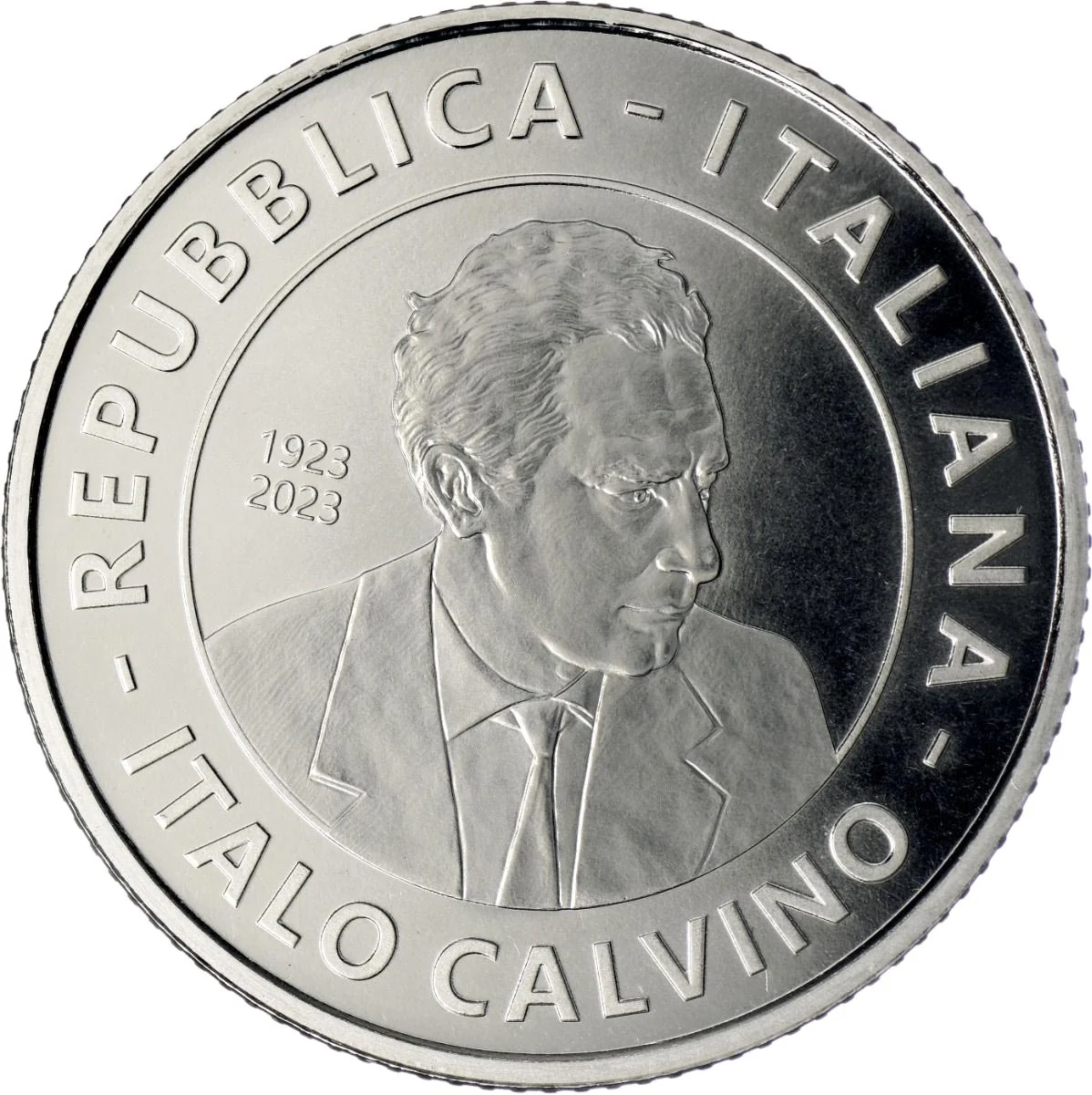
Bust of Italo Calvino facing right, encircled by an inscription.
Inscription:
- REPUBLICA - ITALIANA -
1923
2023
ITALO CALVINO
1923
2023
ITALO CALVINO
Translation:
ITALIAN REPUBLIC
1923
2023
ITALO CALVINO
1923
2023
ITALO CALVINO
Script: Latin
Language: Italian
Designer: Antonio Vecchio
Reverse
Description:
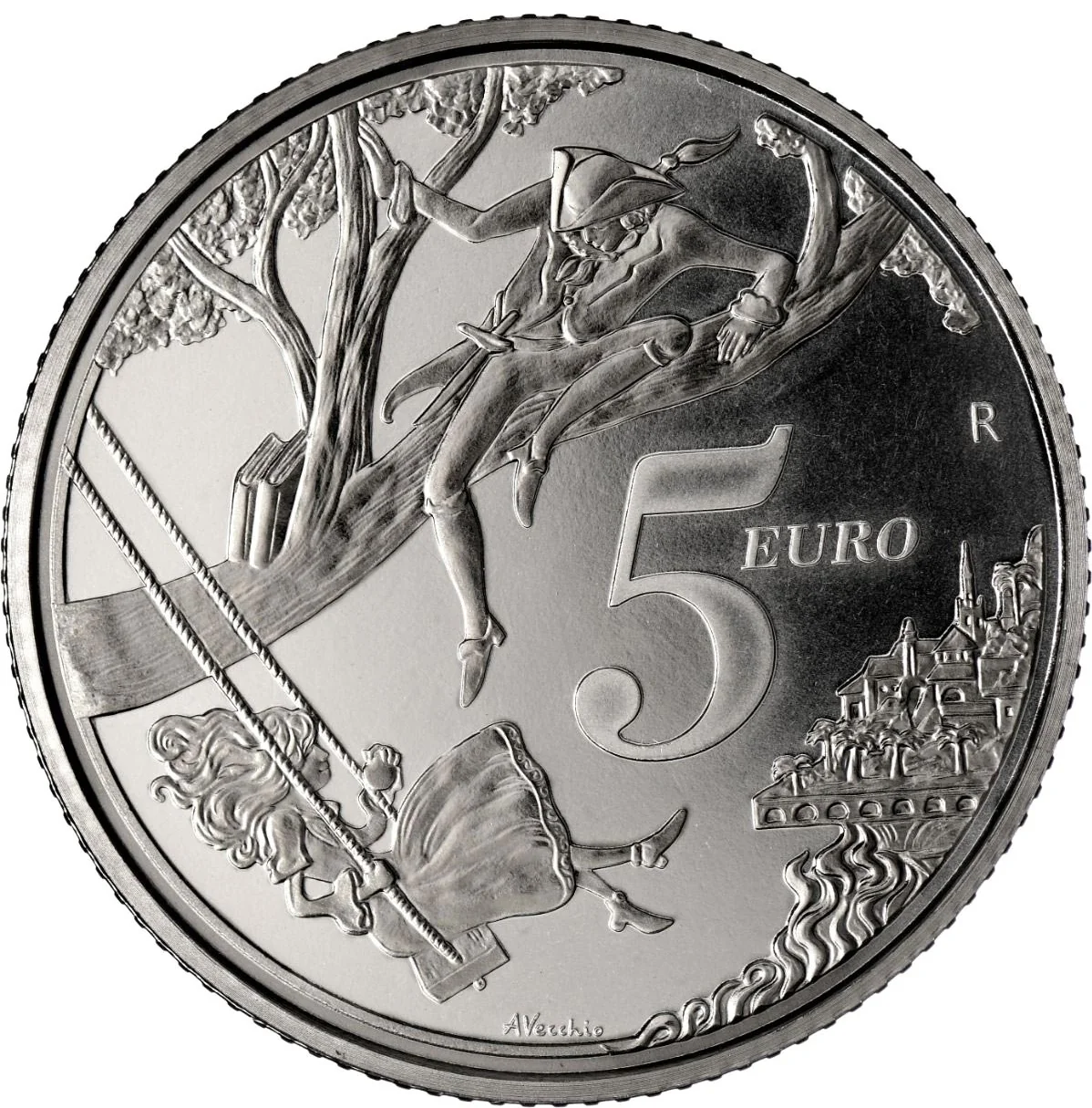
Cosimo in a tree, Violante on a swing.
Inscription:
5 EURO
R
AVecchio
R
AVecchio
Script: Latin
Designer: Antonio Vecchio
Edge
Reeded
Categories
| Object> Cold weapons |
| Art> Literature |
| Event> Birth anniversary |
| Person> Artist |
| Art> Fictional character |
| Object> Hat |
Mints
| Name | Mark |
|---|---|
| Rome | R |
Historical background
In 2023, Italy's currency situation was firmly within the framework of the Eurozone, with the euro (EUR) serving as the sole legal tender. As the third-largest economy in the Eurozone, Italy's monetary policy was set by the European Central Bank (ECB), which embarked on an aggressive tightening cycle to combat high inflation. Throughout the year, the ECB raised key interest rates multiple times, a move that strengthened the euro against other major currencies like the US dollar but also increased borrowing costs for the Italian government, businesses, and households.
Domestically, the currency dynamic was heavily influenced by Italy's significant public debt, which exceeded 140% of GDP. The rising interest rates elevated concerns about debt sustainability and widened the spread between Italian and German 10-year government bonds (the BTP-Bund spread), a key indicator of perceived risk in Italian sovereign debt. This financial pressure was managed under Prime Minister Giorgia Meloni's right-wing coalition government, which navigated between EU fiscal rules and promises of tax cuts and increased spending, all while the strong euro had a mixed impact on the export-oriented manufacturing sector.
Looking forward, the currency and economic outlook remained tightly linked to ECB policy decisions and Italy's ability to maintain fiscal discipline to access EU pandemic recovery funds. While the euro's stability provided macroeconomic benefits, the high debt burden under a regime of elevated interest rates posed a persistent challenge, making economic growth essential for stabilizing the country's financial position within the single currency area.
Domestically, the currency dynamic was heavily influenced by Italy's significant public debt, which exceeded 140% of GDP. The rising interest rates elevated concerns about debt sustainability and widened the spread between Italian and German 10-year government bonds (the BTP-Bund spread), a key indicator of perceived risk in Italian sovereign debt. This financial pressure was managed under Prime Minister Giorgia Meloni's right-wing coalition government, which navigated between EU fiscal rules and promises of tax cuts and increased spending, all while the strong euro had a mixed impact on the export-oriented manufacturing sector.
Looking forward, the currency and economic outlook remained tightly linked to ECB policy decisions and Italy's ability to maintain fiscal discipline to access EU pandemic recovery funds. While the euro's stability provided macroeconomic benefits, the high debt burden under a regime of elevated interest rates posed a persistent challenge, making economic growth essential for stabilizing the country's financial position within the single currency area.


💎 Extremely Rare