

Israel
Context
Years: 1978–1979
Issuer: Israel 
Period:
(since 1948)
Currency:
(1960—1980)
Demonetization: 31 March 1984
Total mintage: 8,408,433
Material
References
KM: #Click to copy to clipboard90
Numista: #3836
Value
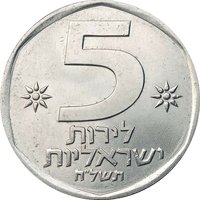
Exchange value: 5 ILP
Inflation-adjusted value: 77500.48 ILP
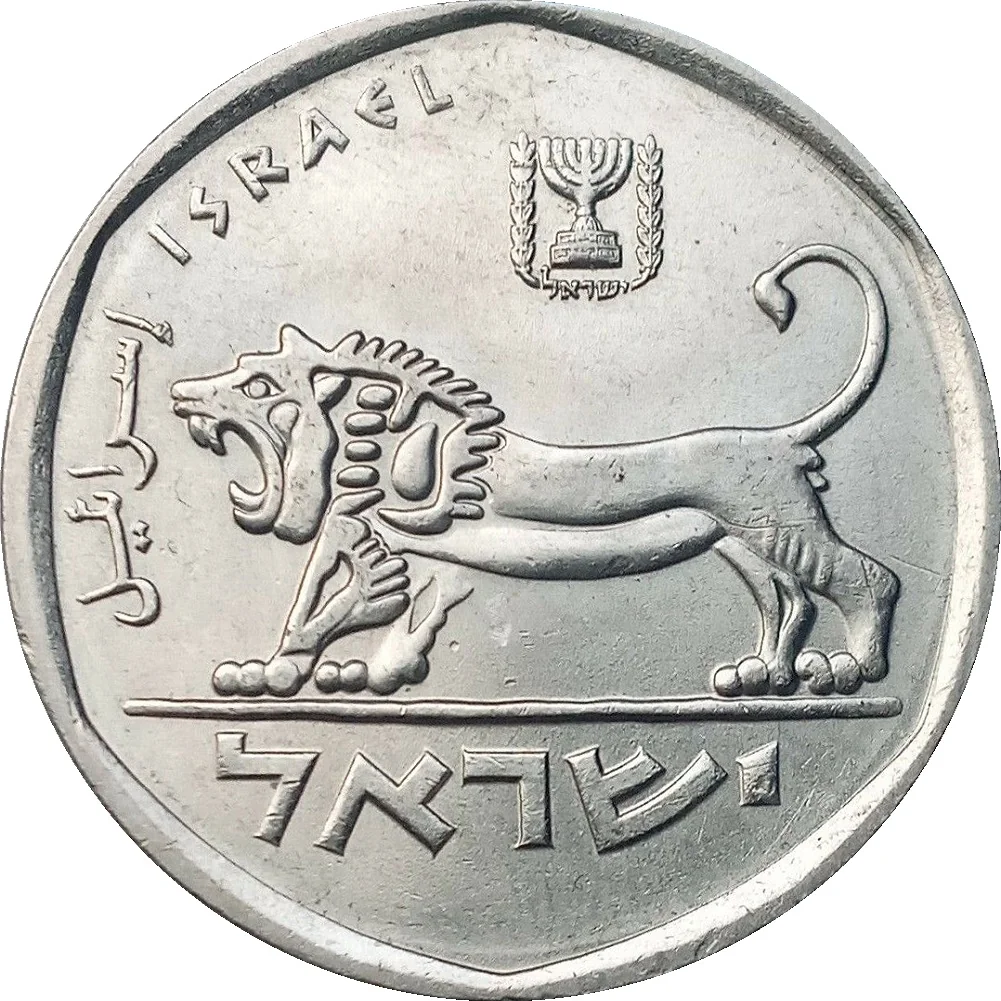
Obverse
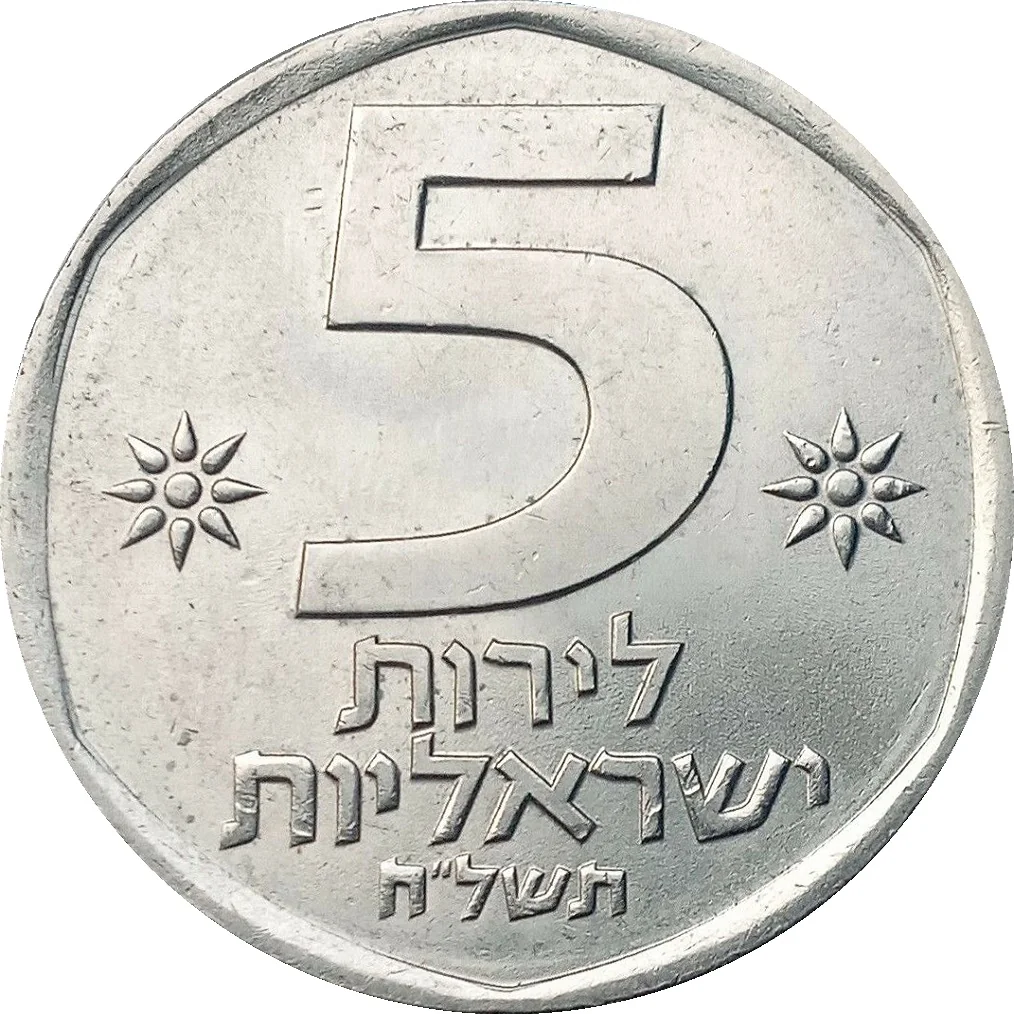
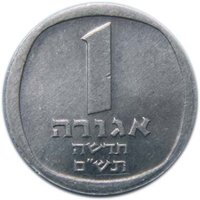
Reverse
Edge
Plain
Mints
| Name | Mark |
|---|---|
| Jerusalem | — |
| Royal Australian Mint | — |
Mintings
| Year | Mint Mark | Mintage | Quality | Collection |
|---|---|---|---|---|
| 1978 | — | 8,350,000 | ||
| 1979 | — | 58,433 |
Historical background
In 1978, Israel's currency situation was characterized by the ongoing use of the Israeli lira (often called the pound), but it was a period of significant instability and transition. The economy was grappling with the aftermath of the 1973 Yom Kippur War, which had led to massive defense spending, a slowdown in growth, and rising inflation. By the late 1970s, inflation was accelerating into triple-digit territory, severely eroding the lira's value and public confidence. The government's attempts to control prices and the exchange rate through administrative measures were largely ineffective, creating a growing gap between the official and black-market rates for foreign currency.
This inflationary crisis was driven by a combination of expansive fiscal policies, wage indexation mechanisms, and a lack of independent monetary policy under a fixed exchange rate regime. The Bank of Israel was subordinated to the government's financing needs, effectively monetizing the deficit. Consequently, the Israeli lira was undergoing rapid devaluation. In 1975, the official link to the US dollar was severed, and a "crawling peg" system was adopted, allowing for more frequent but still managed devaluations in an attempt to maintain export competitiveness without fully surrendering to market forces.
The currency turmoil of 1978 set the stage for a pivotal shift in policy. The recognition that the existing system was unsustainable led to a major liberalization plan in 1979, which included a significant devaluation and the introduction of a new, heavier currency unit—the shekel (worth 10 old pounds)—in 1980. However, the fundamental issues of fiscal discipline and monetary independence remained unaddressed, meaning the new shekel initially suffered from even higher hyperinflation. Thus, 1978 represents the peak of the old system's failures, immediately preceding the drastic but incomplete reforms that would eventually culminate in the successful 1985 Economic Stabilization Plan and the introduction of the new shekel (NIS) in 1986.
This inflationary crisis was driven by a combination of expansive fiscal policies, wage indexation mechanisms, and a lack of independent monetary policy under a fixed exchange rate regime. The Bank of Israel was subordinated to the government's financing needs, effectively monetizing the deficit. Consequently, the Israeli lira was undergoing rapid devaluation. In 1975, the official link to the US dollar was severed, and a "crawling peg" system was adopted, allowing for more frequent but still managed devaluations in an attempt to maintain export competitiveness without fully surrendering to market forces.
The currency turmoil of 1978 set the stage for a pivotal shift in policy. The recognition that the existing system was unsustainable led to a major liberalization plan in 1979, which included a significant devaluation and the introduction of a new, heavier currency unit—the shekel (worth 10 old pounds)—in 1980. However, the fundamental issues of fiscal discipline and monetary independence remained unaddressed, meaning the new shekel initially suffered from even higher hyperinflation. Thus, 1978 represents the peak of the old system's failures, immediately preceding the drastic but incomplete reforms that would eventually culminate in the successful 1985 Economic Stabilization Plan and the introduction of the new shekel (NIS) in 1986.
🌱 Very Common