

2½ lire – Papal States
Add to wishlist
Vatican City
Context
Year: 1867
Country: Vatican City
Issuer: Papal States
Ruler: Pius IX
Currency:
(1866—1870)
Demonetized: Yes
Total mintage: 257,432
Material
References
KM: #
Numista: #38293
Value
Bullion value: $25.60
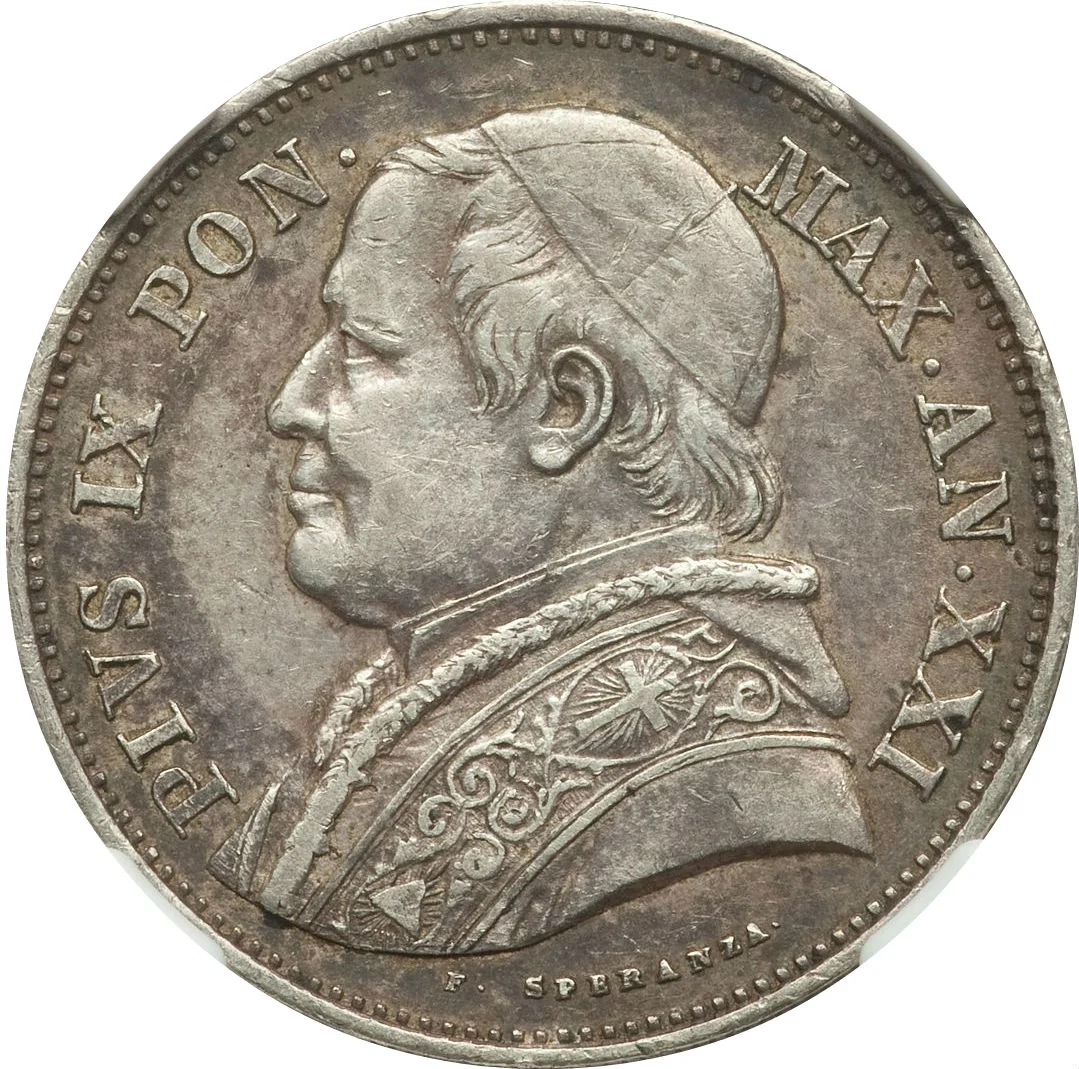
Obverse
Description:
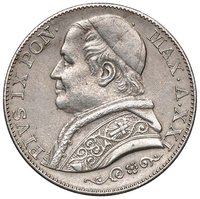
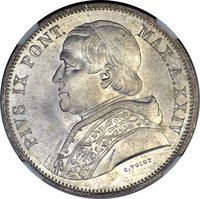
Left-facing bust.
Inscription:
PIVS • IX PON • MAX • AN • XXI
F•SPERANZA
F•SPERANZA
Translation:
Pius IX, Supreme Pontiff, in the 21st year.
F. Speranza
F. Speranza
Script: Latin
Language: Latin
Engraver: Filippo Speranza
Reverse
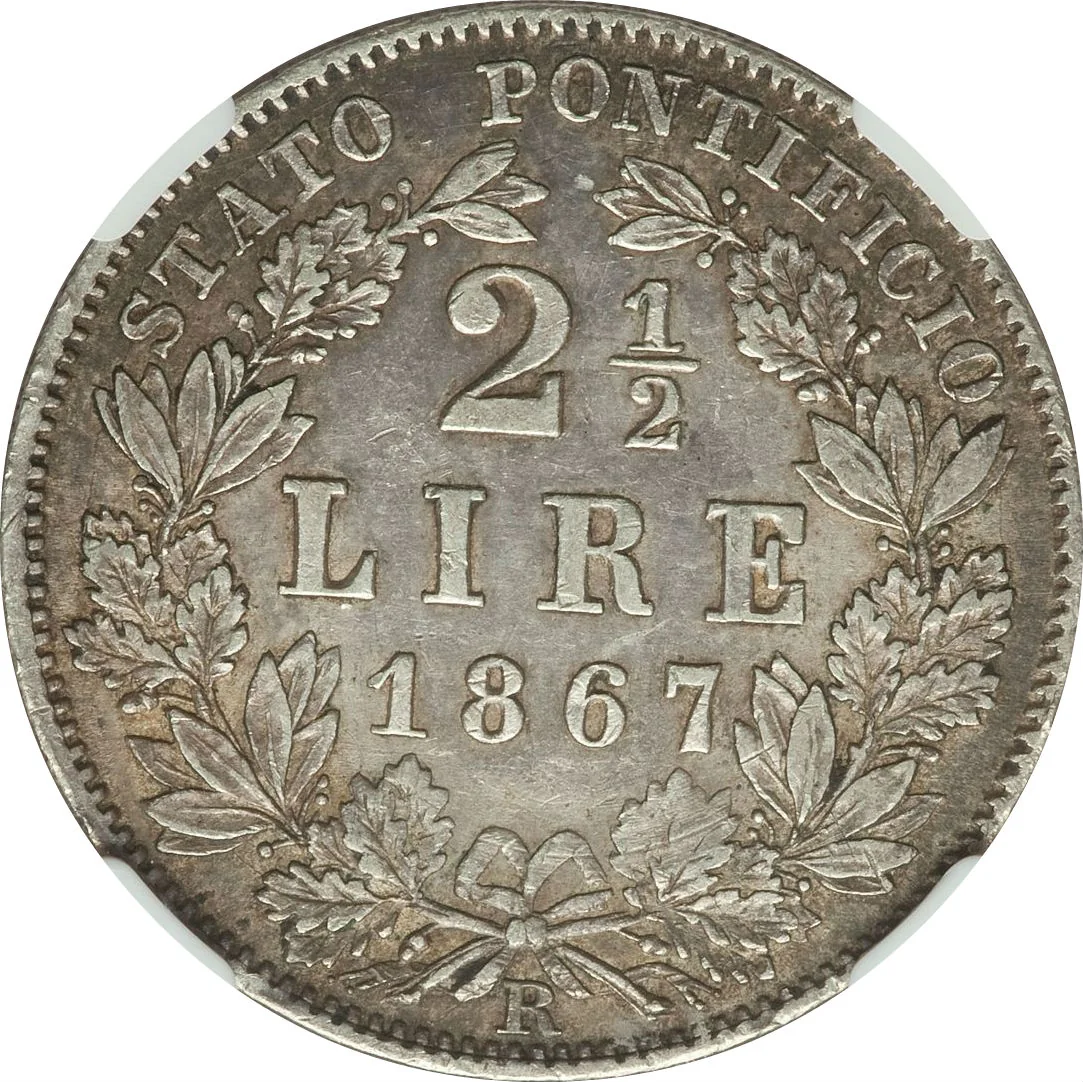
Description:
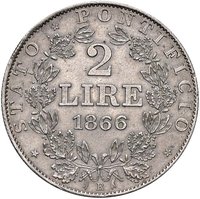
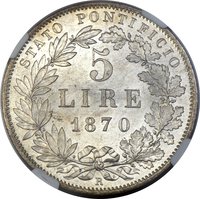
Value and date encircled.
Inscription:
STATO PONTIFICIO
2 1/2 LIRE
1867
2 1/2 LIRE
1867
Translation:
Pontifical State
2 1/2 Lire
1867
2 1/2 Lire
1867
Script: Latin
Language: Italian
Engraver: Filippo Speranza
Edge
Reeded
Mints
| Name | Mark |
|---|---|
| Rome | R |
Mintings
| Year | Mint Mark | Mintage | Quality | Collection |
|---|---|---|---|---|
| 1867 | R | 257,432 |
Historical background
In 1867, the Papal States found themselves in a precarious monetary situation, caught between tradition and the pressing realities of a modernizing Italy. The official currency remained the Papal Scudo, divided into 100 Bajocchi, a system dating back centuries. However, the scudo's value and circulation were severely undermined. The state's dire financial straits, caused by the immense cost of maintaining a foreign mercenary army to defend against the encroaching Italian unification movement, led to chronic budget deficits. This forced the papal government to repeatedly debase its coinage, reducing the silver content and eroding public trust in the currency's real value.
Consequently, a chaotic multiplicity of currencies circulated in practice. Alongside the depreciated papal coins, French francs and Italian lire were widely used, especially in commercial hubs and areas near the borders. The French franc held particular sway due to the military presence of French troops in Rome, who were propping up Pope Pius IX's temporal rule. This created a de facto dual (or triple) currency system where transactions were often conducted in these more stable foreign currencies, while the state's own scudo was treated with suspicion and often discounted. The monetary fragmentation mirrored the political fragmentation of the peninsula.
This unstable currency environment was a direct symptom of the Papal States' fading political legitimacy and economic viability. As the armies of the Kingdom of Italy, led by Victor Emmanuel II, consolidated control over most of the peninsula, the papal territory was reduced to the region around Rome (Lazio) under French protection. The monetary confusion of 1867 thus reflected a state in its final act; it was an economy operating on borrowed time and with borrowed currency. Within three years, with the withdrawal of French troops and the Capture of Rome in 1870, the Papal States would cease to exist, and the Italian lira would become the sole, unified currency.
Consequently, a chaotic multiplicity of currencies circulated in practice. Alongside the depreciated papal coins, French francs and Italian lire were widely used, especially in commercial hubs and areas near the borders. The French franc held particular sway due to the military presence of French troops in Rome, who were propping up Pope Pius IX's temporal rule. This created a de facto dual (or triple) currency system where transactions were often conducted in these more stable foreign currencies, while the state's own scudo was treated with suspicion and often discounted. The monetary fragmentation mirrored the political fragmentation of the peninsula.
This unstable currency environment was a direct symptom of the Papal States' fading political legitimacy and economic viability. As the armies of the Kingdom of Italy, led by Victor Emmanuel II, consolidated control over most of the peninsula, the papal territory was reduced to the region around Rome (Lazio) under French protection. The monetary confusion of 1867 thus reflected a state in its final act; it was an economy operating on borrowed time and with borrowed currency. Within three years, with the withdrawal of French troops and the Capture of Rome in 1870, the Papal States would cease to exist, and the Italian lira would become the sole, unified currency.
💎 Very Rare