

2 Para – Baghdad Eyalet
Iraq

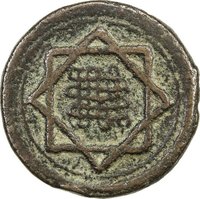
Obverse
Description:
Flower beside toughra.
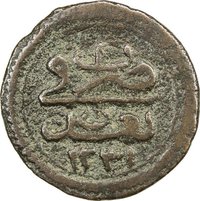
Reverse
Description:
Mint date
Inscription:
ضرب في
بغداد
١٢٣٨
بغداد
١٢٣٨
Translation:
Struck in
Baghdad
1238
Baghdad
1238
Language: Arabic
Edge
Mintings
| Year | Mint Mark | Mintage | Quality | Collection |
|---|---|---|---|---|
| 1823 | — | — | ||
| 1825 | — | — | ||
| 1826 | — | — | ||
| 1829 | — | — |
Historical background
In 1823, the currency situation in Baghdad Eyalet, a vast Ottoman province encompassing much of modern-day Iraq, was characterized by profound monetary chaos and fragmentation. The official Ottoman currency system, based on the kuruş (piastre) and the gold lira, was theoretically in place, but in practice, it competed with a bewildering array of foreign and obsolete coins. Spanish and Mexican silver dollars (riyals), Persian krans, and even old Venetian sequins circulated widely alongside heavily debased local imitations. The authority of the central Ottoman mint in Baghdad was weak, leading to inconsistent coinage standards and widespread counterfeiting.
This monetary disorder was exacerbated by the eyalet's precarious political state. Governed by the semi-autonomous Da'ud Pasha, the region was largely detached from Istanbul's direct fiscal control. Da'ud Pasha's need to finance his administration and military, particularly in the face of ongoing conflicts with Wahhabi tribes and Persian frontier tensions, led to repeated debasements of the local currency. The intrinsic silver content of coins struck in Baghdad was often significantly lower than their nominal value, undermining public trust and disrupting commerce. Merchants and traders in the bustling bazaars had to be expert money-changers, weighing and assessing the quality of each coin in every transaction.
Consequently, the economy of Baghdad Eyalet operated on a de facto silver standard by weight, rather than by official coinage. Major transactions, especially in long-distance trade, often relied on the more reliable foreign silver dollars or were conducted through barter and bills of exchange (suftaja). This unstable environment stifled economic growth, inflated prices, and created a constant source of grievance among soldiers paid in debased coin and merchants engaged in regional trade. The currency crisis of 1823 was thus a direct symptom of the erosion of central Ottoman power and the fiscal strains of local rule, contributing to the province's overall administrative and economic decline in the early 19th century.
This monetary disorder was exacerbated by the eyalet's precarious political state. Governed by the semi-autonomous Da'ud Pasha, the region was largely detached from Istanbul's direct fiscal control. Da'ud Pasha's need to finance his administration and military, particularly in the face of ongoing conflicts with Wahhabi tribes and Persian frontier tensions, led to repeated debasements of the local currency. The intrinsic silver content of coins struck in Baghdad was often significantly lower than their nominal value, undermining public trust and disrupting commerce. Merchants and traders in the bustling bazaars had to be expert money-changers, weighing and assessing the quality of each coin in every transaction.
Consequently, the economy of Baghdad Eyalet operated on a de facto silver standard by weight, rather than by official coinage. Major transactions, especially in long-distance trade, often relied on the more reliable foreign silver dollars or were conducted through barter and bills of exchange (suftaja). This unstable environment stifled economic growth, inflated prices, and created a constant source of grievance among soldiers paid in debased coin and merchants engaged in regional trade. The currency crisis of 1823 was thus a direct symptom of the erosion of central Ottoman power and the fiscal strains of local rule, contributing to the province's overall administrative and economic decline in the early 19th century.

✨ Legendary