

Haiti
Context
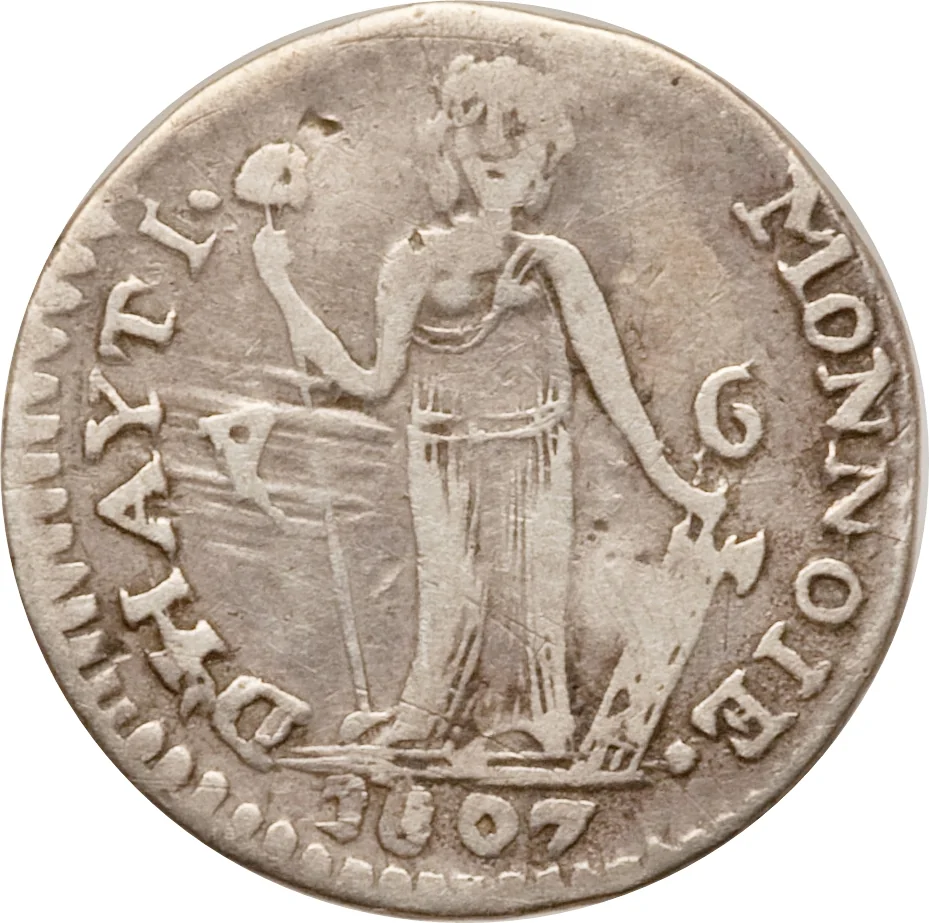
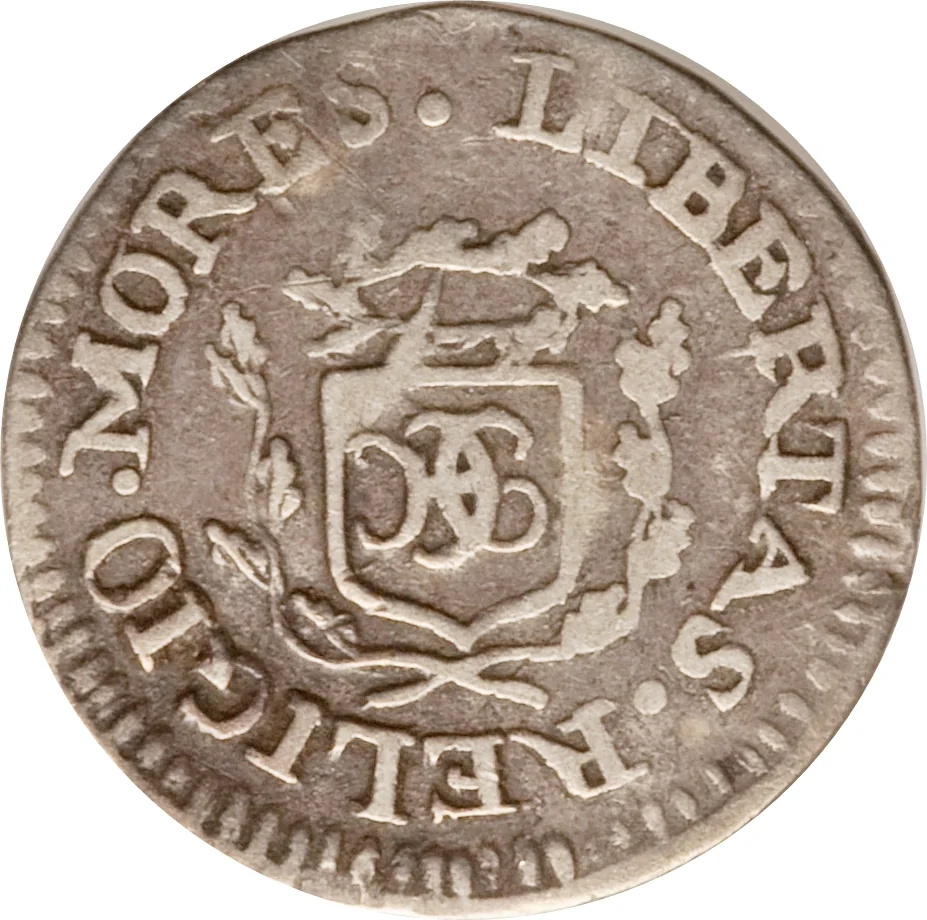
Years: 1807–1809
Issuer: Haiti 
Ruler: Henry Christopher
Currency:
(1804—1813)
Subdivision: 7 Sols 6 Deniers = ½ Escalin
Demonetized: Yes
Material
Diameter: 21 mm
Weight: 3.1 g
Silver weight: 3.10 g
Thickness: 1 mm
Shape: Round
Composition: Silver
Standard: Gold tenth ounce
Magnetic: No
Alignment: Coin alignment
flip
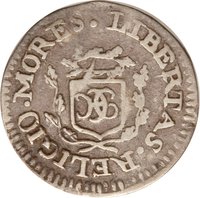
References
KM: #Click to copy to clipboard3
Numista: #38027
Value
Bullion value: $8.98
Obverse
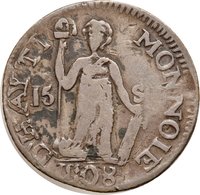
Reverse
Edge
Plain
Mintings
| Year | Mint Mark | Mintage | Quality | Collection |
|---|---|---|---|---|
| 1807 | — | — | ||
| 1808 | — | — | ||
| 1809 | — | — |
Historical background
In 1807, Haiti was a nation divided, both politically and monetarily. Following the assassination of Emperor Jacques I (Dessalines) in 1806, the country split into two rival states: the northern State of Haiti, ruled by Henri Christophe (who would proclaim himself King Henry I in 1811), and the southern Republic of Haiti, led by Alexandre Pétion. This political fracture directly resulted in a fragmented and chaotic currency situation, as each regime issued its own money to finance its government and army, leading to competing currencies within the same island.
The primary currency in circulation was still the colonial-era gourde, but its value and physical form were unstable. Both Christophe and Pétion, lacking sufficient silver and gold, resorted to issuing large quantities of paper money and debased coinage. This led to severe inflation and a deep loss of public confidence. In the North, Christophe enforced a stricter system to back his currency, often tying it to agricultural production, while Pétion in the South, funding a land redistribution program, saw his paper money depreciate more rapidly. The economy was further strained by a crippling international embargo imposed by France and other nations, which isolated Haiti and made it difficult to acquire precious metals for minting sound coinage.
Consequently, the monetary landscape of Haiti in 1807 was one of profound uncertainty. The simultaneous circulation of different paper issues and suspect coins from two hostile governments created confusion in commerce and hindered economic recovery. This instability reflected the broader struggle to build a unified nation and a sustainable post-revolution economy, as the foundational challenge of establishing a trusted and uniform national currency remained unresolved amidst civil war and international isolation.
The primary currency in circulation was still the colonial-era gourde, but its value and physical form were unstable. Both Christophe and Pétion, lacking sufficient silver and gold, resorted to issuing large quantities of paper money and debased coinage. This led to severe inflation and a deep loss of public confidence. In the North, Christophe enforced a stricter system to back his currency, often tying it to agricultural production, while Pétion in the South, funding a land redistribution program, saw his paper money depreciate more rapidly. The economy was further strained by a crippling international embargo imposed by France and other nations, which isolated Haiti and made it difficult to acquire precious metals for minting sound coinage.
Consequently, the monetary landscape of Haiti in 1807 was one of profound uncertainty. The simultaneous circulation of different paper issues and suspect coins from two hostile governments created confusion in commerce and hindered economic recovery. This instability reflected the broader struggle to build a unified nation and a sustainable post-revolution economy, as the foundational challenge of establishing a trusted and uniform national currency remained unresolved amidst civil war and international isolation.
✨ Legendary