

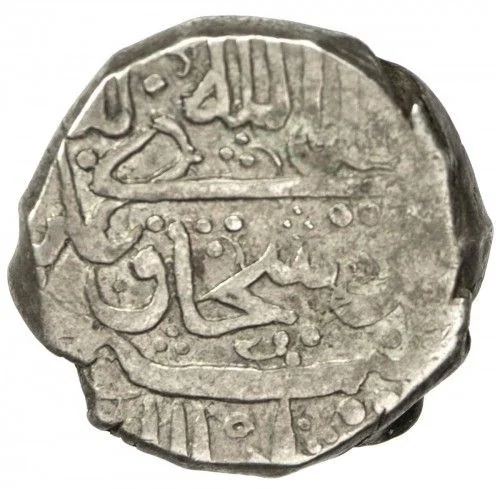
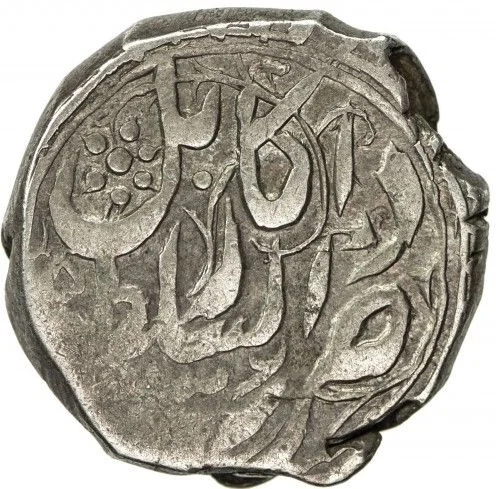
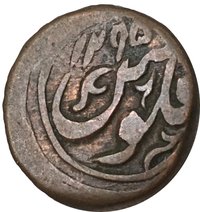
1 Rupee – City of Balkh
Afghanistan
Context
Material
Weight: 9.24 g
Silver weight: 9.24 g
Shape: Irregular round
Composition: Silver
Magnetic: No
Technique: Hammered
References
KM: #Click to copy to clipboard549
Numista: #380009
Value
Bullion value: $25.74
Obverse
Reverse
Edge
Plain.
Mints
| Name | Mark |
|---|---|
| Kabul | — |
Mintings
| Year | Mint Mark | Mintage | Quality | Collection |
|---|---|---|---|---|
| 1888 | — | — | ||
| 1889 | — | — |
Historical background
In 1888, the city of Balkh, a historic trade hub in northern Afghanistan, operated under a complex and fragmented monetary system characteristic of a frontier zone between empires. The region was nominally under the control of the Afghan Amir, Abdur Rahman Khan, who was in the process of forcibly consolidating the modern Afghan state. However, Balkh's position on the Silk Road and its recent history of political upheaval meant that multiple currencies circulated simultaneously. The primary official currency was the Afghan rupee, minted by the Amir in Kabul, but its reach and authority in this distant province were still being solidified through often-brutal campaigns of centralization.
Alongside the Afghan rupee, the most significant circulating medium was the Russian silver ruble and its subsidiary coins. This reflected the growing economic and political influence of the Russian Empire to the north, which was actively advancing into Central Asia. Furthermore, older coins from the Bukharan Emirate and even remnants of Persian (Qajar) coinage remained in use for local and regional trade, their value determined by weight and silver content rather than royal decree. The British Indian rupee, dominant in the south and east of Afghanistan, had less penetration here, making the monetary landscape a clear indicator of Balkh's orientation toward Central Asian, rather than South Asian, trade networks.
This multiplicity of coins created a challenging environment for commerce, requiring money-changers (sarraf) to play a crucial role in determining exchange rates and verifying the often-clipped or debased metal. The situation was a source of economic instability and also a point of political contention, as Abdur Rahman Khan viewed the circulation of foreign currency, particularly Russian, as an erosion of his sovereignty. Therefore, the currency situation in Balkh in 1888 was not merely an economic issue but a tangible manifestation of the city’s precarious position caught between a consolidating Afghan monarchy and expanding European imperial powers.
Alongside the Afghan rupee, the most significant circulating medium was the Russian silver ruble and its subsidiary coins. This reflected the growing economic and political influence of the Russian Empire to the north, which was actively advancing into Central Asia. Furthermore, older coins from the Bukharan Emirate and even remnants of Persian (Qajar) coinage remained in use for local and regional trade, their value determined by weight and silver content rather than royal decree. The British Indian rupee, dominant in the south and east of Afghanistan, had less penetration here, making the monetary landscape a clear indicator of Balkh's orientation toward Central Asian, rather than South Asian, trade networks.
This multiplicity of coins created a challenging environment for commerce, requiring money-changers (sarraf) to play a crucial role in determining exchange rates and verifying the often-clipped or debased metal. The situation was a source of economic instability and also a point of political contention, as Abdur Rahman Khan viewed the circulation of foreign currency, particularly Russian, as an erosion of his sovereignty. Therefore, the currency situation in Balkh in 1888 was not merely an economic issue but a tangible manifestation of the city’s precarious position caught between a consolidating Afghan monarchy and expanding European imperial powers.
✨ Legendary