
Logo Title
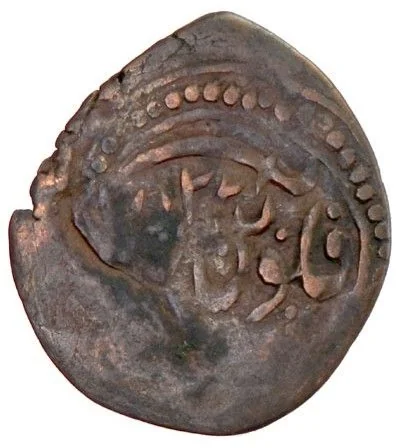
obverse
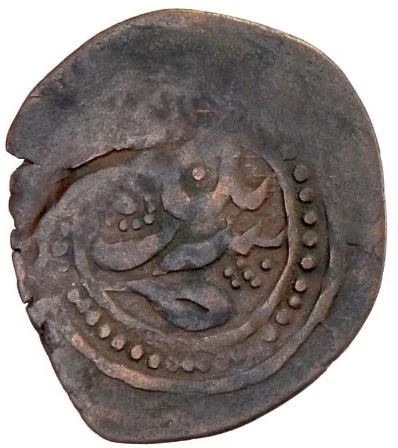
reverse
Stephen Album Rare Coins

1 Falus – City of Sar-i Pul

Afghanistan
Context
Year: 1855
Islamic (Hijri) Year: 1271
Country: Afghanistan Country flag
Currency:
(1747—1891)
Demonetized: Yes
Material
Weight: 2.66 g
Composition: Copper
Magnetic: No
Technique: Hammered
References
KM: #Click to copy to clipboard98
Numista: #379819

Obverse

Reverse

Edge

Plain.

Mintings

YearMint MarkMintageQualityCollection
1855

Historical background

In 1855, Sar-i Pul, a strategic trading town in northern Afghanistan, was enmeshed in a complex and fragmented monetary landscape typical of the region. The city was not under the control of a single, centralized Afghan state; the Barakzai dynasty in Kabul was still consolidating power amidst internal rivalries and British influence following the First Anglo-Afghan War (1839–1842). Consequently, the currency in circulation was a heterogeneous mix, reflecting both local authority and broader economic currents. The primary coins were silver rupees and copper paisa, but these were issued by various competing mints in regional centers like Kabul, Herat, Bukhara, and even Peshawar, leading to a lack of standardization in weight and purity.

This multiplicity of coinage created significant challenges for trade, Sar-i Pul's economic lifeblood as a node on routes connecting Central Asia with South Asia. Merchants and money-changers (sarraf) were essential figures, constantly assessing and exchanging coins based on their metallic content and the perceived stability of the issuing authority. Alongside these official issues, older Mughal and Durrani coins remained in circulation, and barter was still a common practice, especially in rural exchanges. The value of money was inherently unstable, tied directly to the volatile political fortunes of local khans and the fluctuating supply of silver from mines and trade.

Therefore, the monetary situation in Sar-i Pul in 1855 was one of pragmatic disorder. There was no unified "currency" but rather a market-driven ecosystem of metal. The authority behind a coin—whether the Kabul ruler Dost Mohammad Khan, the Khan of Bukhara, or a local chieftain—directly influenced its acceptance and value. This system functioned adequately for local and regional commerce but was fraught with inefficiency and risk, mirroring the political fragmentation of Afghanistan itself during this turbulent period before the consolidation of the modern Afghan state.
Legendary