

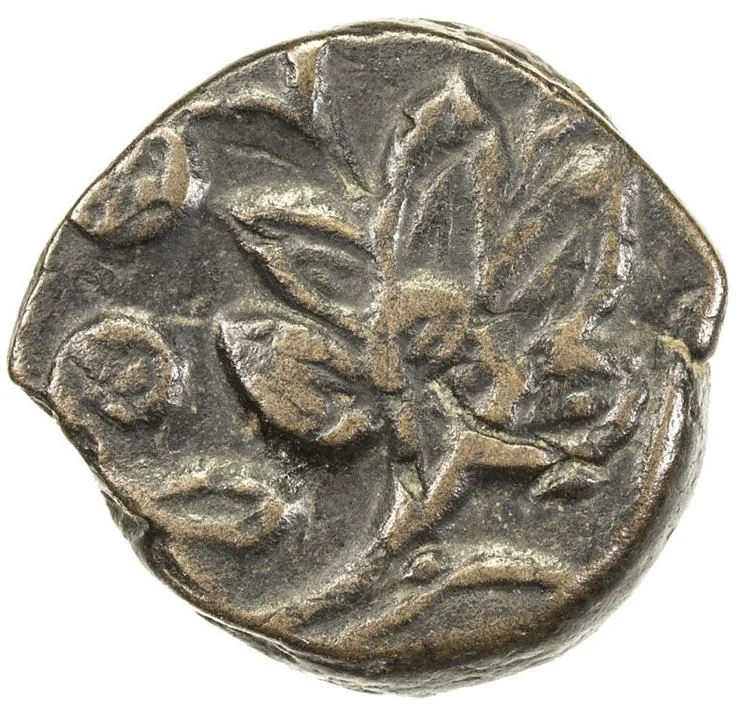
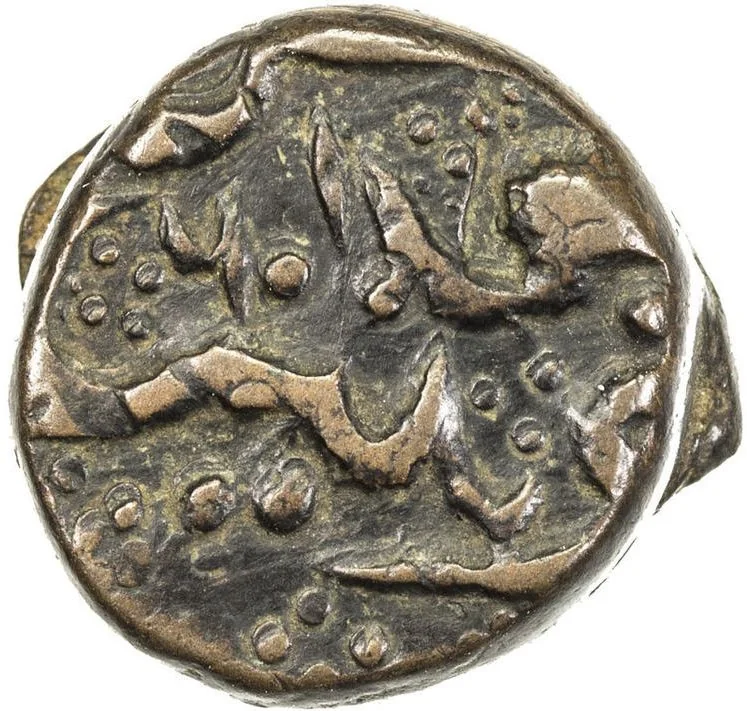
1 Falus – City of Ghaznayn
Afghanistan
Context
Years: 1885–1889
Country: Afghanistan 
Issuer: City of Ghaznayn
Currency:
(1747—1891)
Demonetized: Yes
Material
References
Numista: #379813
Obverse
Reverse
Edge
Plain.
Mintings
| Year | Mint Mark | Mintage | Quality | Collection |
|---|---|---|---|---|
| — | — | — |
Historical background
In 1885, the City of Ghaznayn, a strategic trading hub nestled in the foothills of Central Asia, presented a complex and chaotic monetary landscape. Officially part of the Emirate of Afghanistan, the city's bazaars were a cacophony of competing currencies, reflecting its history as a crossroads of empires. The most trusted medium was the British Indian rupee, its silver content prized by merchants engaged in trade with the Raj to the south. Alongside it circulated the Kabuli rupee of the ruling Amir Abdur Rahman Khan, older and more debased coins from the Durrani era, and even Persian krans and Russian rubles from northern trade routes. This proliferation created a constant, mentally taxing business of assessing weight, purity, and fluctuating exchange rates.
The root of this disorder lay in the weak central authority of the Afghan state, which struggled to impose its monetary will on a distant, commercially vibrant city. While Amir Abdur Rahman was actively working to consolidate power and standardize the currency in Kabul, his reforms seeped slowly into Ghaznayn. Consequently, the city operated on a de facto silver standard, where the intrinsic metal value of a coin mattered more than the sovereign stamp upon it. Money changers (sarrafs) wielded significant power, their tables laden with scales and cutting tools to clip and weigh suspect coins, taking a profit from every transaction and further eroding public trust in any unified system.
This monetary fragmentation was more than an inconvenience; it stifled larger economic development and symbolized the city’s precarious position. Long-distance merchants factored exchange losses into their prices, while local artisans and farmers faced uncertainty in their daily dealings. The situation underscored the tension between Ghaznayn’s integrated role in regional commerce and its place within a nascent nation-state. For the city's inhabitants, wealth was not simply counted, but constantly evaluated, weighed, and negotiated—a daily reminder of the unstable transition between medieval caravan stop and modern administrative center.
The root of this disorder lay in the weak central authority of the Afghan state, which struggled to impose its monetary will on a distant, commercially vibrant city. While Amir Abdur Rahman was actively working to consolidate power and standardize the currency in Kabul, his reforms seeped slowly into Ghaznayn. Consequently, the city operated on a de facto silver standard, where the intrinsic metal value of a coin mattered more than the sovereign stamp upon it. Money changers (sarrafs) wielded significant power, their tables laden with scales and cutting tools to clip and weigh suspect coins, taking a profit from every transaction and further eroding public trust in any unified system.
This monetary fragmentation was more than an inconvenience; it stifled larger economic development and symbolized the city’s precarious position. Long-distance merchants factored exchange losses into their prices, while local artisans and farmers faced uncertainty in their daily dealings. The situation underscored the tension between Ghaznayn’s integrated role in regional commerce and its place within a nascent nation-state. For the city's inhabitants, wealth was not simply counted, but constantly evaluated, weighed, and negotiated—a daily reminder of the unstable transition between medieval caravan stop and modern administrative center.
💎 Extremely Rare