

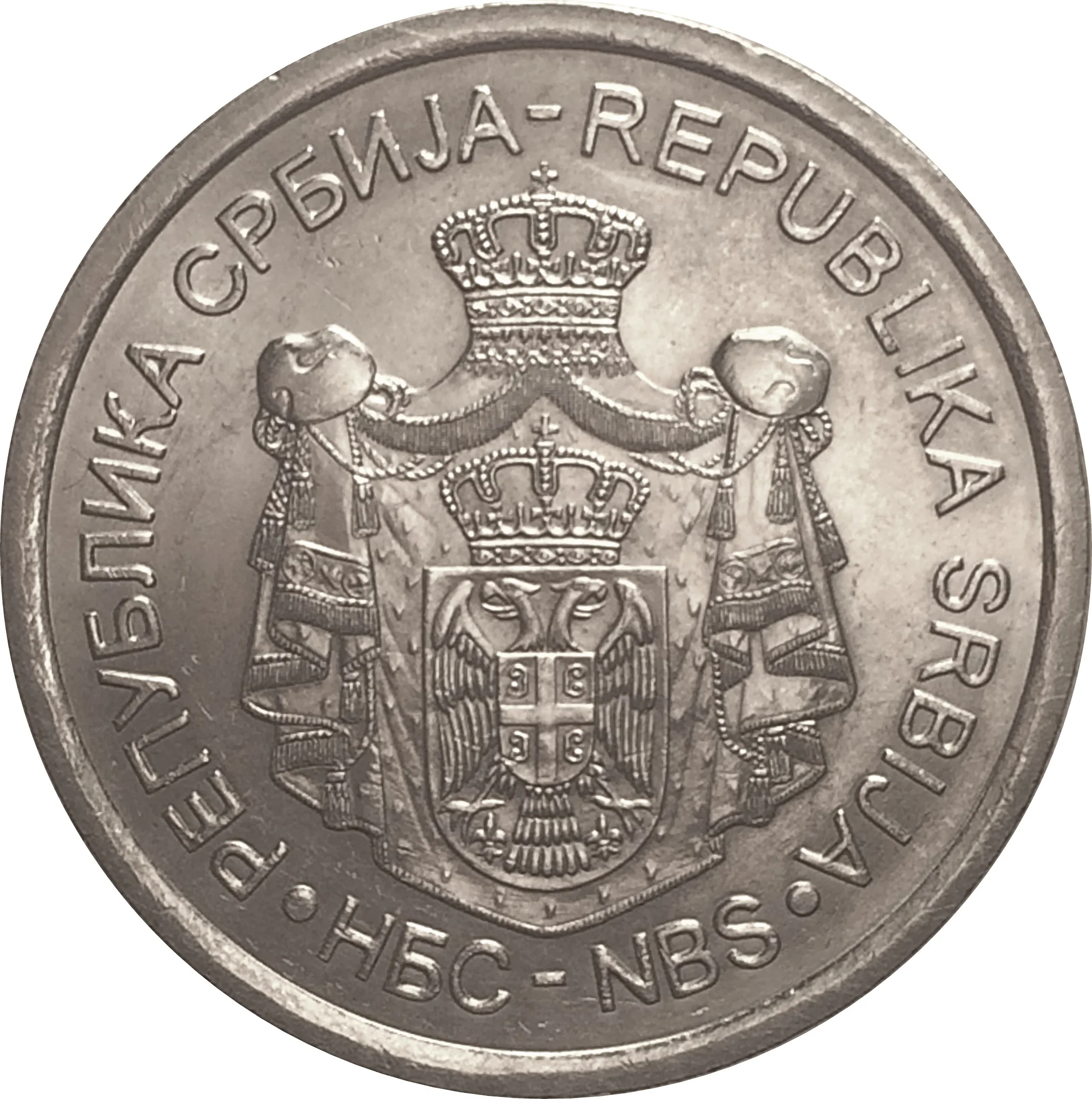
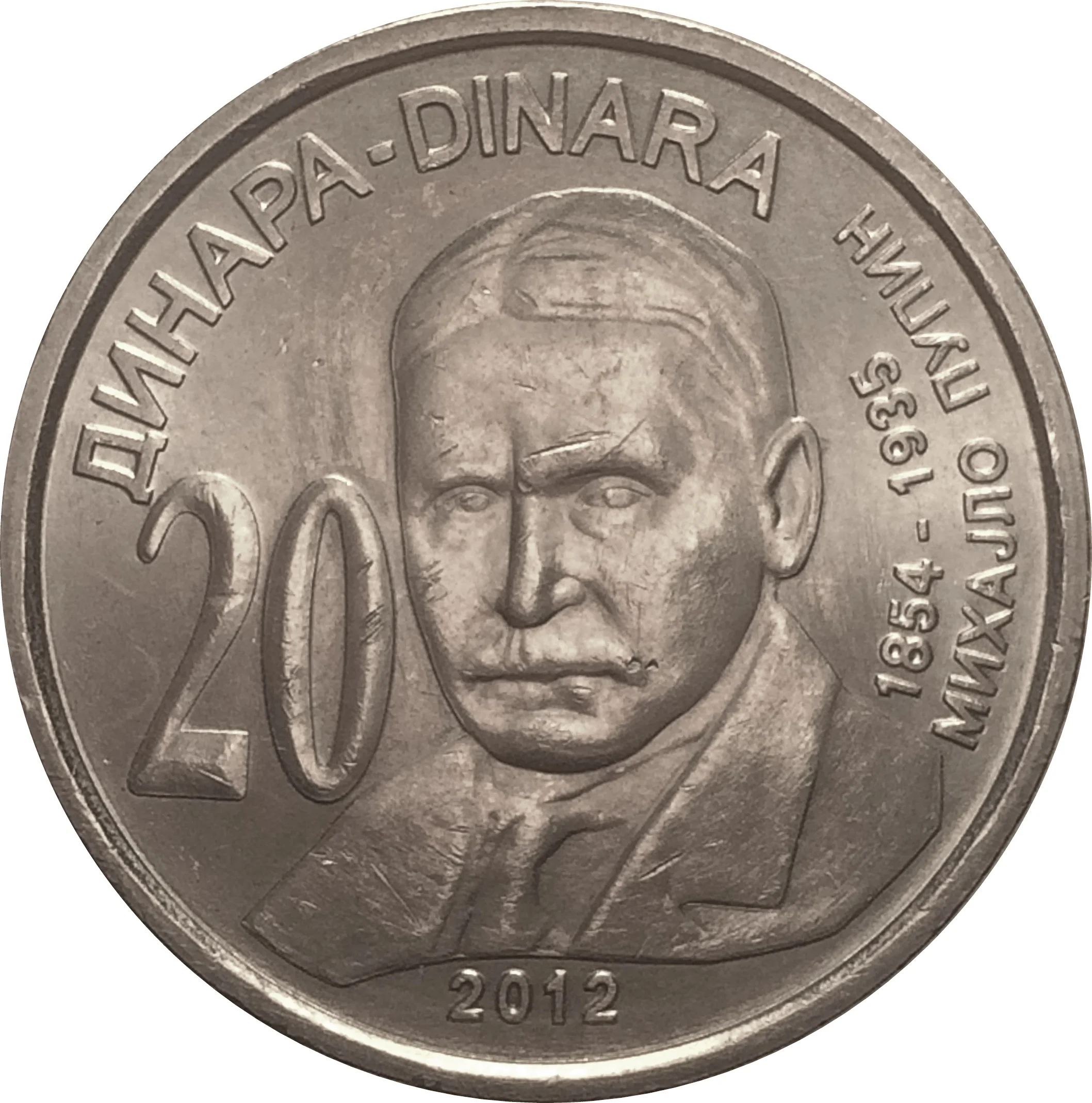
20 dinars (Pupin's John Fritz Medal) – Serbia
Add to wishlist
Circulating commemorative coins
Commemoration: 80th Anniversary of Pupin’s John Fritz Medal
Serbia
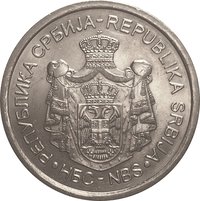
Obverse
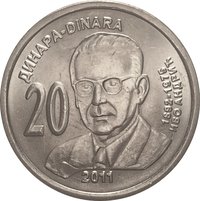
Reverse
Edge
5 reeded segments with 19 reeds each
Categories
| Mustache/Beard |
| Symbol> Crown |
| Symbols> Coat of Arms |
| Symbol> Double-headed eagle |
| Animal> Bird |
| Person> Scientist |
Mints
| Name | Mark |
|---|---|
| Belgrade | — |
Mintings
| Year | Mint Mark | Mintage | Quality | Collection |
|---|---|---|---|---|
| 2012 | — | — |
Historical background
In 2012, Serbia's currency situation was characterized by significant volatility and pressure on the Serbian dinar (RSD), driven by a combination of domestic economic fragility and the escalating Eurozone crisis. The country was recovering from a sharp recession in 2009 and continued to grapple with high fiscal deficits, rising public debt, and stagnant growth. As a major source of foreign direct investment and trade, the turmoil in the Eurozone directly impacted Serbia, leading to reduced capital inflows and export demand. This external shock exacerbated internal weaknesses, including political uncertainty following elections in May, causing investor caution and putting persistent downward pressure on the dinar.
The National Bank of Serbia (NBS) actively intervened in the foreign exchange market throughout the year to curb excessive volatility and prevent a disorderly depreciation. The bank utilized its foreign currency reserves, which saw a notable decline, to sell euros and prop up the dinar. Alongside interventions, the NBS employed a managed float exchange rate regime and tightened monetary policy, raising its key policy rate to defend the currency and combat inflationary pressures, which were heightened by poor agricultural harvests and administered price increases. Despite these efforts, the dinar depreciated by approximately 10% against the euro over the course of the year.
This challenging currency environment underscored deeper structural issues within the Serbian economy, such as a high level of euroization, persistent current account deficits, and the need for fiscal consolidation. The situation in 2012 set the stage for important subsequent developments, including the beginning of an IMF-backed economic reform program in 2015. The pressures of 2012 highlighted the vulnerability of the dinar to external shocks and the difficult balance the central bank had to strike between maintaining currency stability, protecting reserves, and fostering economic growth.
The National Bank of Serbia (NBS) actively intervened in the foreign exchange market throughout the year to curb excessive volatility and prevent a disorderly depreciation. The bank utilized its foreign currency reserves, which saw a notable decline, to sell euros and prop up the dinar. Alongside interventions, the NBS employed a managed float exchange rate regime and tightened monetary policy, raising its key policy rate to defend the currency and combat inflationary pressures, which were heightened by poor agricultural harvests and administered price increases. Despite these efforts, the dinar depreciated by approximately 10% against the euro over the course of the year.
This challenging currency environment underscored deeper structural issues within the Serbian economy, such as a high level of euroization, persistent current account deficits, and the need for fiscal consolidation. The situation in 2012 set the stage for important subsequent developments, including the beginning of an IMF-backed economic reform program in 2015. The pressures of 2012 highlighted the vulnerability of the dinar to external shocks and the difficult balance the central bank had to strike between maintaining currency stability, protecting reserves, and fostering economic growth.
🌱 Common