

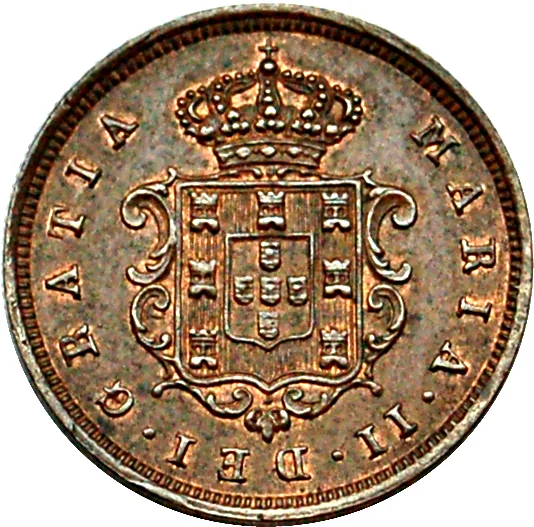
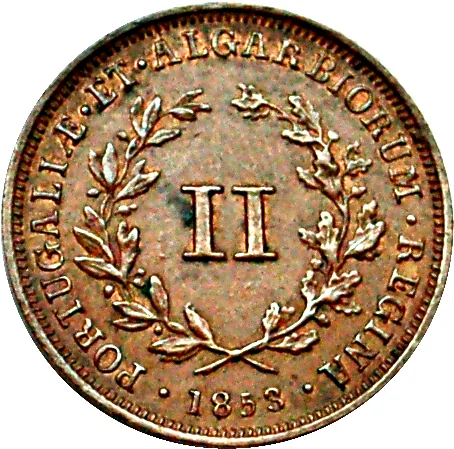
2 réis – Mozambique
Add to wishlist
Mozambique
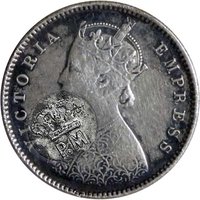
Obverse
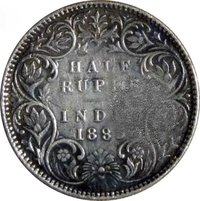
Reverse
Edge
Mintings
| Year | Mint Mark | Mintage | Quality | Collection |
|---|---|---|---|---|
| 1853 | — | 100,000 |
Historical background
In 1853, Mozambique was not a unified political entity but a collection of coastal settlements and vast interior territories under Portuguese influence, with its economy deeply integrated into the wider Indian Ocean and transatlantic trade networks. The official currency was the Portuguese real, but its circulation was largely confined to administrative centers like the Island of Mozambique, the colonial capital. The Portuguese monetary system was chronically weak in the colony, suffering from a severe shortage of minted coinage, which stifled formal commercial transactions and state revenue collection.
The dominant mediums of exchange across most of the territory were instead commodity currencies and foreign coins. The most important was the machira, a type of cotton cloth produced locally in the Zambezi valley, which served as a widespread unit of account and payment, especially for taxing and paying workers. Alongside cloth, other traditional currencies like beads and shells circulated. Crucially, gold and silver coins from other empires, particularly Spanish and Mexican silver dollars (pesos or patacas) and British sovereigns, were heavily used in port cities and long-distance trade. These foreign coins were preferred for their reliable silver and gold content, facilitating trade with Arab, Indian, and European merchants.
This fragmented monetary landscape reflected Mozambique’s role as a periphery of both the Portuguese empire and global commerce. The scarcity of Portuguese currency underscored Lisbon’s limited effective control and investment in the region. The reliance on machiras and foreign specie highlights how the local economy functioned through adaptable, indigenous systems and was more responsive to the practical demands of regional slave, ivory, and later cash-crop trades than to decrees from a distant European metropole. The currency situation of 1853 thus captures a colonial administration struggling to impose monetary order on a complex and autonomous commercial sphere.
The dominant mediums of exchange across most of the territory were instead commodity currencies and foreign coins. The most important was the machira, a type of cotton cloth produced locally in the Zambezi valley, which served as a widespread unit of account and payment, especially for taxing and paying workers. Alongside cloth, other traditional currencies like beads and shells circulated. Crucially, gold and silver coins from other empires, particularly Spanish and Mexican silver dollars (pesos or patacas) and British sovereigns, were heavily used in port cities and long-distance trade. These foreign coins were preferred for their reliable silver and gold content, facilitating trade with Arab, Indian, and European merchants.
This fragmented monetary landscape reflected Mozambique’s role as a periphery of both the Portuguese empire and global commerce. The scarcity of Portuguese currency underscored Lisbon’s limited effective control and investment in the region. The reliance on machiras and foreign specie highlights how the local economy functioned through adaptable, indigenous systems and was more responsive to the practical demands of regional slave, ivory, and later cash-crop trades than to decrees from a distant European metropole. The currency situation of 1853 thus captures a colonial administration struggling to impose monetary order on a complex and autonomous commercial sphere.
⭐ Rare