

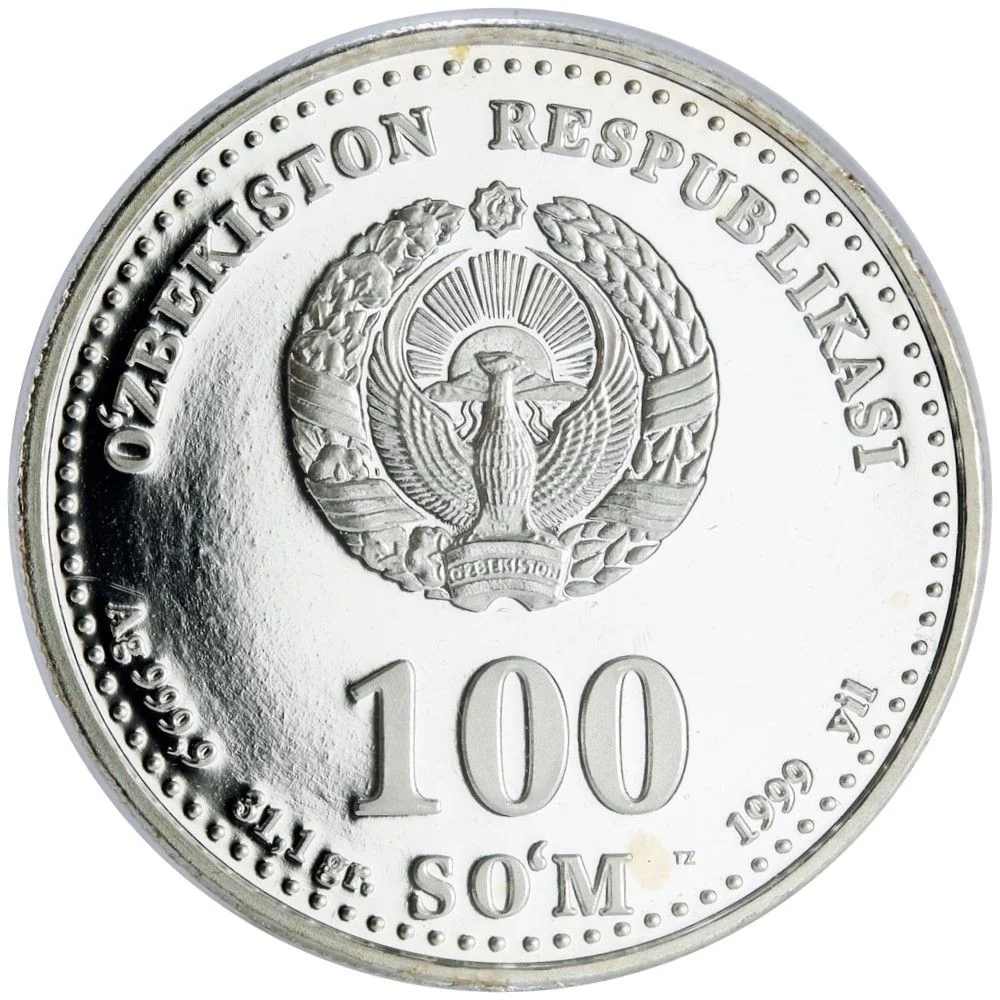
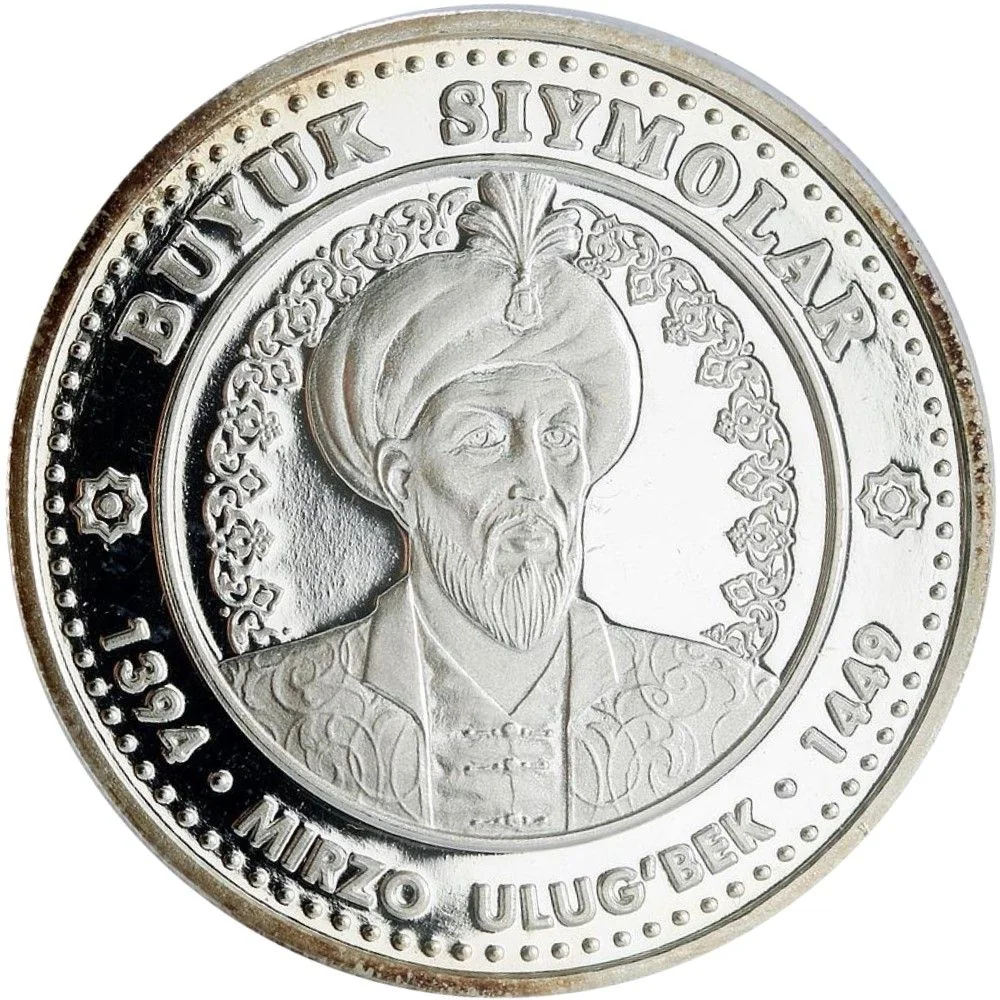
100 Soʻm – Uzbekistan
Uzbekistan
Context

Material
Diameter: 38 mm
Weight: 31.1 g
Silver weight: 31.10 g
Thickness: 3.1 mm
Shape: Round
Composition: 99.99% Silver
Standard: Silver ounce
Magnetic: No
Technique: Milled
Alignment: Medal alignment
flip
References
Numista: #379075
Value
Exchange value: 100 UZS
Bullion value: $88.40
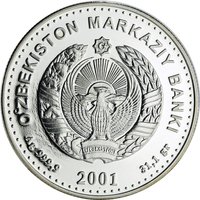
Obverse
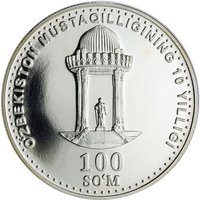
Reverse
Edge
Reeded
Mintings
| Year | Mint Mark | Mintage | Quality | Collection |
|---|---|---|---|---|
| 1999 | TZ | 1,000 | Proof |
Historical background
In 1999, Uzbekistan’s currency situation was characterized by a severe and entrenched dual-exchange rate system, a legacy of the government's cautious and isolationist economic policies following independence in 1991. The official exchange rate, set by the Central Bank of Uzbekistan, was artificially strong, pegged at around 140 Uzbek som to the US dollar. However, this rate was inaccessible to most citizens and businesses for all but a few prioritized import transactions. The real economy operated on a thriving black market, where the som traded at a rate of approximately 550 to 600 som per dollar, reflecting the currency's true market value and the scarcity of hard currency. This wide disparity created massive distortions, encouraging corruption, stifling foreign investment, and crippling legitimate import-export activities.
The root causes of this situation were a combination of restrictive trade policies, a state-dominated economy, and a lack of convertibility. The government maintained strict currency controls, requiring exporters (primarily of cotton and gold, the country's main sources of foreign exchange) to surrender their hard currency earnings at the unfavorable official rate. This policy aimed to conserve foreign reserves for state priorities but effectively penalized producers and created a critical shortage of dollars and other convertible currencies in the banking system. Consequently, businesses needing to import goods or transfer profits abroad faced immense bureaucratic hurdles or were forced to resort to the illegal market.
The economic consequences by 1999 were profound. The overvalued official exchange rate made Uzbek exports uncompetitive, except for raw materials mandated for state sale, and made imports prohibitively expensive for anyone without special access to official rates. High inflation eroded purchasing power, and the gap between the two rates fostered a shadow economy that undermined formal economic growth and state revenues. While the government had initiated some IMF-recommended reforms in the mid-1990s, progress had stalled, and 1999 represented a peak of economic isolation before gradual, albeit slow, steps toward liberalization would begin in the early 2000s.
The root causes of this situation were a combination of restrictive trade policies, a state-dominated economy, and a lack of convertibility. The government maintained strict currency controls, requiring exporters (primarily of cotton and gold, the country's main sources of foreign exchange) to surrender their hard currency earnings at the unfavorable official rate. This policy aimed to conserve foreign reserves for state priorities but effectively penalized producers and created a critical shortage of dollars and other convertible currencies in the banking system. Consequently, businesses needing to import goods or transfer profits abroad faced immense bureaucratic hurdles or were forced to resort to the illegal market.
The economic consequences by 1999 were profound. The overvalued official exchange rate made Uzbek exports uncompetitive, except for raw materials mandated for state sale, and made imports prohibitively expensive for anyone without special access to official rates. High inflation eroded purchasing power, and the gap between the two rates fostered a shadow economy that undermined formal economic growth and state revenues. While the government had initiated some IMF-recommended reforms in the mid-1990s, progress had stalled, and 1999 represented a peak of economic isolation before gradual, albeit slow, steps toward liberalization would begin in the early 2000s.
✨ Legendary