

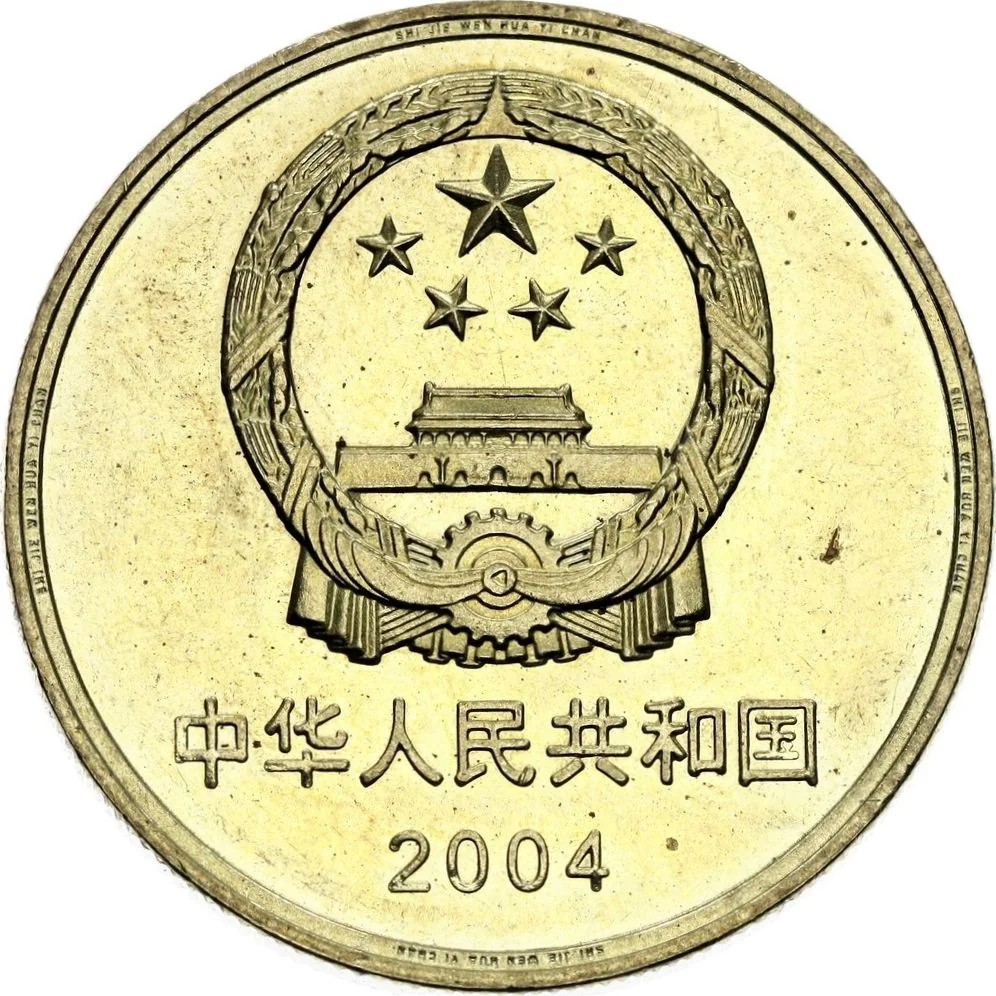
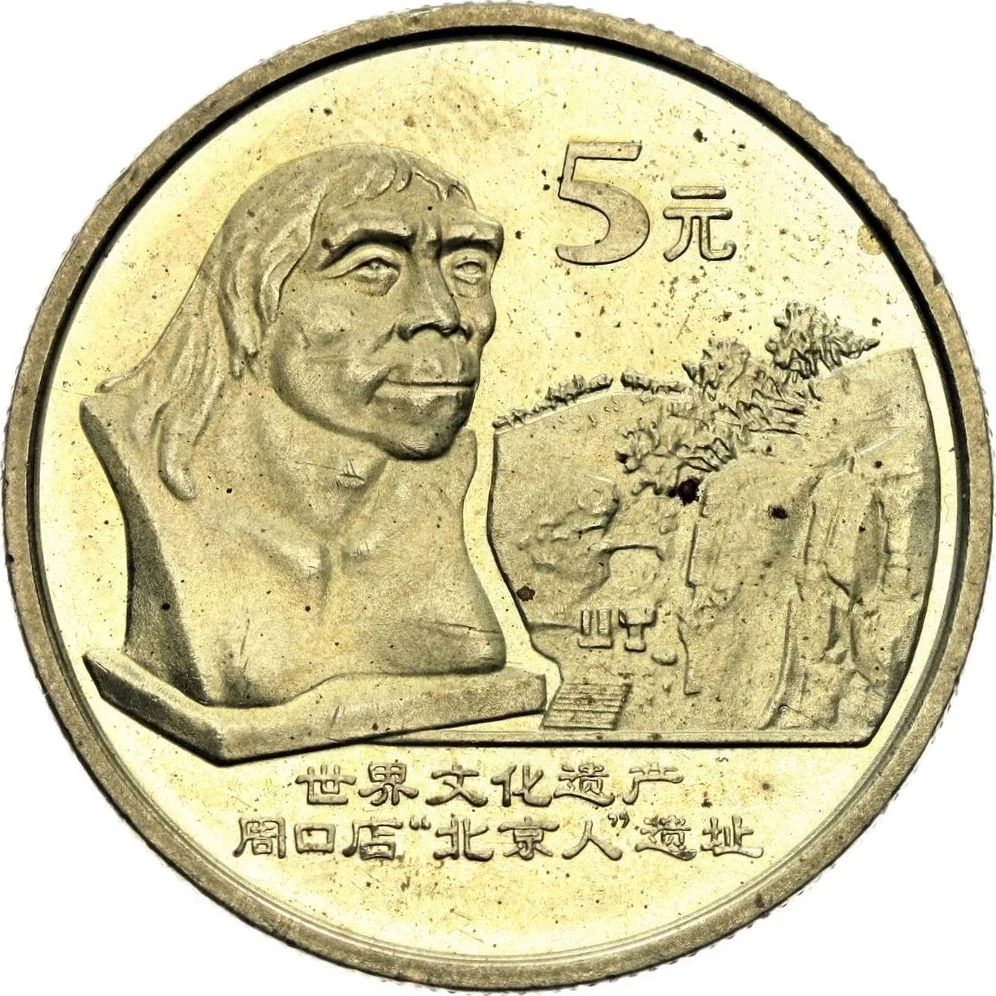
5 Yuan – People's Republic of China
Circulating commemorative coins
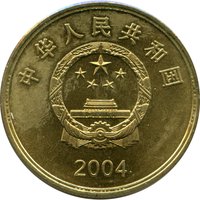
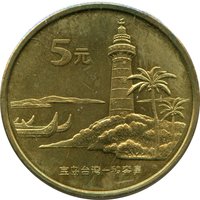
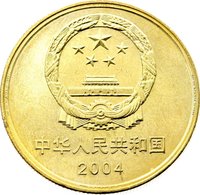
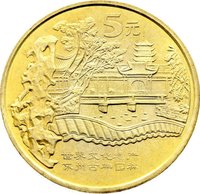
Commemoration: UNESCO World Heritage Sites Series - 1st edition - The Peking Man Site at Zhoukoudian
China
Context
Year: 2004
Country: China 
Issuer: People's Republic of China
Period:
(since 1949)
Currency:
(since 1955)
Total mintage: 6,000,000
Material
References
KM: #Click to copy to clipboard1526
Numista: #37877
Value
Exchange value: 5 CNY = $0.73
Inflation-adjusted value: 8.05 CNY
Mintings
| Year | Mint Mark | Mintage | Quality | Collection |
|---|---|---|---|---|
| 2004 | — | 6,000,000 |
Historical background
In 2004, the People's Republic of China's currency, the Renminbi (RMB), was formally pegged to the US dollar at an exchange rate of approximately 8.28 RMB per dollar. This fixed exchange rate regime, established in the wake of the 1997 Asian Financial Crisis, was a cornerstone of China's economic policy, providing stability for its booming export sector. The peg facilitated predictable pricing for China's massive trade surplus, particularly with the United States, and helped attract foreign direct investment by mitigating currency risk. However, this policy drew increasing international criticism, especially from the US and EU, which argued the RMB was significantly undervalued, giving Chinese exporters an unfair advantage and contributing to global trade imbalances.
Domestically, the fixed peg presented complex challenges for the People's Bank of China (PBOC). To maintain the peg amid large capital inflows from trade and investment, the central bank was forced to engage in heavy sterilization—buying foreign currency and selling RMB to control its value. This led to a rapid expansion of the country's foreign exchange reserves and increased the domestic money supply, fueling inflationary pressures and the risk of asset bubbles. The PBOC faced a difficult trilemma: it sought to control the exchange rate, maintain independent monetary policy, and allow for some capital mobility, which are three goals that cannot be simultaneously achieved.
The year 2004 proved to be a pivotal turning point, setting the stage for a major policy shift. Mounting external pressure and the growing recognition of the domestic economic distortions caused by the peg led to intense internal debate. While the peg remained officially unchanged throughout the year, Chinese authorities began laying the groundwork for reform. By late 2004 and early 2005, officials signaled a move toward greater flexibility, culminating in the landmark July 2005 revaluation, where the RMB was appreciated by 2.1% and shifted to a managed float against a basket of currencies, effectively ending the strict dollar peg.
Domestically, the fixed peg presented complex challenges for the People's Bank of China (PBOC). To maintain the peg amid large capital inflows from trade and investment, the central bank was forced to engage in heavy sterilization—buying foreign currency and selling RMB to control its value. This led to a rapid expansion of the country's foreign exchange reserves and increased the domestic money supply, fueling inflationary pressures and the risk of asset bubbles. The PBOC faced a difficult trilemma: it sought to control the exchange rate, maintain independent monetary policy, and allow for some capital mobility, which are three goals that cannot be simultaneously achieved.
The year 2004 proved to be a pivotal turning point, setting the stage for a major policy shift. Mounting external pressure and the growing recognition of the domestic economic distortions caused by the peg led to intense internal debate. While the peg remained officially unchanged throughout the year, Chinese authorities began laying the groundwork for reform. By late 2004 and early 2005, officials signaled a move toward greater flexibility, culminating in the landmark July 2005 revaluation, where the RMB was appreciated by 2.1% and shifted to a managed float against a basket of currencies, effectively ending the strict dollar peg.
🌟 Limited