

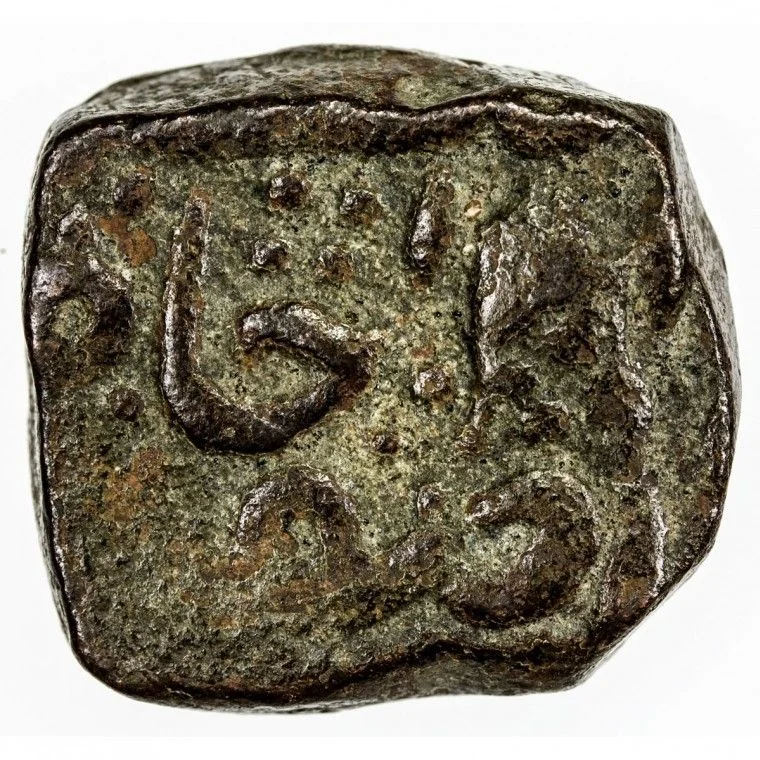
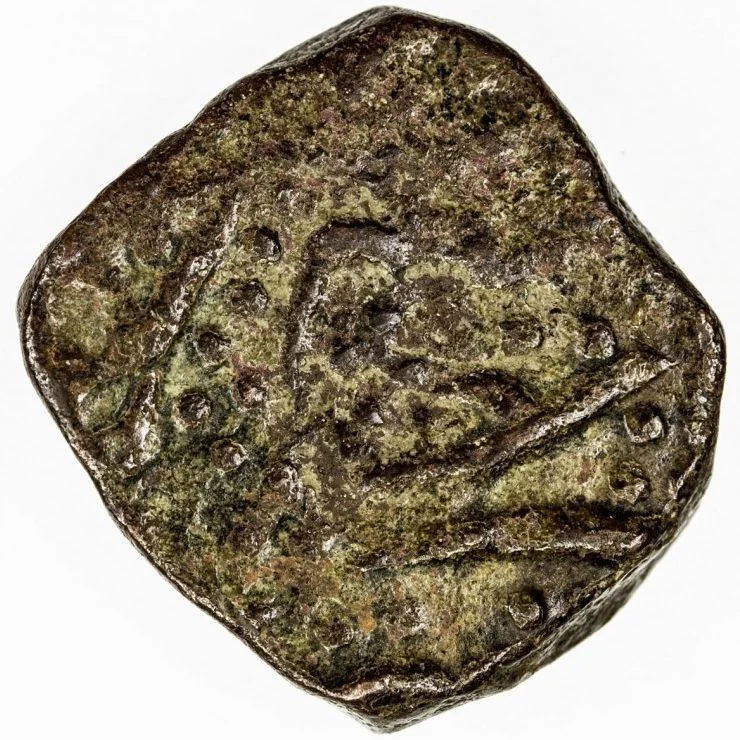
1 paisa – Hyderabad-Basmatnagar Feudatory
Add to wishlist
India
Context
Material
References
Numista: #377998
Obverse
Reverse
Edge
Mintings
| Year | Mint Mark | Mintage | Quality | Collection |
|---|---|---|---|---|
| — | — | — |
Historical background
In the early 1800s, the Hyderabad-Basmatnagar feudatory presented a complex currency landscape, deeply entangled within the broader monetary system of the Nizam of Hyderabad's dominions. The princely state of Hyderabad issued its own distinct currency, the Hyderabadi Rupee, which was the primary legal tender. However, as a feudatory (a semi-autonomous territory under Hyderabad's suzerainty), Basmatnagar would have been obligated to use this state currency for official revenue payments and larger transactions. The Hyderabadi Rupee itself existed in a crowded field, competing with the British East India Company's Company Rupee and various other regional coins, leading to frequent exchange rate fluctuations and valuation challenges.
At the local level in Basmatnagar, this official currency coexisted with a more informal and ancient system of commodity money and smaller, low-denomination coins. For everyday village economies, transactions were often conducted through barter or using physical commodities like grain, cloth, or livestock. When coins were used, they were often older, worn Mughal-era silver rupees or copper dams that remained in circulation long after their original issuers had lost power. The scarcity of minted small change in rural areas meant that these older coins and commodities filled a critical gap in the local bazaar economy.
This dual system created a persistent tension between the centralizing monetary authority of the Hyderabad state and the practical, decentralized realities of the feudatory's agrarian economy. While the Nizam's government sought to standardize currency for administrative and fiscal efficiency, the people of Basmatnagar navigated a hybrid monetary environment. Their daily financial life was a pragmatic blend of complying with state demands for Hyderabadi Rupees while relying on a more accessible, if less formal, web of valued goods and legacy coins for subsistence and local trade.
At the local level in Basmatnagar, this official currency coexisted with a more informal and ancient system of commodity money and smaller, low-denomination coins. For everyday village economies, transactions were often conducted through barter or using physical commodities like grain, cloth, or livestock. When coins were used, they were often older, worn Mughal-era silver rupees or copper dams that remained in circulation long after their original issuers had lost power. The scarcity of minted small change in rural areas meant that these older coins and commodities filled a critical gap in the local bazaar economy.
This dual system created a persistent tension between the centralizing monetary authority of the Hyderabad state and the practical, decentralized realities of the feudatory's agrarian economy. While the Nizam's government sought to standardize currency for administrative and fiscal efficiency, the people of Basmatnagar navigated a hybrid monetary environment. Their daily financial life was a pragmatic blend of complying with state demands for Hyderabadi Rupees while relying on a more accessible, if less formal, web of valued goods and legacy coins for subsistence and local trade.
✨ Legendary