

10 Lira – Turkey
Circulating commemorative coins
Commemoration: 27 May 1960 Revolution
Turkey
Context

Material
References
KM: #Click to copy to clipboard894
Numista: #14232
Value
Exchange value: 10 TRL
Bullion value: $34.90
Inflation-adjusted value: 283699293.26 TRL
Obverse
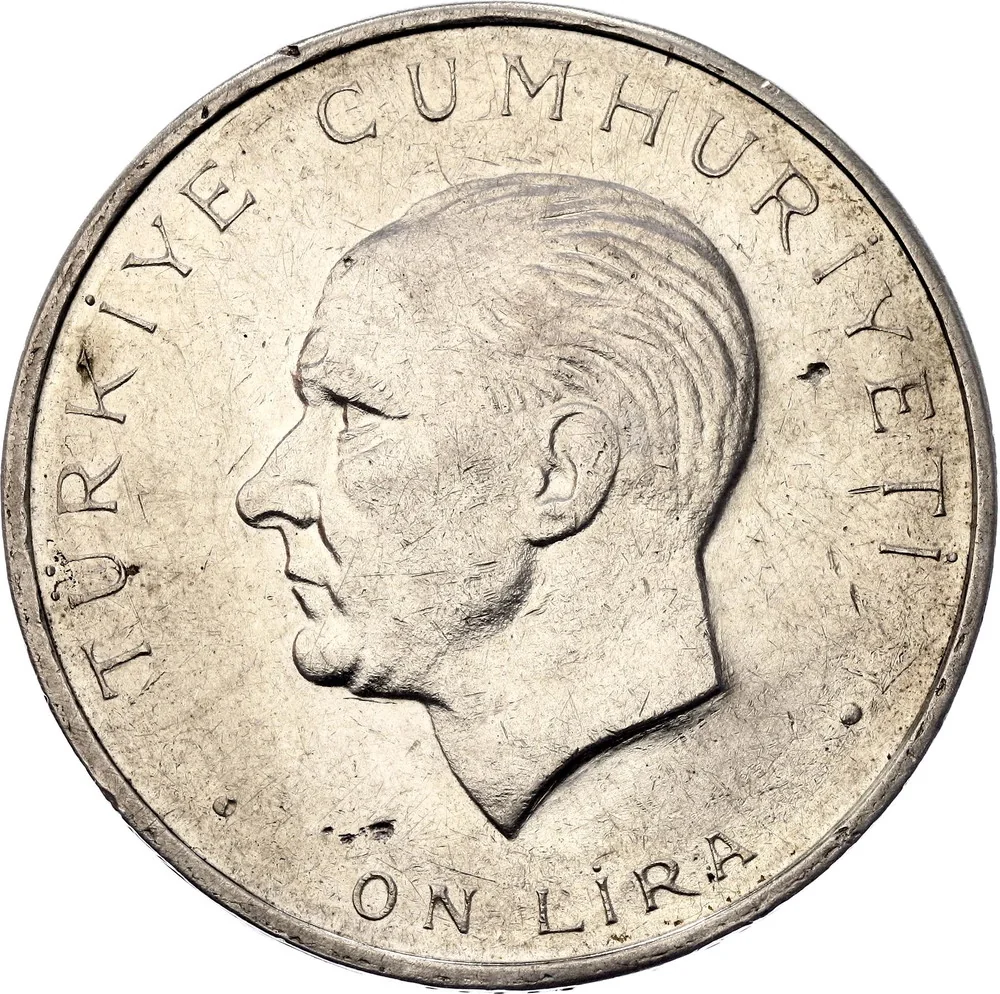
Description:
Atatürk's head
Inscription:
TÜRKIYE CUMHURIYETI
ON LIRA
ON LIRA
Translation:
TURKISH REPUBLIC
TEN LIRA
TEN LIRA
Script: Latin
Language: Turkish
Engraver: Pietro Giampaoli
Reverse
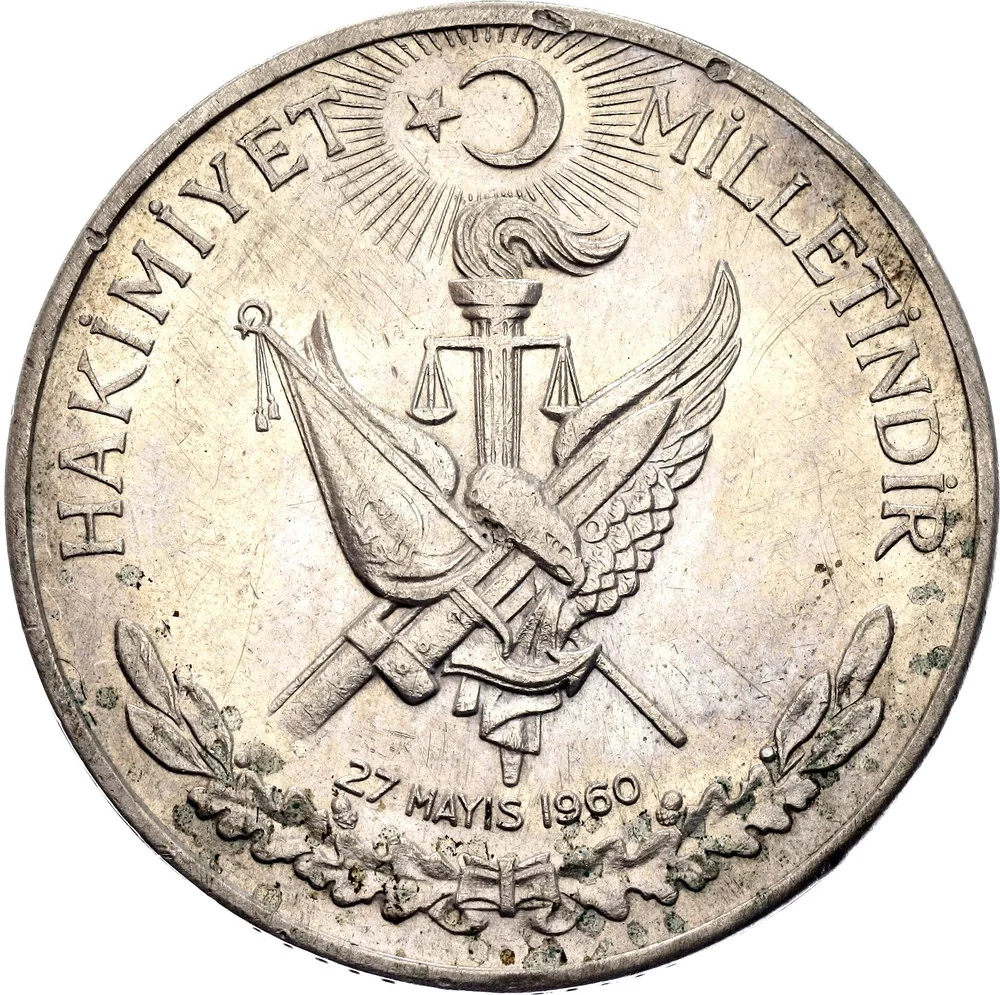
Description:
Crescent, star, torch, scales, crossed flag, and wing.
Inscription:
HAKIMIYET MILLETINDIR
27 MAYIS 1960
27 MAYIS 1960
Translation:
Sovereignty Belongs to the Nation
27 May 1960
27 May 1960
Script: Latin
Language: Turkish
Engraver: Pietro Giampaoli
Edge
Smooth with 2 sets of 10 vertical lines in 2 sets of 5, lettering surrounded by branchy lines
Legend:
T.C.
Translation:
The Senate and People of Rome.
Language: Latin
Mints
| Name | Mark |
|---|---|
| Turkish State Mint | — |
Mintings
| Year | Mint Mark | Mintage | Quality | Collection |
|---|---|---|---|---|
| 1960 | — | 4,000,000 |
Historical background
In 1960, Turkey’s currency situation was characterized by a tightly controlled and overvalued Turkish lira within a complex multi-tiered exchange rate system. The government, prioritizing industrialization and import-substituting policies, maintained an official parity of 2.80 lira to the US dollar. However, this rate was largely symbolic for trade, as a series of "effective rates" and surcharges applied to different categories of imports and exports, creating a de facto devaluation to encourage specific sectors. This intricate web of rates, managed by the Central Bank and various committees, aimed to direct scarce foreign exchange toward capital goods and raw materials while discouraging consumer imports.
This system emerged from the economic pressures of the post-World War II era and the Democratic Party's expansive spending in the 1950s, which led to persistent trade deficits and dwindling foreign exchange reserves. By the end of the decade, inflation was rising, and the currency was under severe strain. The economic turmoil contributed to political instability, culminating in the military coup of May 27, 1960, which overthrew the Menderes government.
The new military-backed administration inherited this precarious monetary situation and recognized the need for reform. While immediate, radical change was not implemented in 1960 itself, the year was a pivotal turning point. The government began laying the groundwork for a major economic stabilization program, which would eventually materialize in 1961-62. This included moves toward simplifying the exchange rate regime and seeking assistance from international organizations like the OECD and IMF, setting the stage for a significant devaluation of the lira in the years immediately following.
This system emerged from the economic pressures of the post-World War II era and the Democratic Party's expansive spending in the 1950s, which led to persistent trade deficits and dwindling foreign exchange reserves. By the end of the decade, inflation was rising, and the currency was under severe strain. The economic turmoil contributed to political instability, culminating in the military coup of May 27, 1960, which overthrew the Menderes government.
The new military-backed administration inherited this precarious monetary situation and recognized the need for reform. While immediate, radical change was not implemented in 1960 itself, the year was a pivotal turning point. The government began laying the groundwork for a major economic stabilization program, which would eventually materialize in 1961-62. This included moves toward simplifying the exchange rate regime and seeking assistance from international organizations like the OECD and IMF, setting the stage for a significant devaluation of the lira in the years immediately following.
🌱 Common