

10 rupiah – Indonesia
Add to wishlist
Circulating commemorative coins
Commemoration: FAO - Family Planning Program
Indonesia
Context
Material
References
KM: #
Numista: #3771
Value
Exchange value: 10 IDR
Inflation-adjusted value: 428.41 IDR
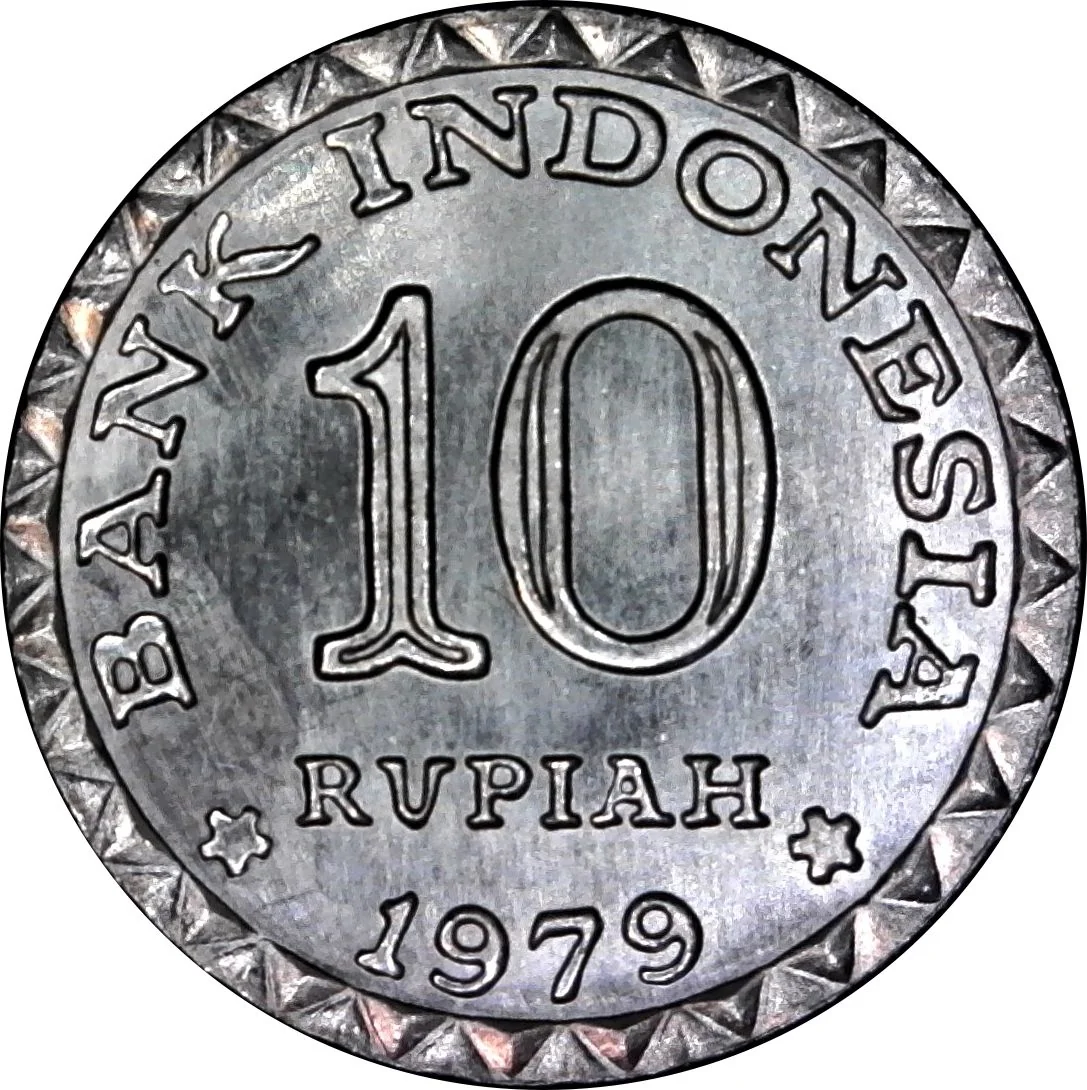
Obverse
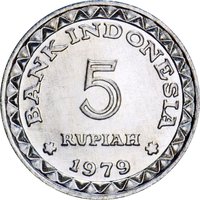
Description:
Stars beside date under value.
Inscription:
BANK INDONESIA
10
RUPIAH
★ 1979 ★
10
RUPIAH
★ 1979 ★
Translation:
BANK INDONESIA
10
RUPIAH
★ 1979 ★
10
RUPIAH
★ 1979 ★
Script: Latin
Languages: English, Indonesian
Reverse
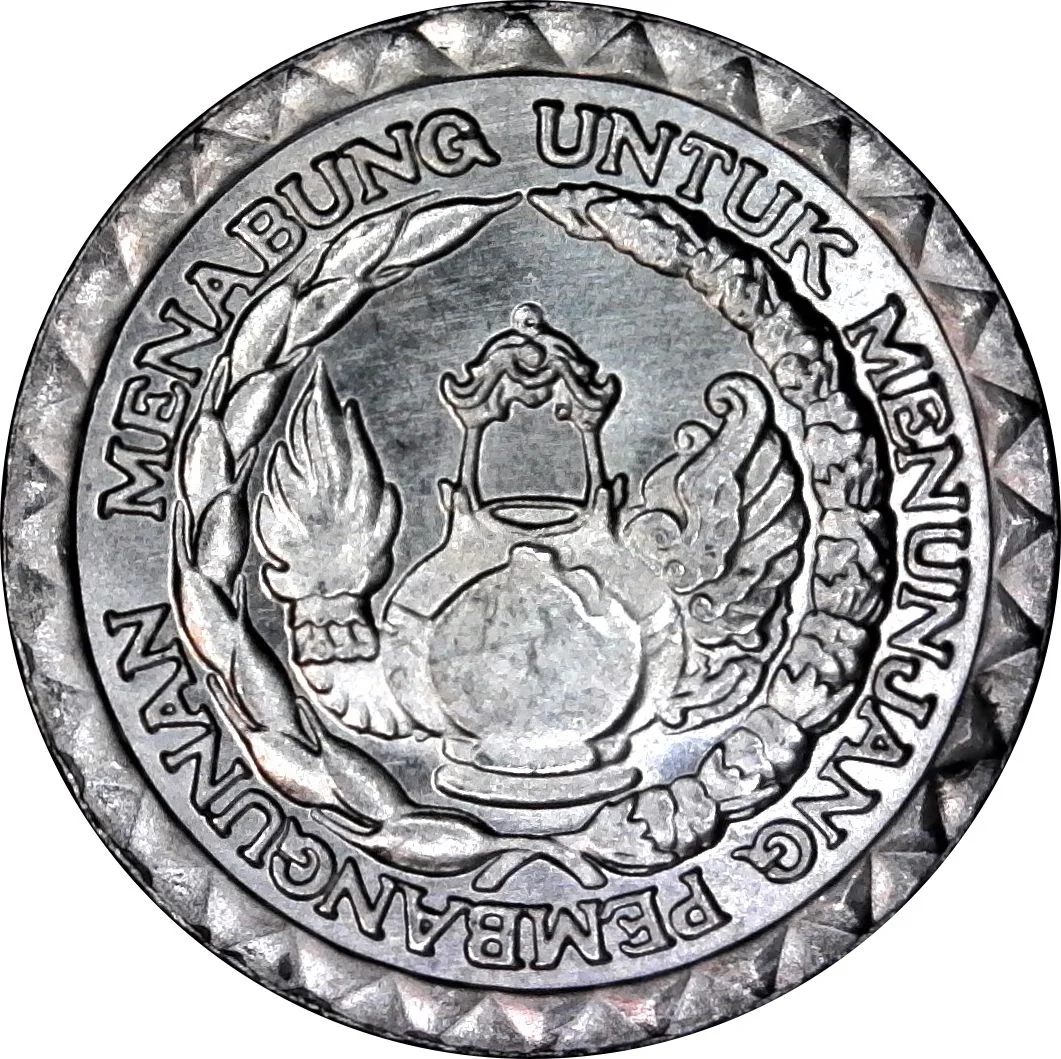
Description:
Legends of an oil lamp.
Inscription:
MENABUNG UNTUK MENUNJANG PEMBANGUNAN
Translation:
Saving to Support Development
Script: Latin
Language: Indonesian
Edge
Reeded
Categories
| Organization> FAO |
Mints
| Name | Mark |
|---|---|
| Perum Peruri | — |
Mintings
| Year | Mint Mark | Mintage | Quality | Collection |
|---|---|---|---|---|
| 1979 | — | 285,670,000 |
Historical background
In 1979, Indonesia's currency situation was characterized by relative stability under the managed exchange rate regime of the New Order government, but it was operating within a challenging global economic environment. The rupiah was pegged to the US dollar at a fixed rate of Rp 415, a parity maintained since 1971. This stability was artificially enforced by Bank Indonesia and was fundamentally underpinned by the nation's oil and gas revenues, which accounted for over 60% of export earnings and a large portion of government budget. The fixed rate provided predictability for importers, foreign debt servicing, and development planning, fostering an era of rapid economic growth and infrastructure projects.
However, this stability was increasingly precarious. The year 1979 saw the outbreak of the second major oil price shock following the Iranian Revolution, which initially appeared to be a windfall for Indonesia as a major OPEC exporter. In reality, it created complex pressures. While oil revenues surged, the global spike in oil prices also fueled worldwide inflation and pushed up interest rates in developed countries. This increased the cost of servicing Indonesia's substantial external debt, which had been accumulated to finance its development ambitions. Furthermore, the high oil prices began to dampen global economic growth, threatening demand for Indonesia's other commodity exports.
Consequently, the fixed exchange rate masked growing macroeconomic distortions. The rupiah was arguably overvalued, making non-oil exports less competitive and encouraging imports, which widened the current account deficit outside the oil sector. The government, reliant on oil for fiscal sustainability, increased spending, fueling domestic inflation. While a full-blown currency crisis would not erupt until the 1980s following a collapse in oil prices, the conditions of 1979—an overvalued peg, dependence on a volatile commodity, rising debt costs, and imported inflation—were laying the groundwork for future economic adjustments and the eventual devaluation of the rupiah in 1983.
However, this stability was increasingly precarious. The year 1979 saw the outbreak of the second major oil price shock following the Iranian Revolution, which initially appeared to be a windfall for Indonesia as a major OPEC exporter. In reality, it created complex pressures. While oil revenues surged, the global spike in oil prices also fueled worldwide inflation and pushed up interest rates in developed countries. This increased the cost of servicing Indonesia's substantial external debt, which had been accumulated to finance its development ambitions. Furthermore, the high oil prices began to dampen global economic growth, threatening demand for Indonesia's other commodity exports.
Consequently, the fixed exchange rate masked growing macroeconomic distortions. The rupiah was arguably overvalued, making non-oil exports less competitive and encouraging imports, which widened the current account deficit outside the oil sector. The government, reliant on oil for fiscal sustainability, increased spending, fueling domestic inflation. While a full-blown currency crisis would not erupt until the 1980s following a collapse in oil prices, the conditions of 1979—an overvalued peg, dependence on a volatile commodity, rising debt costs, and imported inflation—were laying the groundwork for future economic adjustments and the eventual devaluation of the rupiah in 1983.

🌱 Very Common