

5 Cedis – Ghana
Non-circulating coins
Commemoration: Phoenix Opal
Ghana

Obverse
Description:
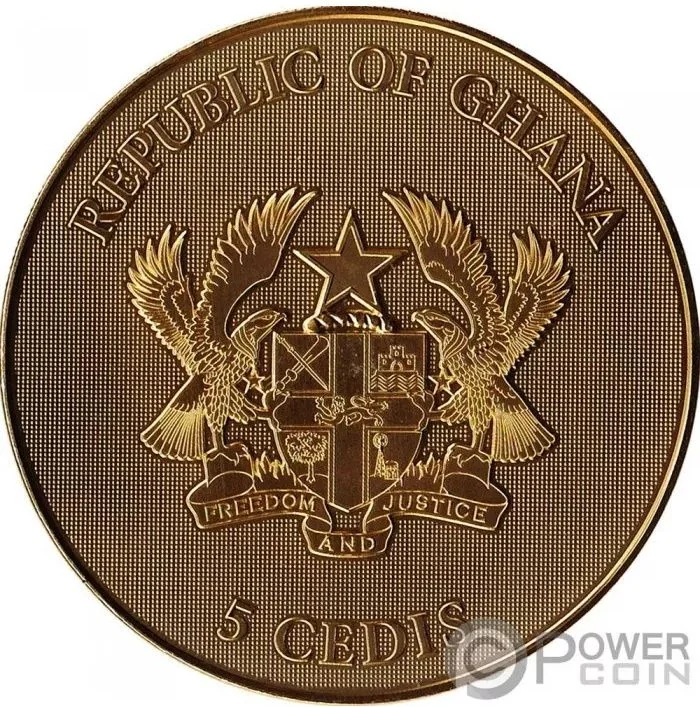
Ghana's coat of arms.
Inscription:
REPUBLIC OF GHANA
FREEDOM AND JUSTICE
5 CEDIS
FREEDOM AND JUSTICE
5 CEDIS
Script: Latin
Reverse
Description:
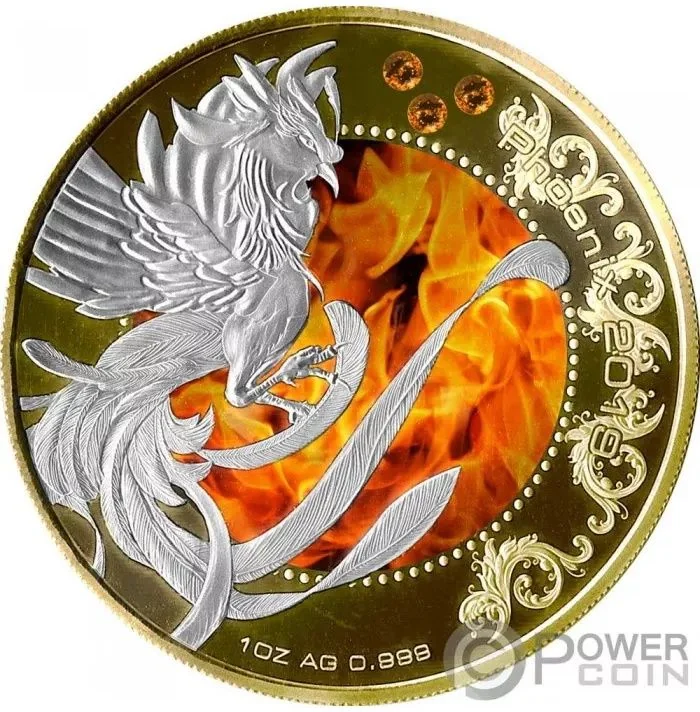
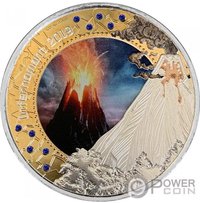
A phoenix, a sun-linked bird, reborn from its predecessor's ashes.
Inscription:
PHOENIX 2019
1 OZ AG 0.999
1 OZ AG 0.999
Script: Latin
Edge
Categories
| Mythology> Fantastic animal |
Mintings
| Year | Mint Mark | Mintage | Quality | Collection |
|---|---|---|---|---|
| 2019 | — | 444 |
Historical background
In 2019, Ghana's currency, the cedi (GHS), faced significant depreciation pressure, emerging as one of the worst-performing currencies in Africa during the first half of the year. The primary drivers were a combination of a strong US dollar, elevated demand for foreign exchange to service imports and energy sector debts, and relatively lower inflows from key export commodities like cocoa and gold. This depreciation fueled inflation, increased the cost of living, and raised the cost of servicing the country's substantial dollar-denominated debt, creating a cycle of economic strain.
The government and the Bank of Ghana (BoG) implemented several measures to stem the decline. The BoG tightened monetary policy, increased its key interest rate, and directly intervened in the foreign exchange market by selling dollars from its reserves to boost supply. Furthermore, authorities secured a $3 billion Eurobond in early 2019, which provided a temporary influx of foreign exchange and bolstered investor confidence. These actions, combined with improved cocoa and oil revenues later in the year, led to a notable stabilization and recovery of the cedi in the final quarter.
Underlying the 2019 volatility were persistent structural challenges, including a high fiscal deficit, a large current account deficit, and concerns about the sustainability of public debt. The currency's performance became a central political and economic issue, highlighting Ghana's vulnerability to external shocks and its ongoing dependence on commodity exports and foreign capital. The year ultimately underscored the critical need for deeper fiscal discipline and economic diversification to build long-term resilience in the foreign exchange market.
The government and the Bank of Ghana (BoG) implemented several measures to stem the decline. The BoG tightened monetary policy, increased its key interest rate, and directly intervened in the foreign exchange market by selling dollars from its reserves to boost supply. Furthermore, authorities secured a $3 billion Eurobond in early 2019, which provided a temporary influx of foreign exchange and bolstered investor confidence. These actions, combined with improved cocoa and oil revenues later in the year, led to a notable stabilization and recovery of the cedi in the final quarter.
Underlying the 2019 volatility were persistent structural challenges, including a high fiscal deficit, a large current account deficit, and concerns about the sustainability of public debt. The currency's performance became a central political and economic issue, highlighting Ghana's vulnerability to external shocks and its ongoing dependence on commodity exports and foreign capital. The year ultimately underscored the critical need for deeper fiscal discipline and economic diversification to build long-term resilience in the foreign exchange market.

✨ Legendary