


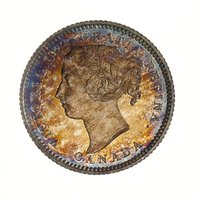
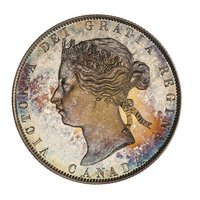
Obverse
Description:
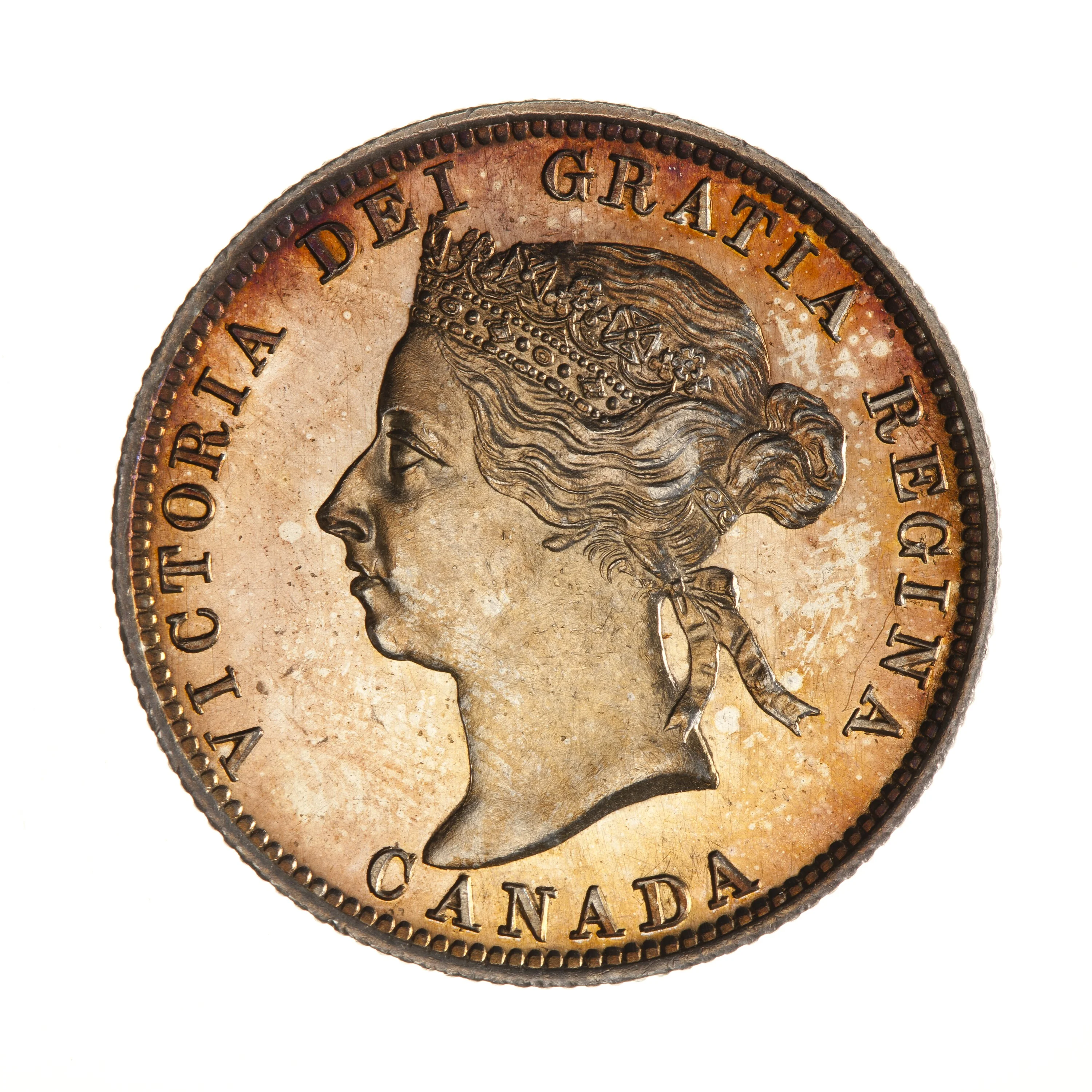
Queen Victoria in tiara, facing left.
Inscription:
VICTORIA DEI GRATIA REGINA.
CANADA
CANADA
Translation:
Victoria by the Grace of God Queen.
Canada
Canada
Script: Latin
Language: Latin
Engraver: Leonard Charles Wyon
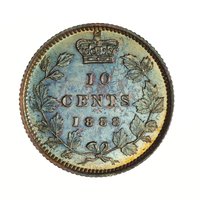
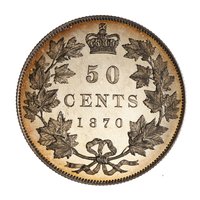
Reverse
Description:
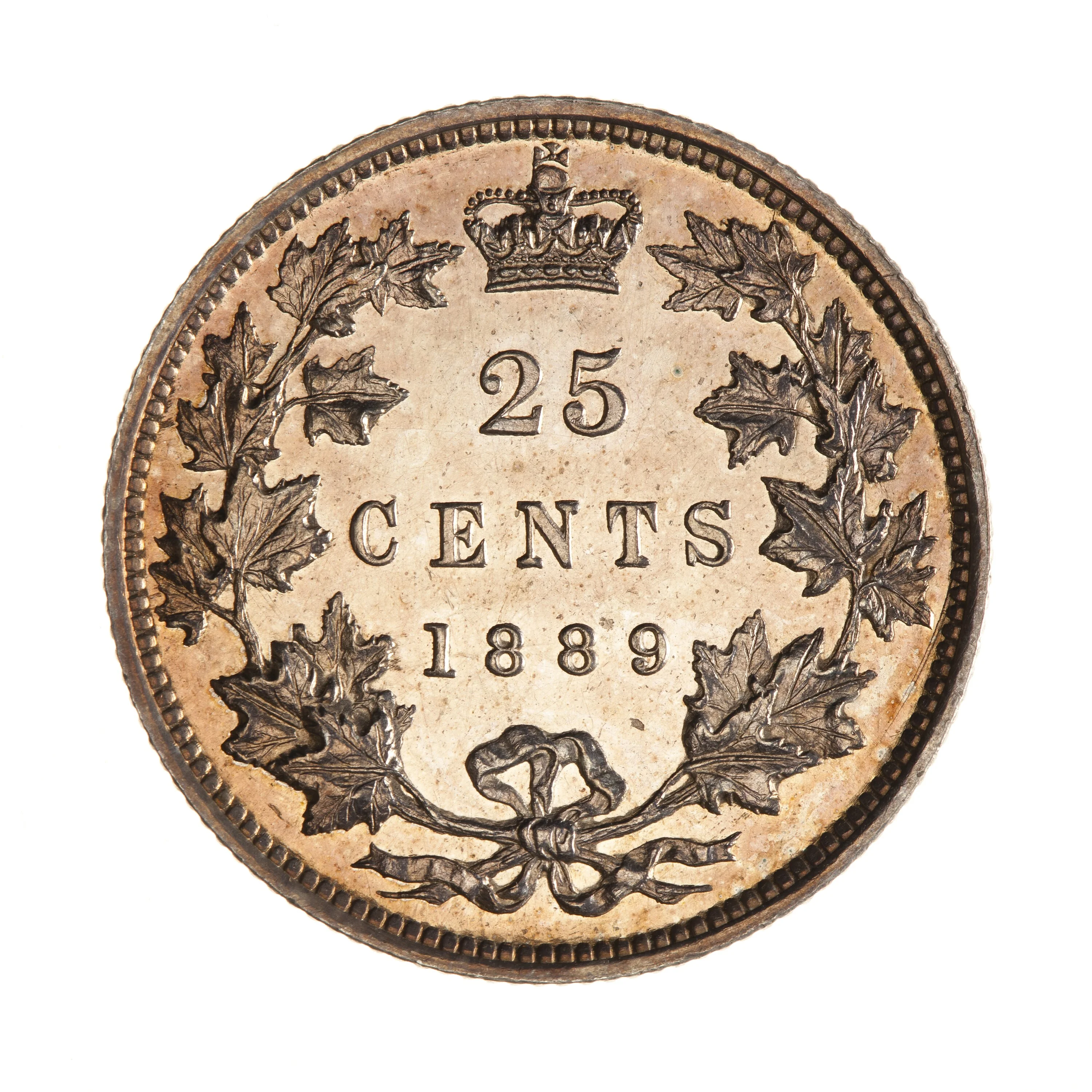
Face value framed by maple boughs and a crown.
Inscription:
25
CENTS
1880
H
CENTS
1880
H
Script: Latin
Engraver: Leonard Charles Wyon
Edge
Reeded
Mints
| Name | Mark |
|---|---|
| Royal Mint (Tower Hill) | — |
| Heaton and Sons / The Mint Birmingham | H |
Mintings
| Year | Mint Mark | Mintage | Quality | Collection |
|---|---|---|---|---|
| 1870 | — | 900,000 | ||
| 1871 | — | 400,000 | ||
| 1871 | H | 748,000 | ||
| 1872 | H | 2,240,000 | ||
| 1874 | H | 1,600,000 | ||
| 1875 | H | 1,000,000 | ||
| 1880 | H | 400,000 | ||
| 1881 | H | 820,000 | ||
| 1882 | H | 600,000 | ||
| 1883 | H | 960,000 | ||
| 1885 | — | 192,000 | ||
| 1886 | — | 540,000 | ||
| 1887 | — | 100,000 | ||
| 1888 | — | 400,000 | ||
| 1889 | — | 66,324 | ||
| 1890 | H | 200,000 | ||
| 1891 | — | 120,000 | ||
| 1892 | — | 510,000 | ||
| 1893 | — | 100,000 | ||
| 1894 | — | 220,000 | ||
| 1899 | — | 415,580 | ||
| 1900 | — | 1,320,000 | ||
| 1901 | — | 640,000 |
Historical background
In 1870, Canada's currency situation was a complex and transitional patchwork, reflecting its recent political formation. The Dominion of Canada, only three years old, lacked a uniform national currency. The economy operated on a dual system of British sterling, used for official government accounts and international trade, and a multitude of Canadian-issued banknotes. These notes, issued by numerous chartered private banks, were theoretically redeemable in gold, but their value and acceptance varied widely, causing confusion and inefficiency in domestic commerce.
This fragmented system was a significant obstacle to national economic integration and development. The government, led by Prime Minister Sir John A. Macdonald's Conservative administration, recognized the need for a uniform currency to foster inter-provincial trade, simplify transactions, and assert national sovereignty. The Dominion Notes Act of 1870 was a critical first legislative step, authorizing the federal government to issue its own paper notes in denominations of $4 and above. However, these "Dominion Notes" initially circulated alongside, rather than replaced, the existing private banknotes.
Thus, the currency situation in 1870 was one of foundational change, marking the beginning of a decades-long journey toward a centralized monetary system. The government had asserted its right to issue legal tender, but the practical reality was a crowded field of competing paper. The full vision of a national currency managed by a central bank would not be realized until the 20th century, but the policies set in motion in this period laid the essential groundwork for the eventual creation of the Canadian dollar as a unified and government-controlled currency.
This fragmented system was a significant obstacle to national economic integration and development. The government, led by Prime Minister Sir John A. Macdonald's Conservative administration, recognized the need for a uniform currency to foster inter-provincial trade, simplify transactions, and assert national sovereignty. The Dominion Notes Act of 1870 was a critical first legislative step, authorizing the federal government to issue its own paper notes in denominations of $4 and above. However, these "Dominion Notes" initially circulated alongside, rather than replaced, the existing private banknotes.
Thus, the currency situation in 1870 was one of foundational change, marking the beginning of a decades-long journey toward a centralized monetary system. The government had asserted its right to issue legal tender, but the practical reality was a crowded field of competing paper. The full vision of a national currency managed by a central bank would not be realized until the 20th century, but the policies set in motion in this period laid the essential groundwork for the eventual creation of the Canadian dollar as a unified and government-controlled currency.
🌱 Common