

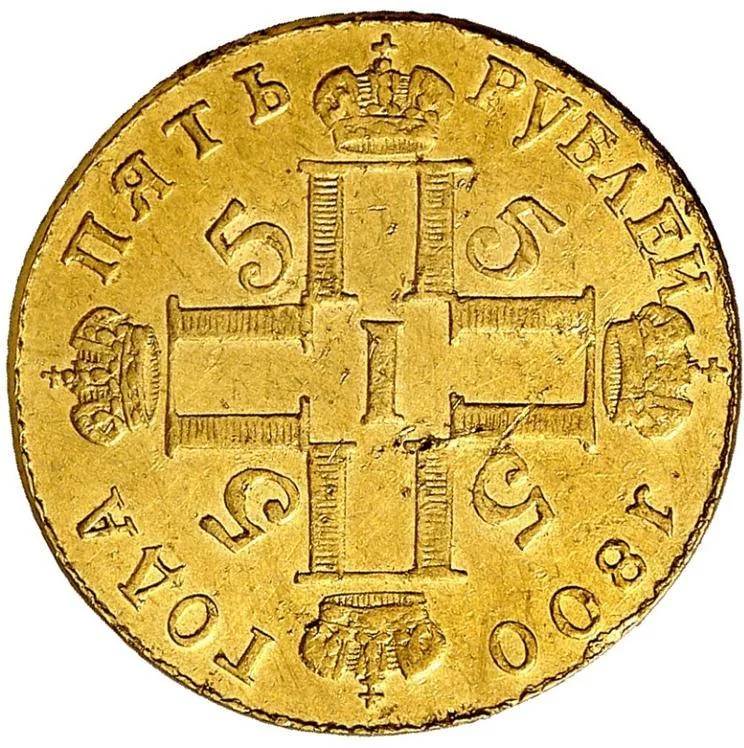
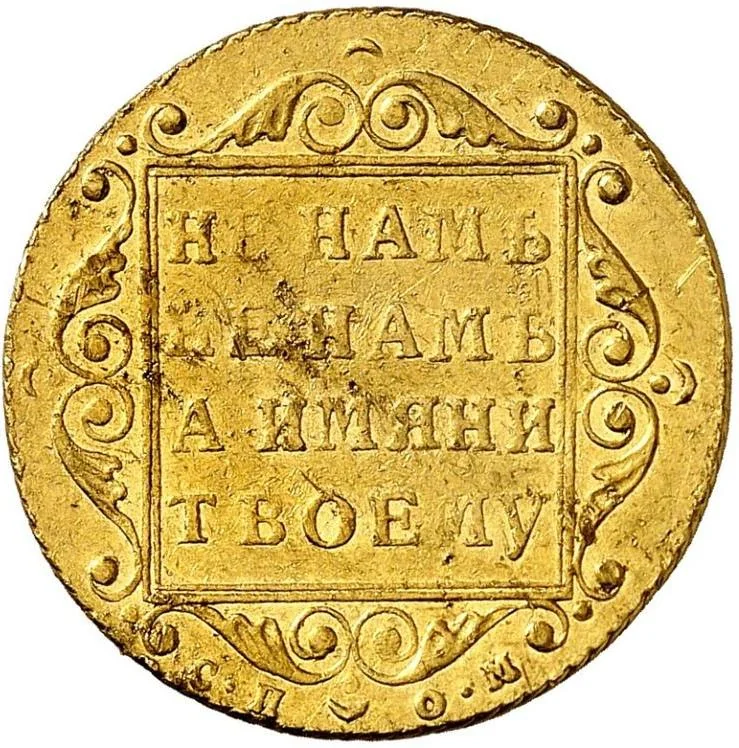
5 rubles – Russian Empire
Add to wishlist
Russia
Context
Year: 1800
Country: Russia
Issuer: Russian Empire
Ruler: Paul I
Currency:
(1700—1917)
Demonetized: Yes
Material
References
Numista: #102612
Value
Bullion value: $922.84
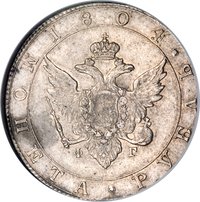
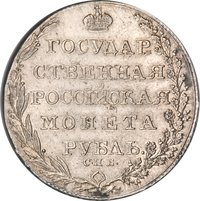
Obverse
Reverse
Edge
Diagonal reeding
Mintings
| Year | Mint Mark | Mintage | Quality | Collection |
|---|---|---|---|---|
| 1800 | СП | — | BU |
Historical background
By 1800, the currency system of the Russian Empire was a complex and unstable legacy of the 18th century, primarily based on the silver ruble. However, the state's chronic fiscal demands, especially due to military expenditures, had led to a heavy reliance on copper coinage and the introduction of paper money. In 1769, Catherine the Great had established Assignation Banks, issuing the first Russian paper rubles (assignatsii) to finance a war with the Ottoman Empire. Initially convertible to copper, these notes soon began to be printed in excess, leading to a gradual depreciation against the silver ruble.
The turn of the century found the Empire with a de facto dual-currency system. The silver ruble remained the ideal standard for foreign trade and large transactions, while the vastly more common paper assignat ruble circulated for everyday use at a fluctuating discount. By 1800, one silver ruble was worth approximately 1.25 to 1.3 assignat rubles, a sign of moderate but concerning inflation. The system was cumbersome, with exchange rates published regularly, and the sheer bulk of low-value copper coins further complicated commerce.
This monetary instability was a significant concern for Tsar Paul I (1796-1801), who attempted reforms. He sought to bolster confidence by burning millions of rubles worth of assignats in a public spectacle and mandating their acceptance at par with silver. However, these measures were largely symbolic and did not address the fundamental issue of budget deficits financed by paper emissions. Thus, as the 19th century began, the Russian currency situation was characterized by a fragile paper credit system undermining a metallic standard, a problem that would worsen during the Napoleonic Wars and remain a central financial challenge for decades to come.
The turn of the century found the Empire with a de facto dual-currency system. The silver ruble remained the ideal standard for foreign trade and large transactions, while the vastly more common paper assignat ruble circulated for everyday use at a fluctuating discount. By 1800, one silver ruble was worth approximately 1.25 to 1.3 assignat rubles, a sign of moderate but concerning inflation. The system was cumbersome, with exchange rates published regularly, and the sheer bulk of low-value copper coins further complicated commerce.
This monetary instability was a significant concern for Tsar Paul I (1796-1801), who attempted reforms. He sought to bolster confidence by burning millions of rubles worth of assignats in a public spectacle and mandating their acceptance at par with silver. However, these measures were largely symbolic and did not address the fundamental issue of budget deficits financed by paper emissions. Thus, as the 19th century began, the Russian currency situation was characterized by a fragile paper credit system undermining a metallic standard, a problem that would worsen during the Napoleonic Wars and remain a central financial challenge for decades to come.
✨ Legendary