

30 euro – Slovenia
Add to wishlist
Non-circulating coins
Commemoration: World Rowing Championships in Bled
Slovenia
Context
Material
References
KM: #
Numista: #37420
Value
Exchange value: 30 EUR
Bullion value: $35.45
Inflation-adjusted value: 42.18 EUR
Obverse
Description:
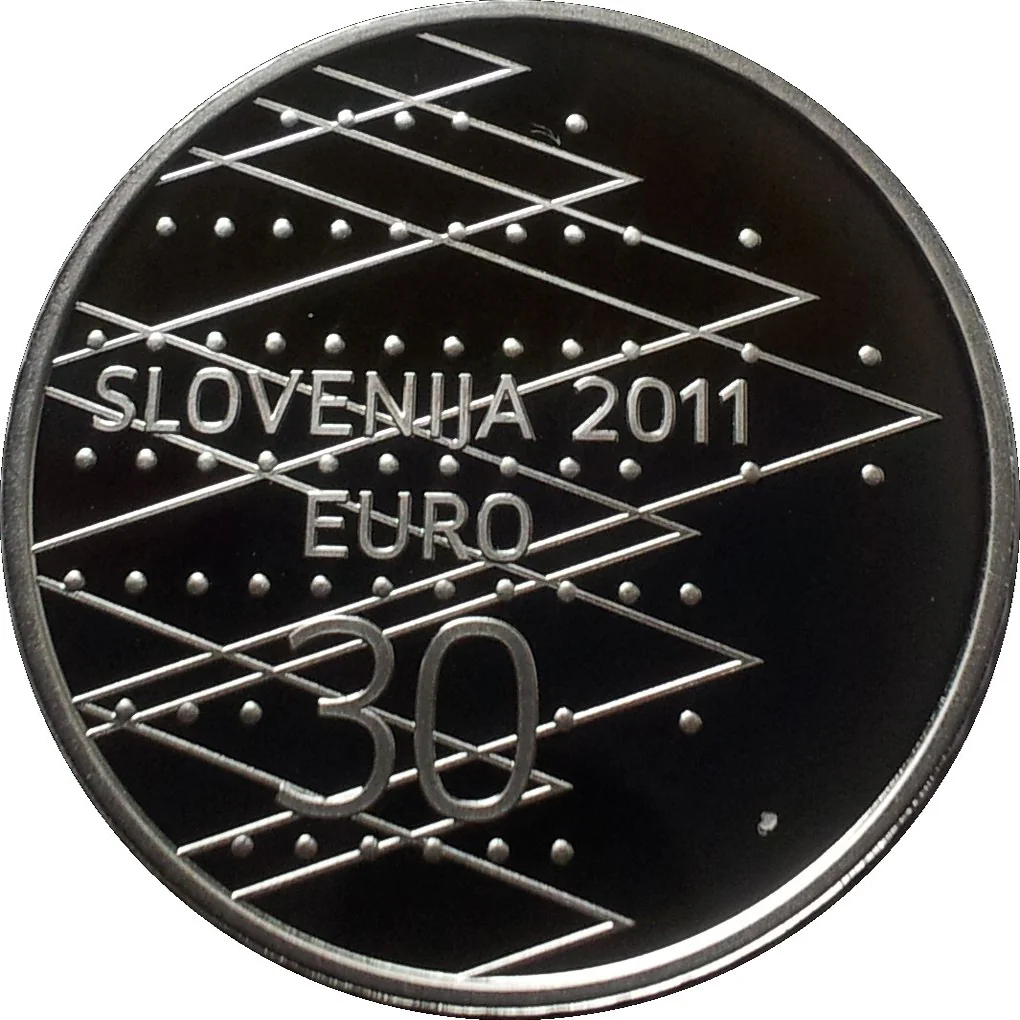
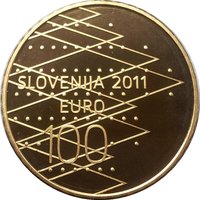
Central motif: a stylized boat wake forming a dynamic net. Below, "SLOVENIJA 2011" and "EURO" are stacked above the face value "30".
Inscription:
SLOVENIJA 2011
EUR0
30
EUR0
30
Script: Latin
Designer: Robert Žvokelj
Reverse
Description:
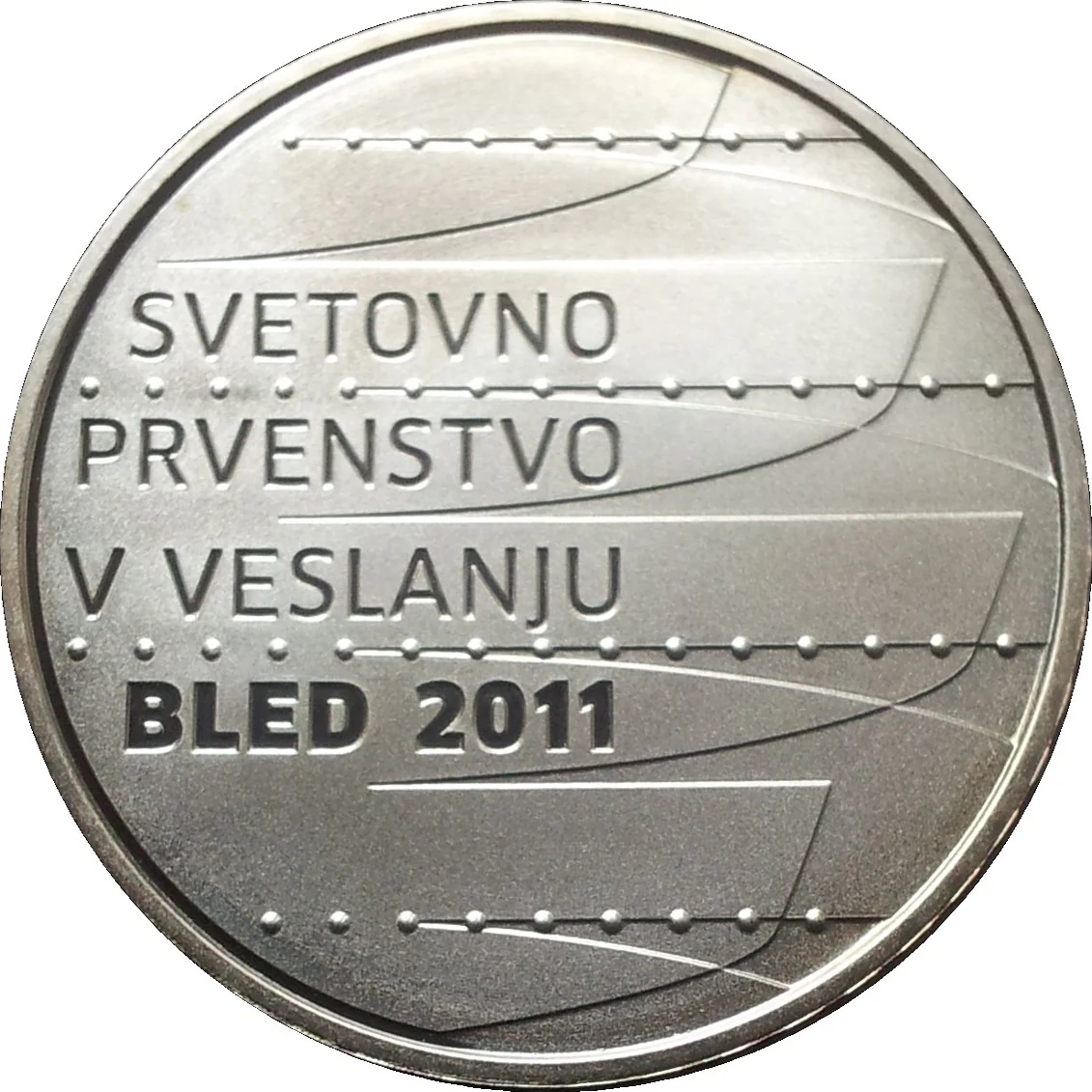
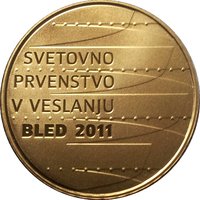
Silhouetted boat stems reflect on water. On the left, text reads:
"SVETOVNO"
"PRVENSTVO"
"V VESLANJU"
"BLED 2011"
"SVETOVNO"
"PRVENSTVO"
"V VESLANJU"
"BLED 2011"
Inscription:
SVETOVNO
PRVENSTVO
V VESLANJU
BLED 2011
PRVENSTVO
V VESLANJU
BLED 2011
Script: Latin
Designer: Robert Žvokelj
Edge
Categories
| Transportation> Watercraft |
| Sport |
Mints
| Name | Mark |
|---|---|
| Mint of Finland | — |
Mintings
| Year | Mint Mark | Mintage | Quality | Collection |
|---|---|---|---|---|
| 2011 | — | 3,500 | Proof |
Historical background
In 2011, Slovenia was still a member of the Eurozone, having successfully adopted the euro as its official currency on 1 January 2007, replacing the Slovenian tolar. This transition was a point of national pride and a key milestone in its integration with the European Union, which it joined in 2004. The euro provided macroeconomic stability, eliminated exchange rate risk with its main trading partners, and was seen as a symbol of Slovenia's advanced economic development within Central and Eastern Europe.
However, by 2011, the broader European sovereign debt crisis cast a shadow over the benefits of euro membership. While Slovenia itself was not at the epicenter of the crisis like Greece or Ireland, it faced significant economic pressures. The global financial crisis of 2008-2009 had exposed domestic weaknesses, including a wave of credit expansion and a subsequent banking crisis rooted in bad loans to state-owned and large private firms. As a Eurozone member, Slovenia had no independent monetary policy—controlled by the European Central Bank—and could not devalue its currency to regain competitiveness, forcing it to rely on difficult internal devaluations (wage and spending cuts).
Consequently, the currency situation in 2011 was defined by this duality: the euro provided a stable framework but also removed crucial policy tools during a downturn. The government, led by Prime Minister Borut Pahor, faced rising borrowing costs and growing market skepticism about its ability to manage public debt and clean up its banking sector without external assistance. The year ended with political instability, a fall of the government, and mounting pressure that would culminate in 2012-2013 with the need for a state-funded bank recapitalization, narrowly avoiding an international bailout.
However, by 2011, the broader European sovereign debt crisis cast a shadow over the benefits of euro membership. While Slovenia itself was not at the epicenter of the crisis like Greece or Ireland, it faced significant economic pressures. The global financial crisis of 2008-2009 had exposed domestic weaknesses, including a wave of credit expansion and a subsequent banking crisis rooted in bad loans to state-owned and large private firms. As a Eurozone member, Slovenia had no independent monetary policy—controlled by the European Central Bank—and could not devalue its currency to regain competitiveness, forcing it to rely on difficult internal devaluations (wage and spending cuts).
Consequently, the currency situation in 2011 was defined by this duality: the euro provided a stable framework but also removed crucial policy tools during a downturn. The government, led by Prime Minister Borut Pahor, faced rising borrowing costs and growing market skepticism about its ability to manage public debt and clean up its banking sector without external assistance. The year ended with political instability, a fall of the government, and mounting pressure that would culminate in 2012-2013 with the need for a state-funded bank recapitalization, narrowly avoiding an international bailout.
💎 Extremely Rare