

25 rupees – Seychelles
Add to wishlist
Non-circulating coins
Commemoration: Millennium
Seychelles
Context
Material
References
KM: #
Numista: #37401
Value
Exchange value: 25 SCR
Bullion value: $64.17
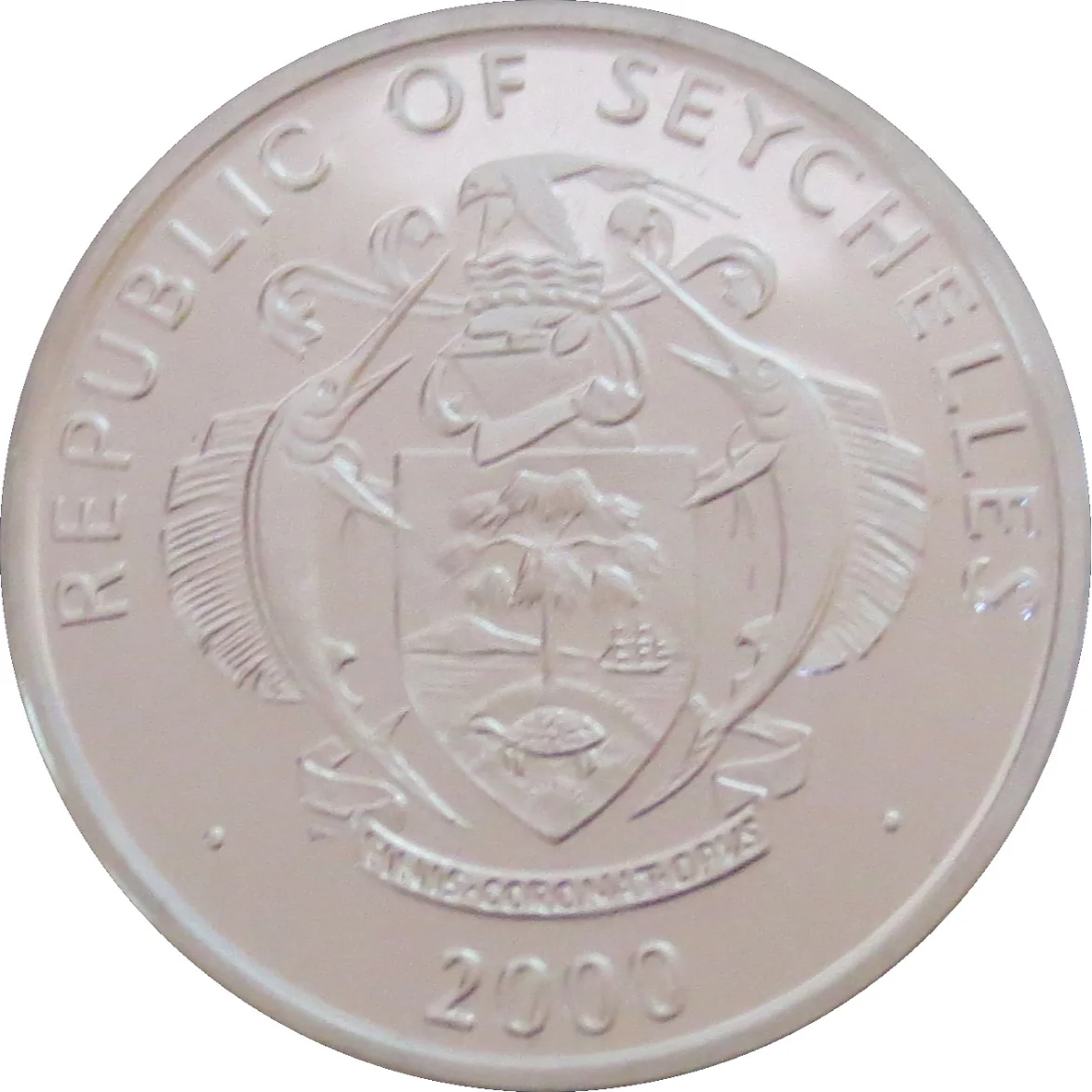
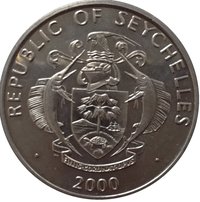
Obverse
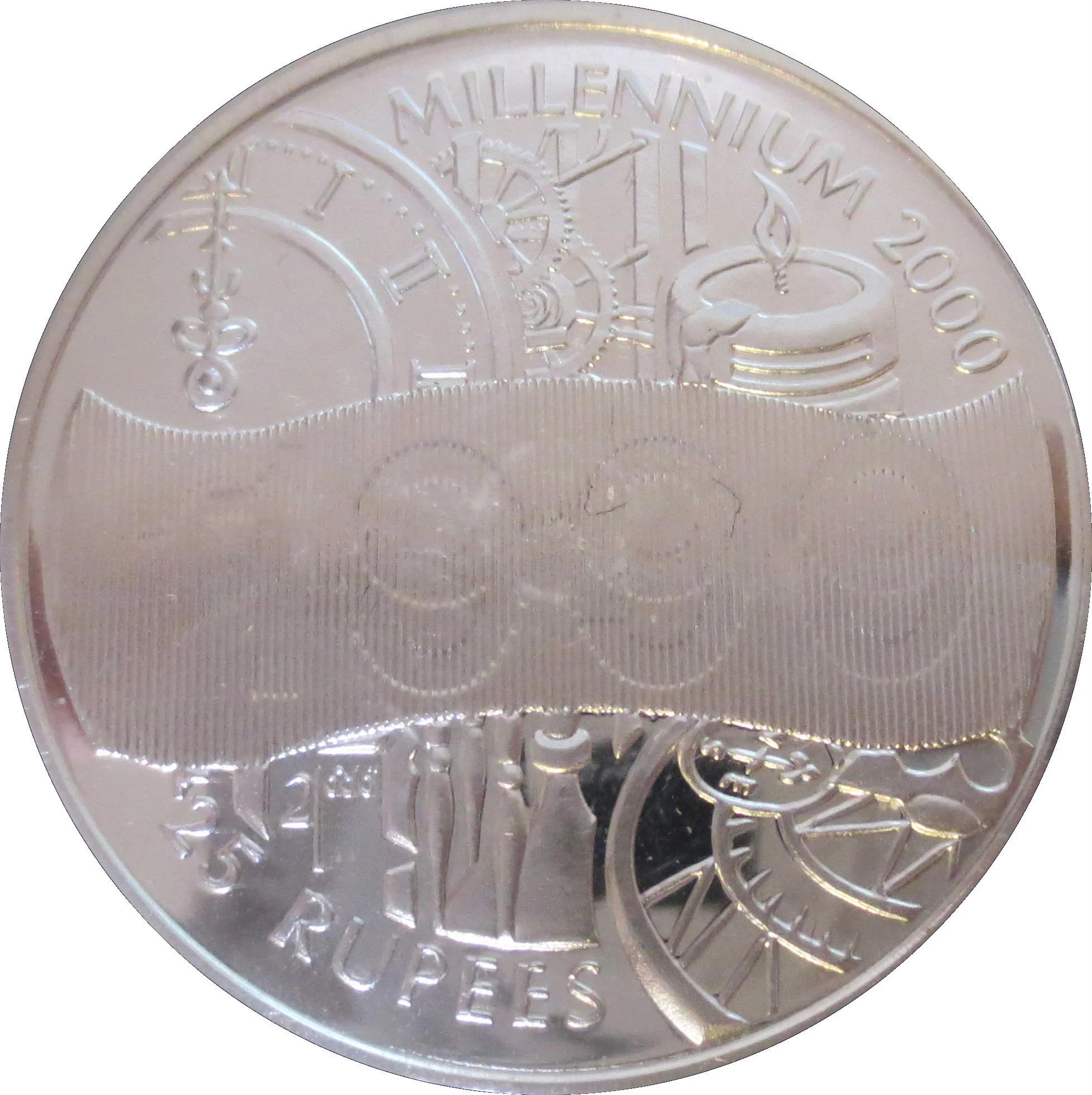
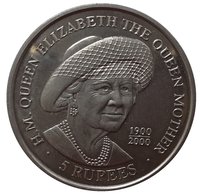
Reverse
Edge
Categories
| Symbols> Coat of Arms |
| Event> Millennium |
Mints
| Name | Mark |
|---|---|
| Pobjoy Mint | PM |
Mintings
| Year | Mint Mark | Mintage | Quality | Collection |
|---|---|---|---|---|
| 2000 | — | 10,000 |
Historical background
In the year 2000, the Seychellois economy was navigating the aftermath of a severe foreign exchange crisis that had peaked in the late 1990s. The country operated under a strict exchange control regime, with the Seychelles rupee (SCR) officially pegged to a basket of currencies but, in reality, tightly managed by the Central Bank of Seychelles. This official rate, however, masked a critical problem: a thriving black market for foreign currency, where the rupee traded at a significant discount, sometimes at double the official rate. This disparity highlighted a profound imbalance, driven by a chronic trade deficit, limited foreign reserves, and an overvalued official exchange rate that discouraged tourism receipts and foreign investment while making imports artificially cheap.
The government's response, led by President France-Albert René, was a system of heavy state intervention in the economy. Essential imports were prioritized and subsidized through allocated foreign exchange at the official rate, while numerous goods were subject to import licensing. This complex and restrictive system created bottlenecks for businesses, encouraged corruption, and led to frequent shortages of goods. The economy was characterized by a large parastatal sector and significant public debt, with fiscal pressures constraining the government's ability to address the underlying structural issues.
Consequently, the currency situation in 2000 was one of entrenched duality and economic strain. The official peg provided superficial stability but at the cost of competitiveness and growth. The parallel market acted as a pressure valve and a more accurate indicator of the rupee's value, but it also undermined formal economic activity and policy credibility. This unsustainable equilibrium set the stage for the profound liberalization reforms that would follow later in the decade, culminating in the dramatic float and devaluation of the rupee in 2008 under an International Monetary Fund program.
The government's response, led by President France-Albert René, was a system of heavy state intervention in the economy. Essential imports were prioritized and subsidized through allocated foreign exchange at the official rate, while numerous goods were subject to import licensing. This complex and restrictive system created bottlenecks for businesses, encouraged corruption, and led to frequent shortages of goods. The economy was characterized by a large parastatal sector and significant public debt, with fiscal pressures constraining the government's ability to address the underlying structural issues.
Consequently, the currency situation in 2000 was one of entrenched duality and economic strain. The official peg provided superficial stability but at the cost of competitiveness and growth. The parallel market acted as a pressure valve and a more accurate indicator of the rupee's value, but it also undermined formal economic activity and policy credibility. This unsustainable equilibrium set the stage for the profound liberalization reforms that would follow later in the decade, culminating in the dramatic float and devaluation of the rupee in 2008 under an International Monetary Fund program.
💎 Extremely Rare