

25 piastres – Egypt
Add to wishlist
Egypt
Context
Material
References
Numista: #373865
Value
Exchange value: 0.25 EGP
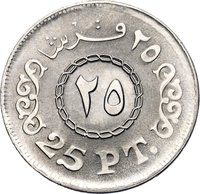
Obverse
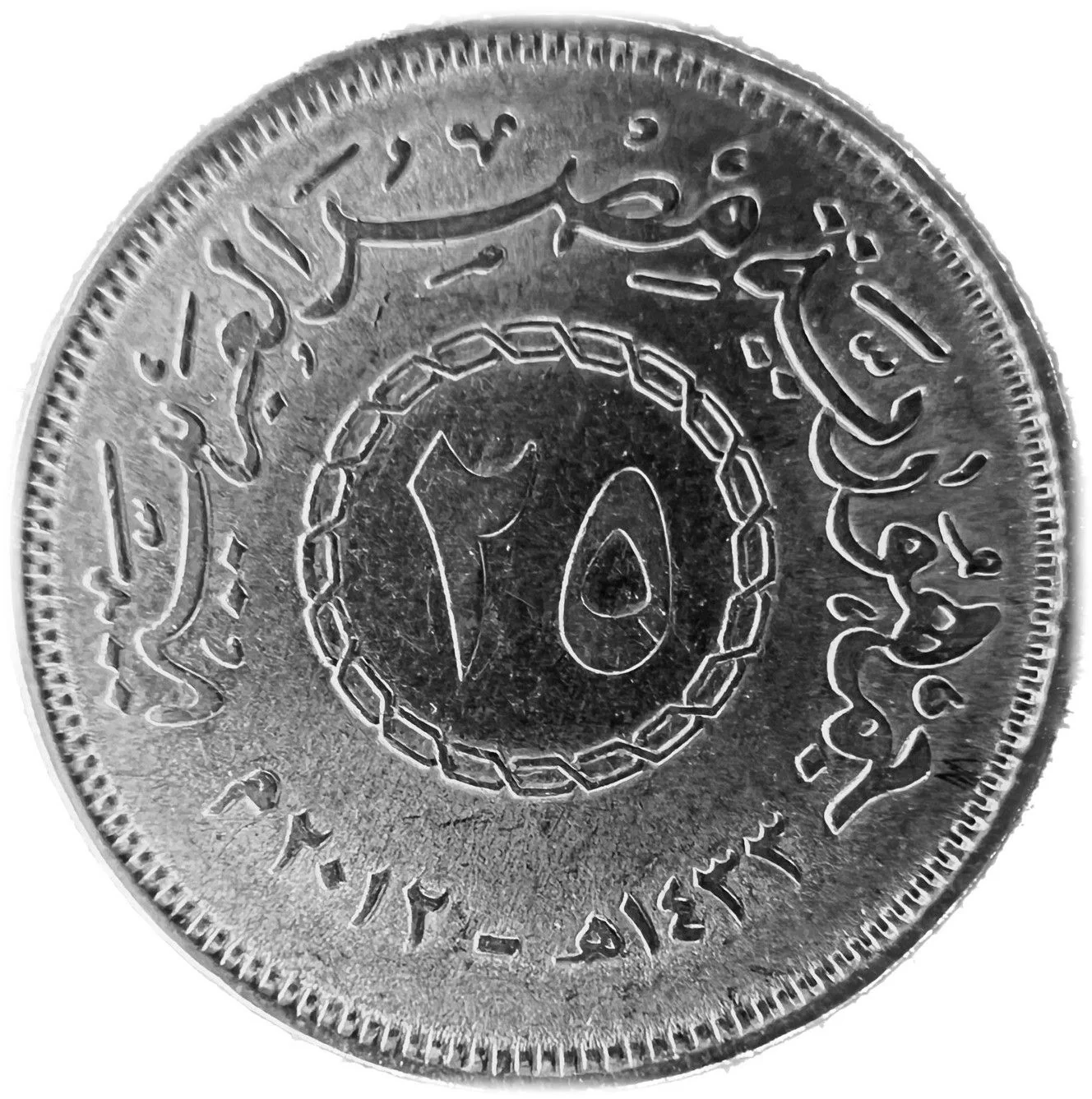
Description:
Central value, Arabic top, dates below.
Inscription:
جمهورية مصر العربية
٢٥
٢٠١٢ - ۱٤٣٣
٢٥
٢٠١٢ - ۱٤٣٣
Translation:
Arab Republic of Egypt
25
2012 - 1433
25
2012 - 1433
Script: Arabic (naskh)
Language: Arabic
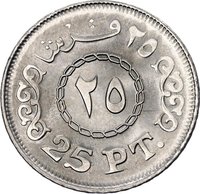
Reverse
Description:
Central value, Arabic top, dates below.
Inscription:
جمهورية مصر العربية
٢٥
٢٠١٢ - ۱٤٣٣
٢٥
٢٠١٢ - ۱٤٣٣
Translation:
Arab Republic of Egypt
25
2012 - 1433
25
2012 - 1433
Script: Arabic (naskh)
Language: Arabic
Edge
Reeded
Mints
| Name | Mark |
|---|---|
| Egyptian Mint Authority | — |
Mintings
| Year | Mint Mark | Mintage | Quality | Collection |
|---|---|---|---|---|
| 2012 | — | — |
Historical background
Following the 2011 revolution that ousted Hosni Mubarak, Egypt entered 2012 in a state of profound economic uncertainty, which placed immense pressure on its currency, the Egyptian pound (EGP). The political transition scared away tourists and foreign investors, two vital sources of hard currency. Simultaneously, the country was depleting its foreign reserves at an alarming rate—from over $36 billion pre-revolution to around $15 billion by mid-2012—in a desperate attempt to prop up the pound and fund essential imports like wheat and fuel. This created a widening gap between the official exchange rate and the black-market rate, as confidence in the economy waned.
The government, led first by the military council and then by the newly elected President Mohamed Morsi of the Muslim Brotherhood, faced a difficult dilemma. To secure a crucial $4.8 billion loan from the International Monetary Fund (IMF), it was required to implement austerity measures and allow the currency to devalue to a more realistic level. However, fearing public backlash over rising prices for basic goods, the authorities repeatedly postponed the deal and continued to burn through reserves to maintain an artificial strength of the pound. This policy was unsustainable and merely deferred an inevitable economic reckoning.
Consequently, 2012 ended with the currency crisis unresolved but significantly worsened. The Central Bank of Egypt (CBE) was forced to take unprecedented steps, including implementing a controversial foreign exchange auction system in late December to ration US dollars. This move effectively engineered a controlled devaluation, but it also highlighted the severe shortage of hard currency. The situation created a complex multi-tier exchange rate system, stifled business, and led to frequent shortages of imported goods, setting the stage for a more severe devaluation and economic reforms in the years immediately following.
The government, led first by the military council and then by the newly elected President Mohamed Morsi of the Muslim Brotherhood, faced a difficult dilemma. To secure a crucial $4.8 billion loan from the International Monetary Fund (IMF), it was required to implement austerity measures and allow the currency to devalue to a more realistic level. However, fearing public backlash over rising prices for basic goods, the authorities repeatedly postponed the deal and continued to burn through reserves to maintain an artificial strength of the pound. This policy was unsustainable and merely deferred an inevitable economic reckoning.
Consequently, 2012 ended with the currency crisis unresolved but significantly worsened. The Central Bank of Egypt (CBE) was forced to take unprecedented steps, including implementing a controversial foreign exchange auction system in late December to ration US dollars. This move effectively engineered a controlled devaluation, but it also highlighted the severe shortage of hard currency. The situation created a complex multi-tier exchange rate system, stifled business, and led to frequent shortages of imported goods, setting the stage for a more severe devaluation and economic reforms in the years immediately following.
💎 Extremely Rare