

200 Dollars – Australia
Non-circulating coins
Commemoration: Queen Elizabeth II Platinum Jubilee.
Australia
Context

Material
References
KM: #Click to copy to clipboard4446
Numista: #373236
Value
Exchange value: 200 AUD = $142.41
Bullion value: $10397.06
Inflation-adjusted value: 233.00 AUD
Obverse
Description:
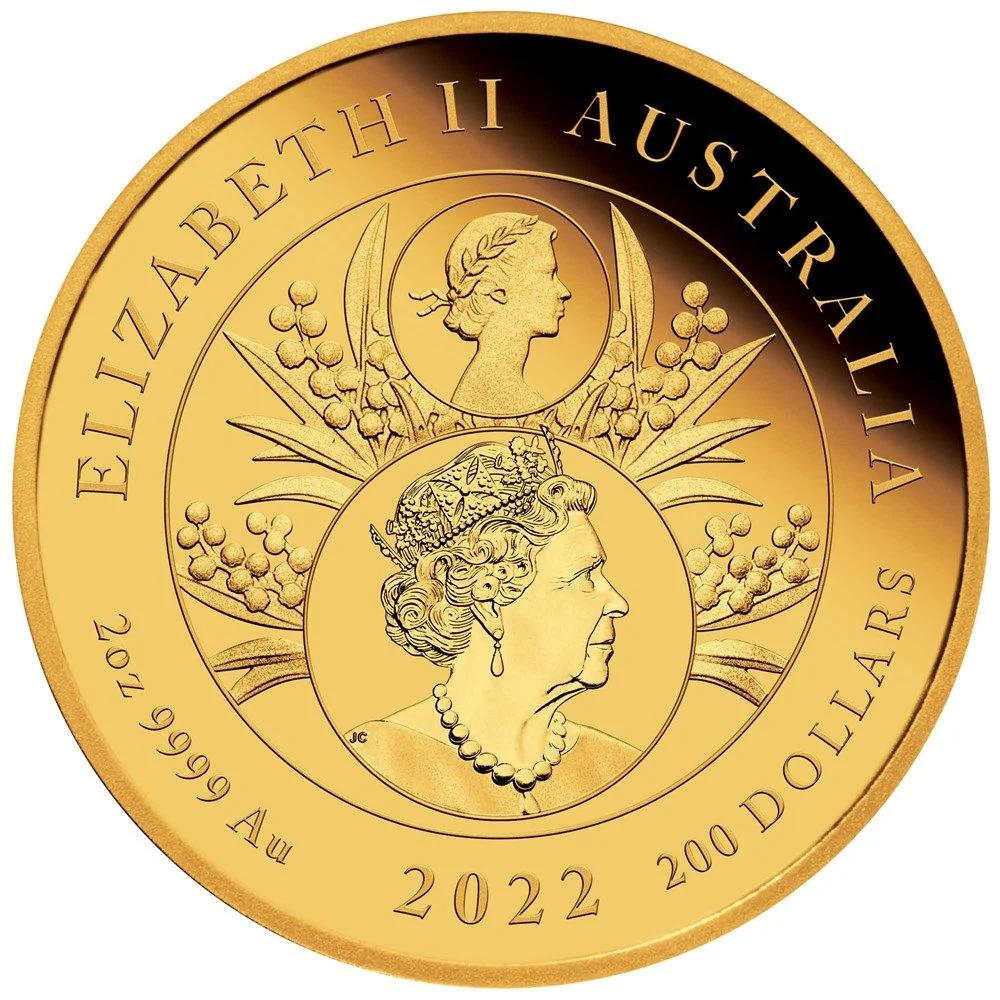
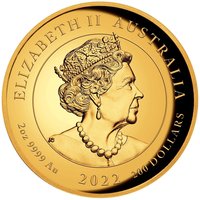
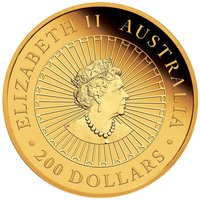
A fan of wattle overlaid with crowned portraits of Queen Elizabeth II: the 6th portrait in the George IV State Diadem and the 1st portrait wearing a laurel.
Inscription:
ELIZABETH II AUSTRALIA
2oz 9999 Au 2022
200 DOLLARS
JC
2oz 9999 Au 2022
200 DOLLARS
JC
Script: Latin
Designers: Jody Clark, Mary Gillick
Reverse
Description:
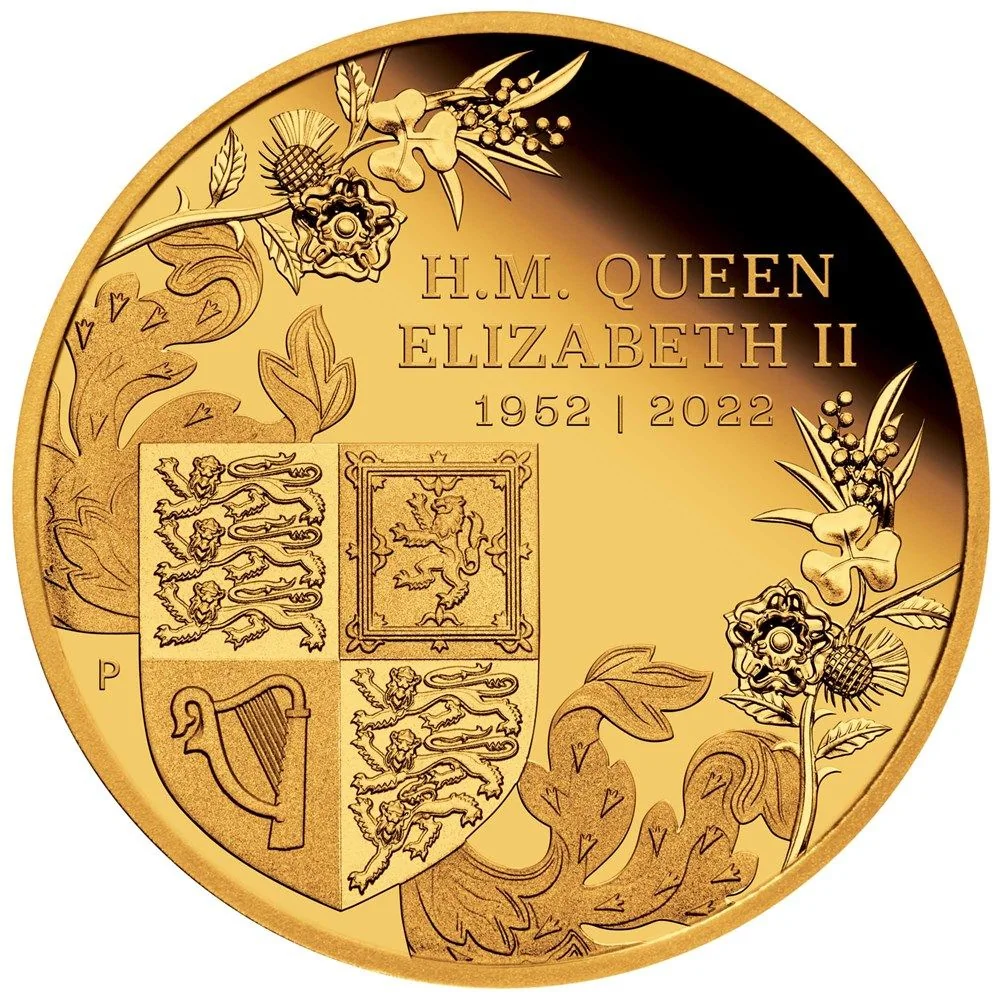
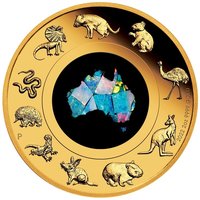
The shield of the Royal Arms with a stem combining an English rose, Irish shamrock, Scottish thistle, and Australian wattle, alongside a stylized interpretation of the knightly mantle.
Inscription:
H. M. QUEEN
ELIZABETH II
1952 2022
P
ELIZABETH II
1952 2022
P
Script: Latin
Edge
Reeded
Mints
| Name | Mark |
|---|---|
| Perth Mint | P |
Mintings
| Year | Mint Mark | Mintage | Quality | Collection |
|---|---|---|---|---|
| 2022 | — | — | Proof |
Historical background
In 2022, Australia's currency situation was defined by a year of significant volatility and a notable depreciation against the US dollar. The Australian dollar (AUD) began the year trading around 72 US cents but fell sharply, breaching the psychological 70-cent mark in May and plummeting to a two-year low near 62 cents by October. This decline was primarily driven by aggressive interest rate hikes by the US Federal Reserve, which strengthened the USD globally, and by growing fears of a worldwide economic slowdown dampening demand for Australia's key commodity exports.
Domestically, the Reserve Bank of Australia (RBA) embarked on its own tightening cycle to combat surging inflation, which peaked at 7.8% in late 2022. However, the RBA's rate increases were more measured than those in the US, creating a widening interest rate differential that further pressured the AUD. While high global prices for key exports like iron ore and liquefied natural gas (LNG) provided some underlying support, this was overshadowed by the stronger global headwinds of risk aversion and a powerful US dollar.
The currency's weakness presented a mixed economic picture. On one hand, it contributed to imported inflation, making overseas goods and travel more expensive for Australians. On the other, it provided a boost to export-oriented sectors like mining, agriculture, and international education by making their products and services more competitive. By year's end, the AUD had recovered slightly to around 68 US cents, but it remained sensitive to global central bank policies and concerns over China's economic health, a major destination for Australian exports.
Domestically, the Reserve Bank of Australia (RBA) embarked on its own tightening cycle to combat surging inflation, which peaked at 7.8% in late 2022. However, the RBA's rate increases were more measured than those in the US, creating a widening interest rate differential that further pressured the AUD. While high global prices for key exports like iron ore and liquefied natural gas (LNG) provided some underlying support, this was overshadowed by the stronger global headwinds of risk aversion and a powerful US dollar.
The currency's weakness presented a mixed economic picture. On one hand, it contributed to imported inflation, making overseas goods and travel more expensive for Australians. On the other, it provided a boost to export-oriented sectors like mining, agriculture, and international education by making their products and services more competitive. By year's end, the AUD had recovered slightly to around 68 US cents, but it remained sensitive to global central bank policies and concerns over China's economic health, a major destination for Australian exports.

✨ Legendary