

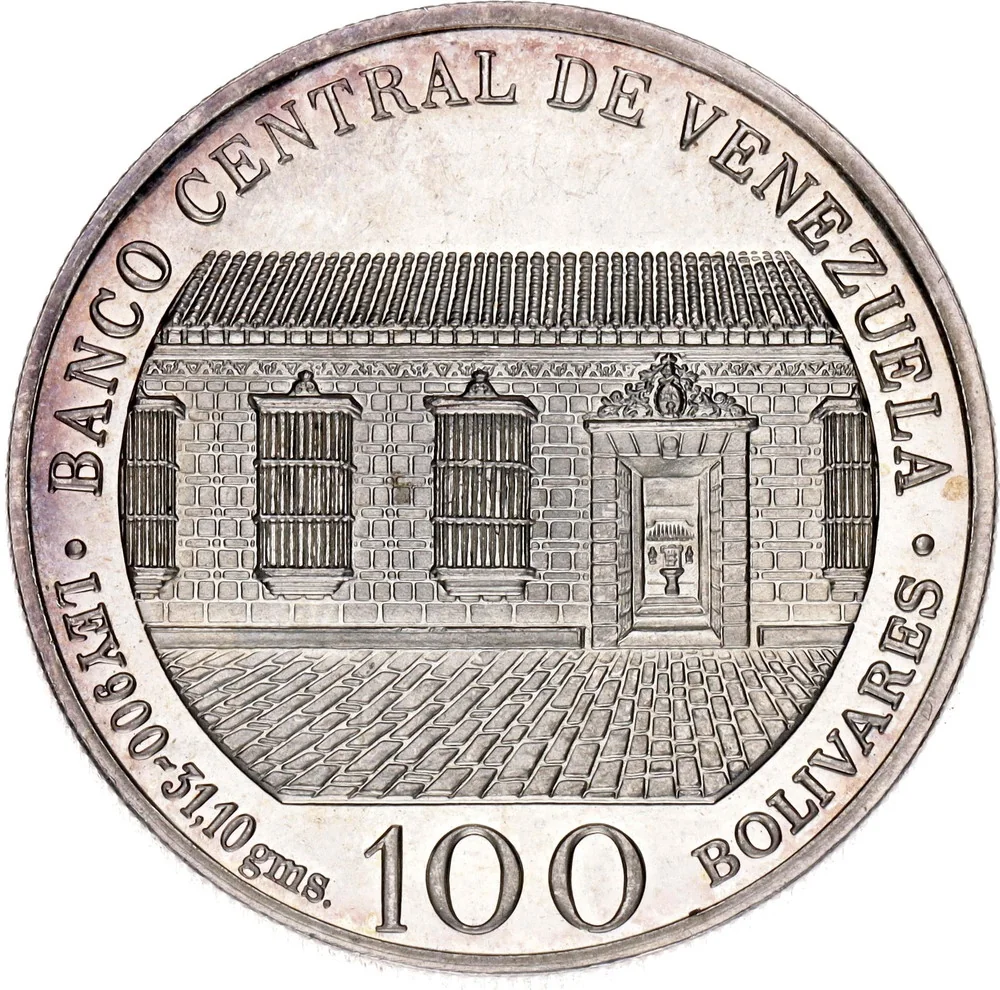
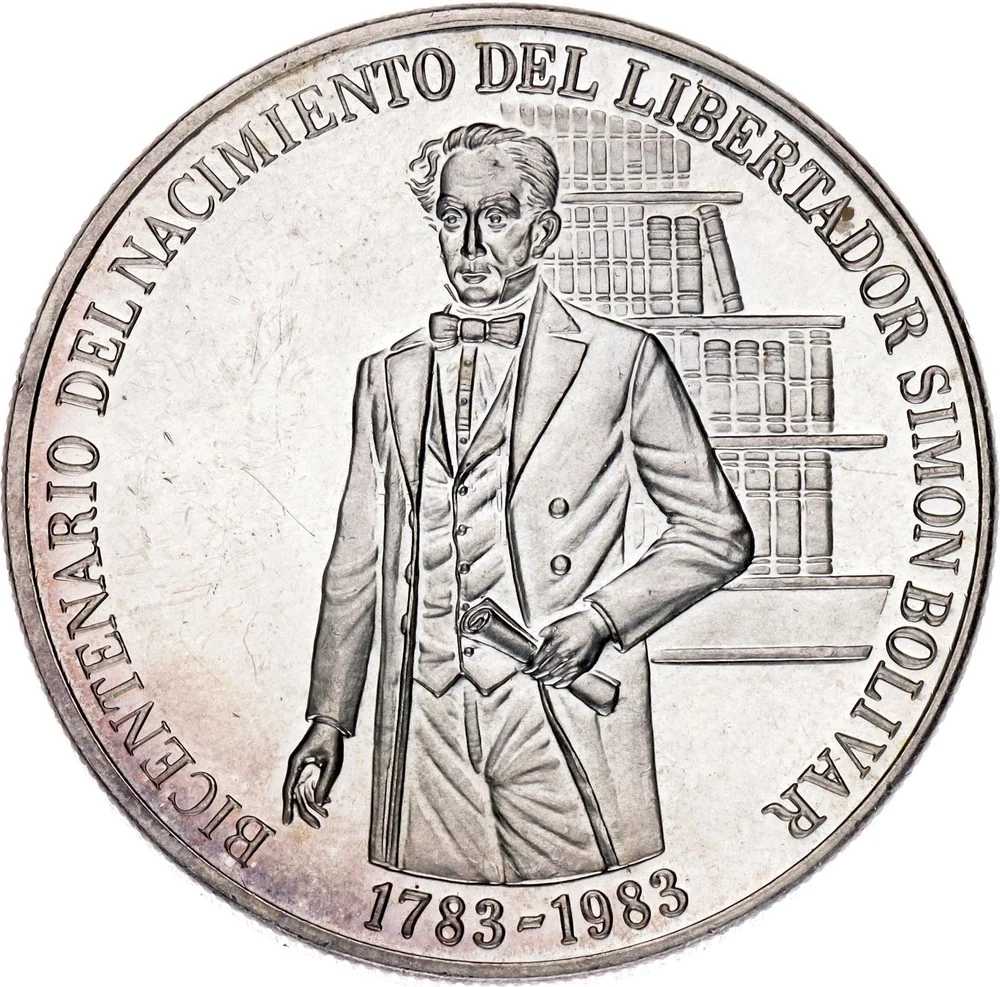
100 bolivars (Simon Bolivar) – Venezuela
Add to wishlist
Non-circulating coins
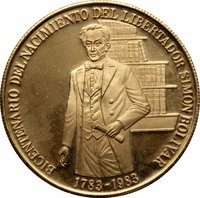
Commemoration: 200th Anniversary - Birth of Simon Bolivar
Venezuela
Context
Year: 1983
Issuer: Venezuela
Period:
(1953—1999)
Currency:
(1879—2007)
Demonetization: 31 December 2011
Total mintage: 300,000
Material
Diameter: 35 mm
Weight: 31.1 g
Silver Weight:: 27.99 g
Thickness: 3.62 mm
Shape: Round
Composition: 90% Silver
Standard: Silver ounce
Magnetic: No
Technique: Milled
Alignment: Coin alignment
flip
References
Y: #
Numista: #37248
Value
Exchange value: 100 VEB
Bullion value: $71.52
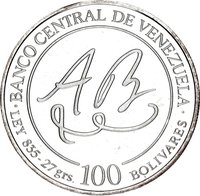
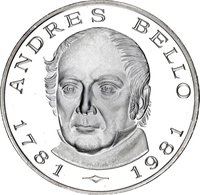
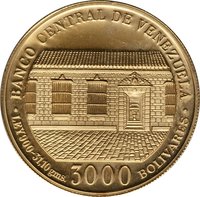
Obverse
Reverse
Edge
Reeded
Categories
| Event> Birth anniversary |
Mints
| Name | Mark |
|---|---|
| VDM Metals / Vereinigte Deutsche Metallwerke | — |
Mintings
| Year | Mint Mark | Mintage | Quality | Collection |
|---|---|---|---|---|
| 1983 | — | 300,000 | Proof |
Historical background
The year 1983 marked a pivotal turning point in Venezuela's economic history, known as "Viernes Negro" or Black Friday. On February 18, the government of President Luis Herrera Campíns, facing a severe fiscal crisis triggered by a collapse in global oil prices and massive foreign debt, made the fateful decision to devalue the bolívar. This ended a 22-year period of currency stability and a fixed exchange rate of 4.3 bolívares to the US dollar, a cornerstone of the nation's oil-fueled prosperity during the 1970s. The immediate devaluation was drastic, introducing a multi-tiered exchange rate system where the currency lost over half its value for most essential imports and capital flows.
This event shattered national confidence and exposed the profound vulnerability of Venezuela's petro-state model. The economy, which had borrowed and spent extravagantly during the oil boom, was left crippled by debt repayments as revenues plummeted. The devaluation was not merely a technical adjustment but a profound socio-economic shock, leading to an immediate spike in inflation, capital flight, and a sharp decline in purchasing power for the middle and working classes. For the first time in a generation, Venezuelans experienced widespread scarcity and a painful erosion of living standards.
Consequently, 1983 is widely regarded as the end of "La Venezuela Saudita" (Saudi Venezuela) and the beginning of a prolonged economic decline and chronic currency instability. The multi-tiered exchange system established after Black Friday created fertile ground for corruption and arbitrage, setting a precedent for complex currency controls that would be expanded in later decades. The crisis fundamentally altered the country's political landscape, eroding faith in the traditional two-party system (Punto Fijo pact) and setting the stage for the economic turmoil and political upheaval that would define Venezuela's future.
This event shattered national confidence and exposed the profound vulnerability of Venezuela's petro-state model. The economy, which had borrowed and spent extravagantly during the oil boom, was left crippled by debt repayments as revenues plummeted. The devaluation was not merely a technical adjustment but a profound socio-economic shock, leading to an immediate spike in inflation, capital flight, and a sharp decline in purchasing power for the middle and working classes. For the first time in a generation, Venezuelans experienced widespread scarcity and a painful erosion of living standards.
Consequently, 1983 is widely regarded as the end of "La Venezuela Saudita" (Saudi Venezuela) and the beginning of a prolonged economic decline and chronic currency instability. The multi-tiered exchange system established after Black Friday created fertile ground for corruption and arbitrage, setting a precedent for complex currency controls that would be expanded in later decades. The crisis fundamentally altered the country's political landscape, eroding faith in the traditional two-party system (Punto Fijo pact) and setting the stage for the economic turmoil and political upheaval that would define Venezuela's future.
🌟 Limited