

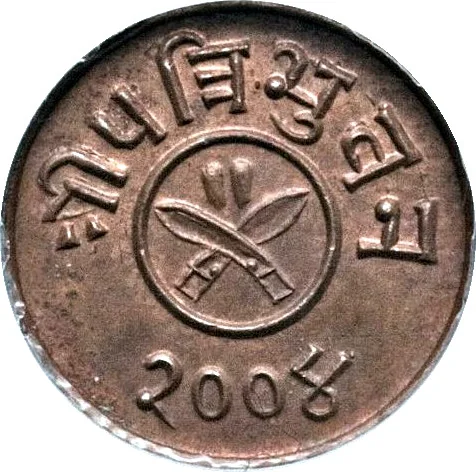
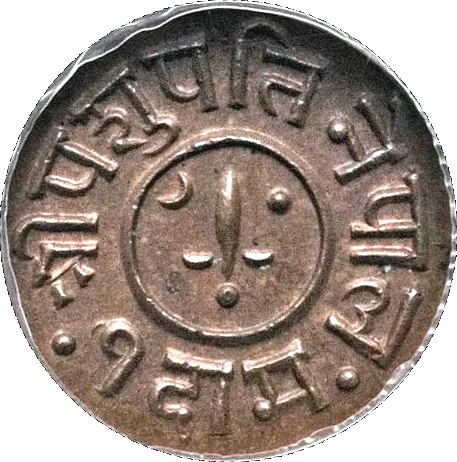
¼ paisa – Nepal
Add to wishlist
Nepal
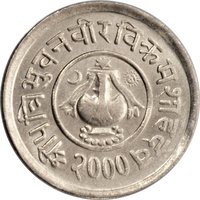
Obverse
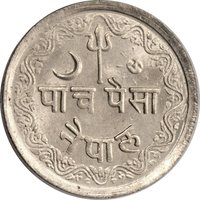
Reverse
Edge
Mintings
| Year | Mint Mark | Mintage | Quality | Collection |
|---|---|---|---|---|
| 1943 | — | — | ||
| 1947 | — | — |
Historical background
In 1943, Nepal's currency situation was fundamentally shaped by its dual monetary system and its economic subordination to British India. The country circulated both the silver Mohar (and its decimalized successor, the Rupee) and the Nepalese rupee, but the dominant and most trusted medium for larger transactions and foreign trade was the Indian rupee. This was due to the Nepal-British Treaty of 1923, which, while recognizing Nepal's independence, effectively tied its economy to India's. The Indian rupee was legally acceptable and widely used, especially in the Tarai region and for government dealings with the south, creating a de facto currency board scenario where the Nepalese rupee's stability was pegged to its Indian counterpart.
Internally, the period was marked by significant coinage debasement and inflationary pressures. The Rana regime, facing fiscal strain from its lavish expenditures and the need to finance its contribution to the British war effort in World War II, increasingly resorted to minting coins with lower silver content. This erosion of the metallic value of the domestic coinage, particularly the smaller denominations, led to a loss of public confidence and a preference for hoarding older, purer coins or Indian currency. The situation was exacerbated by wartime shortages and supply chain disruptions, which drove up prices for essential goods, squeezing the peasant majority.
Furthermore, the war presented a paradoxical economic twist. While causing inflation, it also generated a large inflow of Indian rupees through two main channels: the pensions and salaries of over 250,000 Nepalese Gurkha soldiers serving in the British Indian Army, and the lucrative trade in timber and foodstuffs to supply Allied forces in India. This influx increased the money supply but did not translate into broad domestic prosperity, as wealth was concentrated among the Rana elite and merchant families involved in the export trade. Thus, in 1943, Nepal's currency landscape was one of dependency, internal depreciation, and wartime distortion, setting the stage for future monetary reforms.
Internally, the period was marked by significant coinage debasement and inflationary pressures. The Rana regime, facing fiscal strain from its lavish expenditures and the need to finance its contribution to the British war effort in World War II, increasingly resorted to minting coins with lower silver content. This erosion of the metallic value of the domestic coinage, particularly the smaller denominations, led to a loss of public confidence and a preference for hoarding older, purer coins or Indian currency. The situation was exacerbated by wartime shortages and supply chain disruptions, which drove up prices for essential goods, squeezing the peasant majority.
Furthermore, the war presented a paradoxical economic twist. While causing inflation, it also generated a large inflow of Indian rupees through two main channels: the pensions and salaries of over 250,000 Nepalese Gurkha soldiers serving in the British Indian Army, and the lucrative trade in timber and foodstuffs to supply Allied forces in India. This influx increased the money supply but did not translate into broad domestic prosperity, as wealth was concentrated among the Rana elite and merchant families involved in the export trade. Thus, in 1943, Nepal's currency landscape was one of dependency, internal depreciation, and wartime distortion, setting the stage for future monetary reforms.
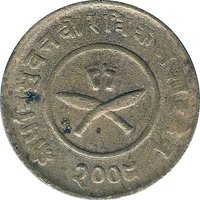
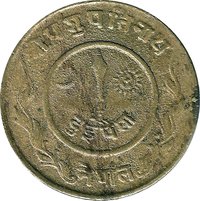
💎 Extremely Rare