

7½ euro (Vasco da Gama Aquarium) – Portugal
Add to wishlist
Non-circulating coins
Commemoration: 125th Anniversary of the Vasco da Gama Aquarium
Portugal

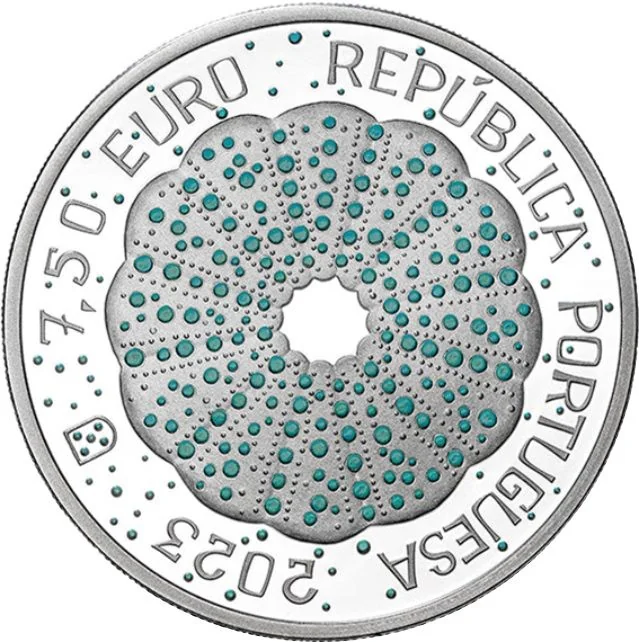
Obverse
Inscription:
7,50 EURO REPÚBLICA PORTUGUESA 2023
Translation:
Seven point fifty Euro Portuguese Republic 2023
Script: Latin
Languages: Latin, Portuguese
Designer: Baiba Šime
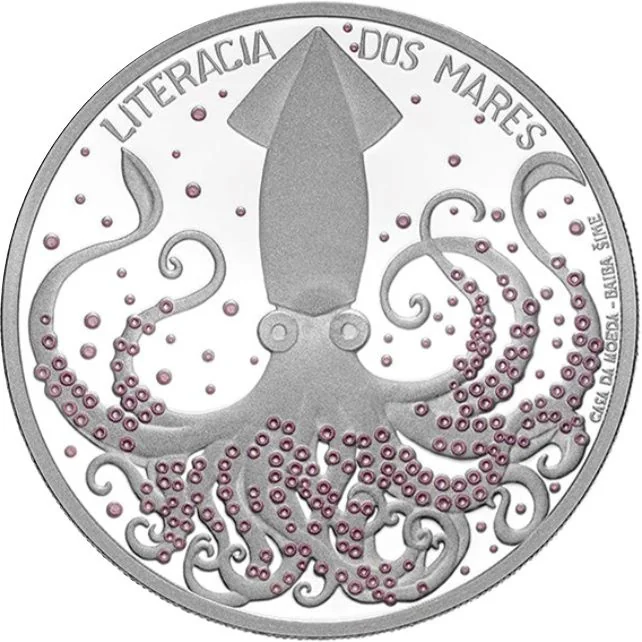
Reverse
Inscription:
LITERACIA DOS MARES
CASA DA MOEDA – BAIBA ŠIME
CASA DA MOEDA – BAIBA ŠIME
Translation:
Literacy of the Seas
Casa da Moeda – Baiba Šime
Casa da Moeda – Baiba Šime
Script: Latin
Languages: Croatian, Portuguese
Designer: Baiba Šime
Edge
Reeded
Categories
| Building> Museum |
| Animal> Crustacean |
| Symbols> Coat of Arms |
Mints
| Name | Mark |
|---|---|
| Imprensa Nacional - Casa da Moeda | — |
Mintings
| Year | Mint Mark | Mintage | Quality | Collection |
|---|---|---|---|---|
| 2023 | — | 2,500 | Proof |
Historical background
In 2023, Portugal's currency situation was defined by its continued and stable membership in the Eurozone, using the euro (€) as its sole legal tender. As a member of the European Union's single currency, Portugal's monetary policy was set by the European Central Bank (ECB), which focused aggressively on combating high inflation throughout the year. The ECB's successive interest rate hikes aimed to cool the euro area economy, directly influencing borrowing costs, credit availability, and economic activity within Portugal. This shared monetary framework meant Portugal benefited from currency stability and deep financial integration but had no independent lever to address domestic economic conditions through interest rates or devaluation.
Domestically, the key challenge was navigating the inflationary pressures that began in 2022, driven by global energy and food prices. While inflation in Portugal moderated from its peak, it remained a central concern for households and businesses, eroding purchasing power. The national context was marked by a rising cost of living, particularly in housing and essential goods, which became a major political issue. The Bank of Portugal, the national central bank within the Eurosystem, supported the ECB's tight monetary policy while repeatedly warning about the risks of high household and corporate debt levels in a rising interest rate environment.
Looking forward, the currency stability of the euro provided a foundation, but Portugal's economic performance in 2023 was more directly shaped by national fiscal policy and EU funds. The government focused on managing the social impact of inflation through targeted support measures while implementing investments funded by the European Union's Recovery and Resilience Plan (RRP). The primary economic debates, therefore, centered not on currency matters but on budgetary choices, public investment, and structural reforms aimed at boosting productivity and long-term growth within the constraints and advantages of the common European currency.
Domestically, the key challenge was navigating the inflationary pressures that began in 2022, driven by global energy and food prices. While inflation in Portugal moderated from its peak, it remained a central concern for households and businesses, eroding purchasing power. The national context was marked by a rising cost of living, particularly in housing and essential goods, which became a major political issue. The Bank of Portugal, the national central bank within the Eurosystem, supported the ECB's tight monetary policy while repeatedly warning about the risks of high household and corporate debt levels in a rising interest rate environment.
Looking forward, the currency stability of the euro provided a foundation, but Portugal's economic performance in 2023 was more directly shaped by national fiscal policy and EU funds. The government focused on managing the social impact of inflation through targeted support measures while implementing investments funded by the European Union's Recovery and Resilience Plan (RRP). The primary economic debates, therefore, centered not on currency matters but on budgetary choices, public investment, and structural reforms aimed at boosting productivity and long-term growth within the constraints and advantages of the common European currency.


💎 Very Rare