

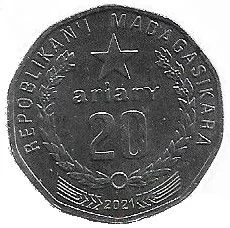
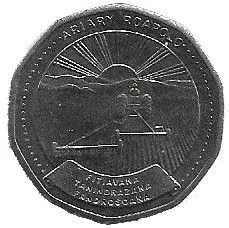
20 ariary – Madagascar
Add to wishlist
Madagascar
Context
Material
Diameter: 28 mm
Weight: 8.92 g
Thickness: 1.5 mm
Shape: Decagonal
Composition: Stainless steel
Technique: Milled
Alignment: Coin alignment
flip
References
Numista: #368589
Value
Exchange value: 20 MGA
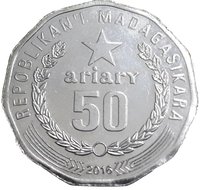
Obverse
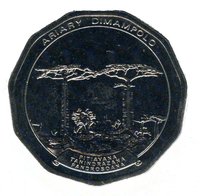
Reverse
Edge
Plain
Categories
| Agriculture |
| Symbol> Sun |
Mintings
| Year | Mint Mark | Mintage | Quality | Collection |
|---|---|---|---|---|
| 2021 | — | — |
Historical background
In 2021, Madagascar's currency, the Malagasy Ariary (MGA), faced significant pressures amidst a severe economic and humanitarian crisis. The country was grappling with the socioeconomic impacts of the COVID-19 pandemic, which severely disrupted tourism and export sectors. Concurrently, the south of the island was experiencing its worst drought in four decades, leading to a catastrophic famine that displaced populations and strained public resources. These twin shocks exacerbated existing fiscal weaknesses, contributing to a widening budget deficit and growing inflationary pressures that directly threatened the currency's stability.
The Ariary experienced sustained depreciation throughout the year, losing value against major currencies like the US dollar and the euro. This devaluation was driven by a combination of factors: a sharp decline in foreign exchange inflows from exports and tourism, rising global commodity prices (especially for food and fuel), and a growing demand for foreign currency for imports. The Central Bank of Madagascar attempted to manage the decline through limited interventions in the foreign exchange market, but its reserves were constrained. Consequently, the official exchange rate often diverged from the stronger rates found in the parallel market, reflecting underlying scarcity and lack of confidence.
The currency depreciation had direct and severe consequences for the population, fueling a surge in inflation which peaked at over 7% annually. This eroded household purchasing power dramatically, particularly for imported essentials like rice, medicine, and fuel. The government's ability to respond was limited by high public debt and the need for external assistance. Ultimately, the currency situation in 2021 was less an isolated monetary event and more a symptom of the profound interconnected crises—climatic, health, and economic—that defined Madagascar's challenging year.
The Ariary experienced sustained depreciation throughout the year, losing value against major currencies like the US dollar and the euro. This devaluation was driven by a combination of factors: a sharp decline in foreign exchange inflows from exports and tourism, rising global commodity prices (especially for food and fuel), and a growing demand for foreign currency for imports. The Central Bank of Madagascar attempted to manage the decline through limited interventions in the foreign exchange market, but its reserves were constrained. Consequently, the official exchange rate often diverged from the stronger rates found in the parallel market, reflecting underlying scarcity and lack of confidence.
The currency depreciation had direct and severe consequences for the population, fueling a surge in inflation which peaked at over 7% annually. This eroded household purchasing power dramatically, particularly for imported essentials like rice, medicine, and fuel. The government's ability to respond was limited by high public debt and the need for external assistance. Ultimately, the currency situation in 2021 was less an isolated monetary event and more a symptom of the profound interconnected crises—climatic, health, and economic—that defined Madagascar's challenging year.
💎 Very Rare