

1 krone – Denmark
Add to wishlist
Denmark
Context
Years: 1947–1960
Issuer: Denmark
Ruler: Frederick IX
Currency:
(since 1873)
Total mintage: 25,691,814
Material
References
KM: #
Numista: #1414
Value
Exchange value: 1 DKK
Obverse
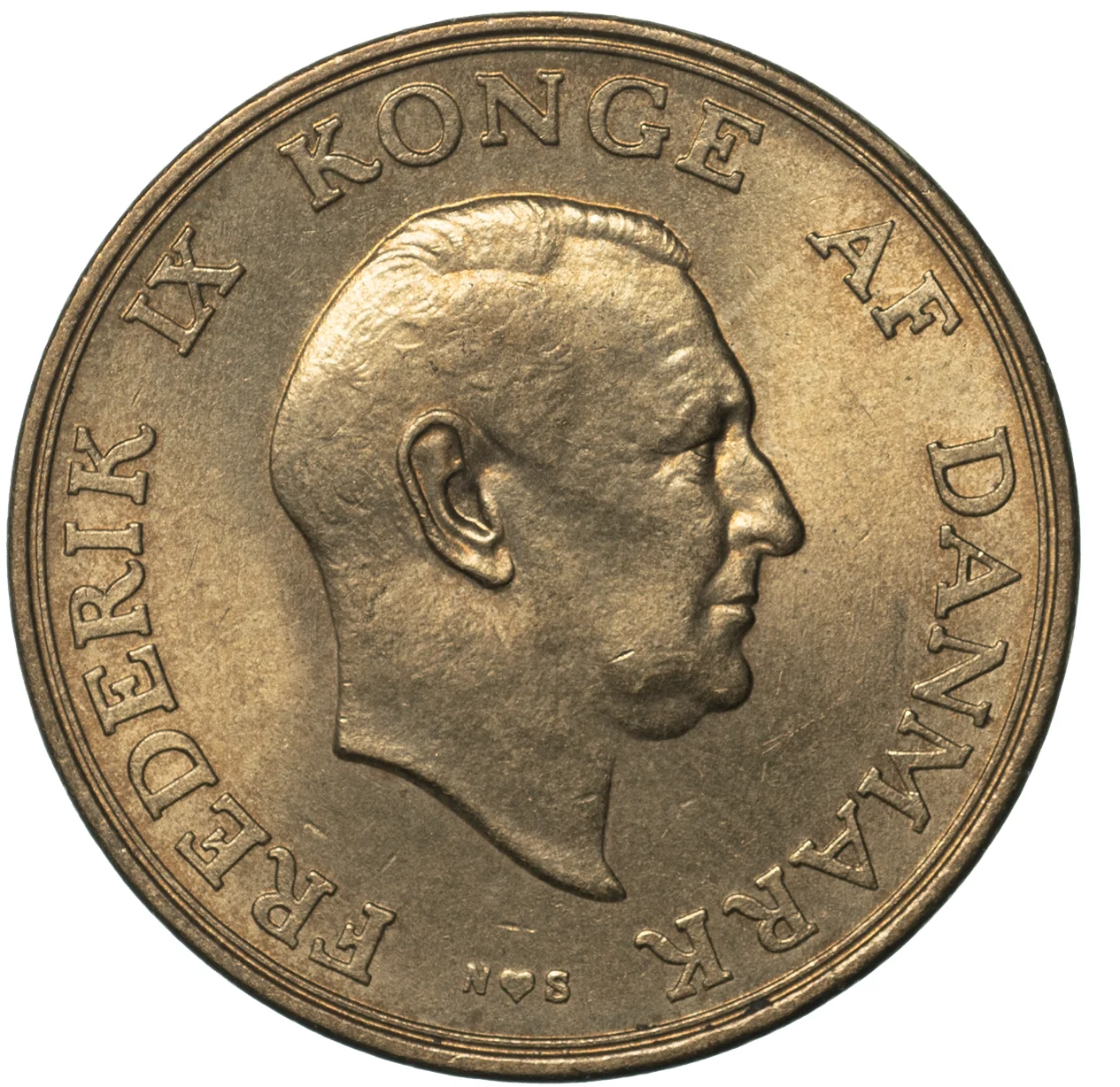
Description:
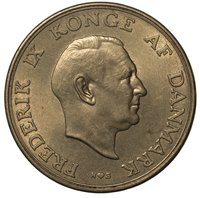
Portrait of Frederik IX facing right.
Inscription:
FREDERIK IX KONGE AF DANMARK
C♥S
C♥S
Translation:
FREDERIK IX KING OF DENMARK
C♥S
C♥S
Script: Latin
Language: Danish
Engraver: H. Salomon
Reverse
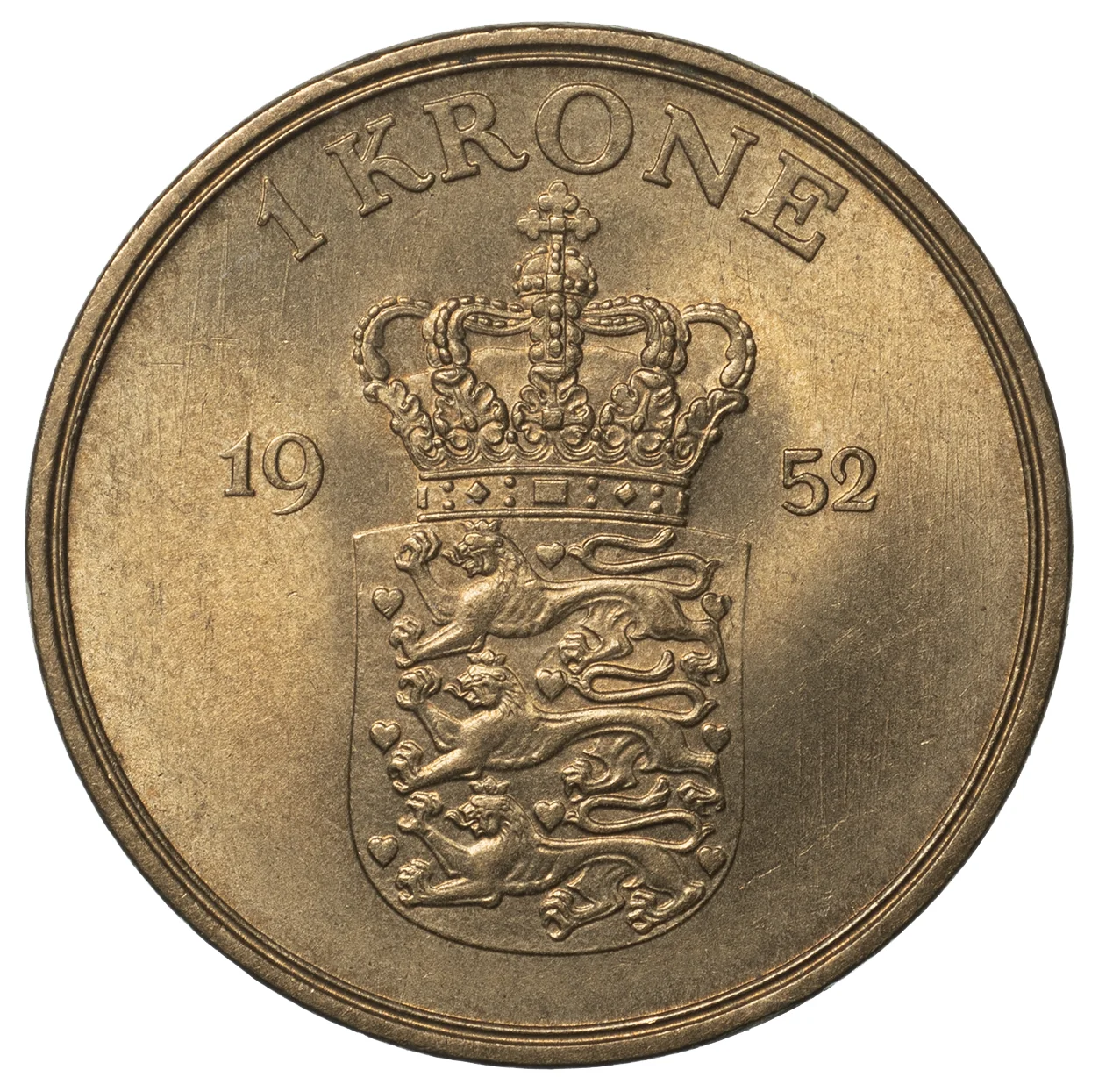
Description:
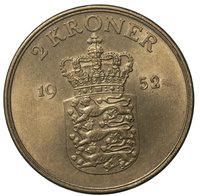
Denmark's lesser coat of arms.
Inscription:
1 KRONE
19 57
19 57
Script: Latin
Engraver: H. Salomon
Edge
Plain
Mints
| Name | Mark |
|---|---|
| Royal Danish Mint | — |
Mintings
| Year | Mint Mark | Mintage | Quality | Collection |
|---|---|---|---|---|
| 1947 | N♥S | — | ||
| 1948 | N♥S | 4,247,510 | ||
| 1949 | N♥S | 1,300,000 | ||
| 1952 | N♥S | 2,124,116 | ||
| 1953 | N♥S | 573,225 | ||
| 1954 | N♥S | 584,026 | ||
| 1955 | N♥S | 1,359,382 | ||
| 1956 | C♥S | 2,857,597 | ||
| 1957 | C♥S | 10,895,655 | ||
| 1958 | C♥S | 1,507,489 | ||
| 1959 | C♥S | 242,714 | ||
| 1960 | C♥S | 100 |
Historical background
In the immediate aftermath of World War II, Denmark, like much of Europe, faced a severe currency and economic crisis in 1947. The country had emerged from the German occupation with its physical infrastructure largely intact, but its economy was strained. Wartime spending, occupation costs, and a pent-up domestic demand for goods had created a large monetary overhang—too much currency chasing too few goods. This fueled inflation and led to a critical shortage of foreign exchange, particularly US dollars, needed to pay for vital imports of raw materials, machinery, and fuel for reconstruction and industrial recovery.
The situation reached a breaking point in the autumn of 1947. Denmark's holdings of hard currency reserves were nearly exhausted, threatening the country's ability to import essential supplies. A major contributing factor was the convertibility of the British pound sterling, which Denmark held in large quantities, into dollars. When Britain made sterling briefly convertible in July 1947, a massive run on its reserves ensued, devaluing the sterling holdings of Denmark and other European nations. This external shock exposed the fragility of Denmark's position and forced the government to seek emergency assistance.
Consequently, the Danish government, led by Prime Minister Hans Hedtoft, was compelled to implement a stringent austerity and stabilization program in November 1947. This included the devaluation of the Danish krone, strict import controls, and the rationing of fuel and certain goods. Crucially, Denmark applied for and received aid from the United States under the Marshall Plan in 1948, which provided the dollar liquidity and material supplies needed to stabilize the currency, rebuild reserves, and set the stage for the economic recovery and modernization of the 1950s.
The situation reached a breaking point in the autumn of 1947. Denmark's holdings of hard currency reserves were nearly exhausted, threatening the country's ability to import essential supplies. A major contributing factor was the convertibility of the British pound sterling, which Denmark held in large quantities, into dollars. When Britain made sterling briefly convertible in July 1947, a massive run on its reserves ensued, devaluing the sterling holdings of Denmark and other European nations. This external shock exposed the fragility of Denmark's position and forced the government to seek emergency assistance.
Consequently, the Danish government, led by Prime Minister Hans Hedtoft, was compelled to implement a stringent austerity and stabilization program in November 1947. This included the devaluation of the Danish krone, strict import controls, and the rationing of fuel and certain goods. Crucially, Denmark applied for and received aid from the United States under the Marshall Plan in 1948, which provided the dollar liquidity and material supplies needed to stabilize the currency, rebuild reserves, and set the stage for the economic recovery and modernization of the 1950s.
🌱 Very Common