

500 lire – Vatican City
Add to wishlist
Circulating commemorative coins
Commemoration: Christianity and Solidarity
Vatican City
Context
Year: 1994
Issuer: Vatican City
Ruler: John Paul II
Currency:
(1929—2001)
Demonetization: 1 March 2002
Total mintage: 38,000
Material
References
KM: #
Numista: #14139
Value
Exchange value: 500 VAL
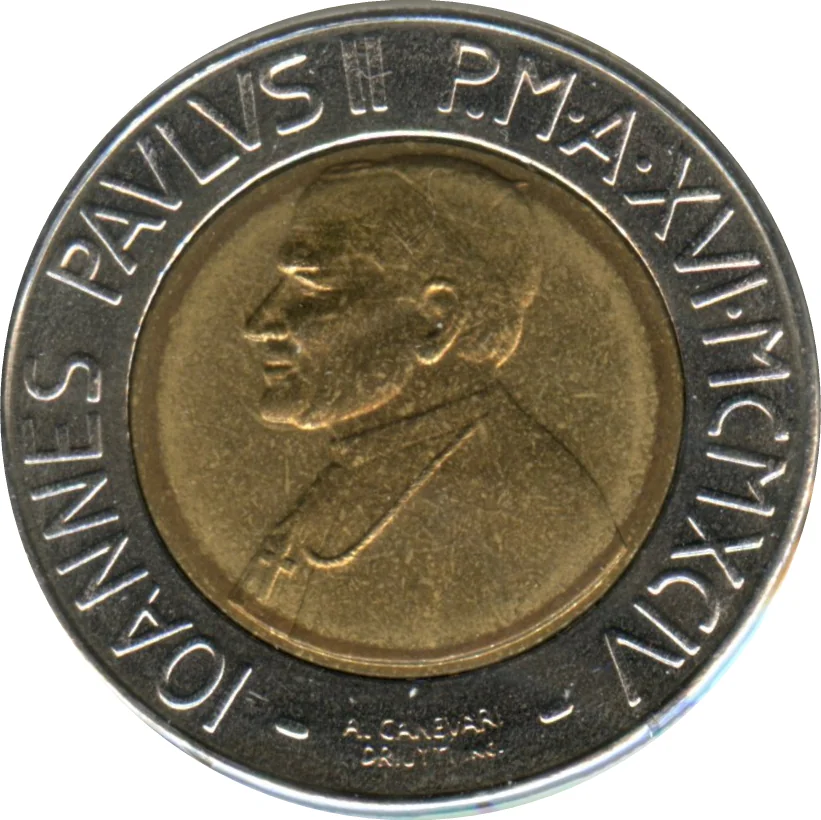
Obverse
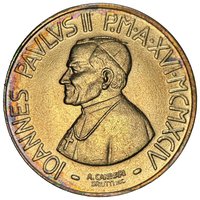
Description:
Left turn
Inscription:
IOANNES PAVLVS II P.M · A · XVI · MCMXCIV
A. CANEVARI
DRIUTTI INC.
A. CANEVARI
DRIUTTI INC.
Translation:
John Paul II, Supreme Pontiff, Year 16, 1994
A. Canevari
Driutti Inc.
A. Canevari
Driutti Inc.
Script: Latin
Engraver: Angelo Canevari
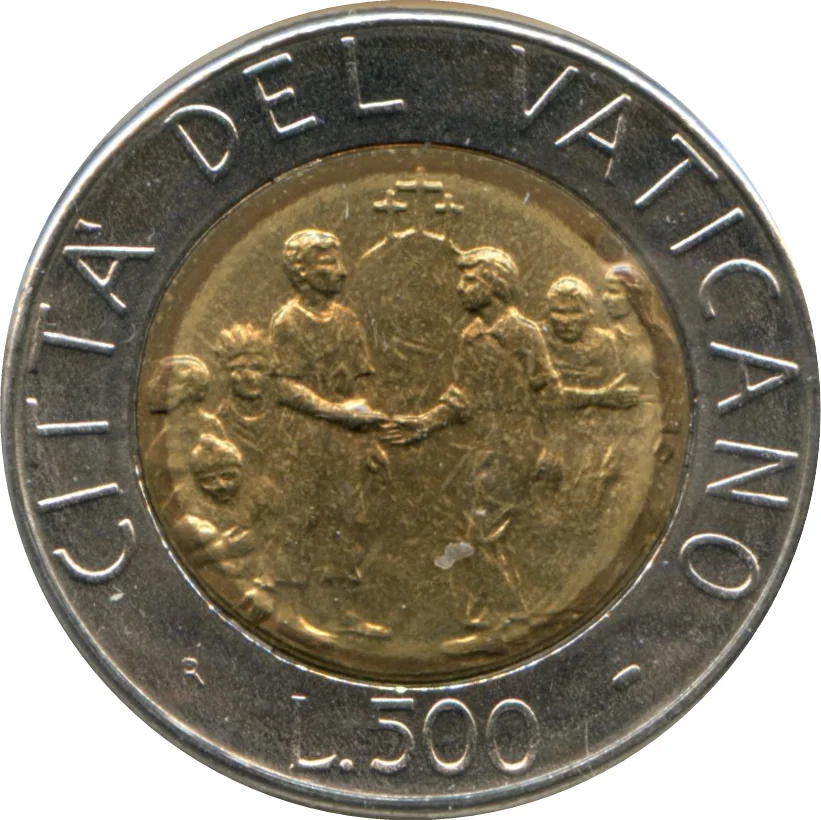
Reverse
Description:
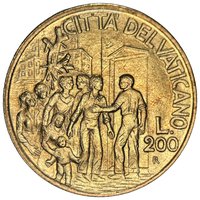
Multinational crowd before Golgotha.
Inscription:
CITTA' DEL VATICANO
R L.500
R L.500
Translation:
Vatican City
500 Lire
500 Lire
Script: Latin
Language: Italian
Engraver: Angelo Canevari
Edge
Segmented reeding
Categories
| Person> Religious figure |
| Symbol> Hand |
| Religion> Religious objects |
| Symbol> Cross |
Mints
| Name | Mark |
|---|---|
| Rome | R |
Mintings
| Year | Mint Mark | Mintage | Quality | Collection |
|---|---|---|---|---|
| 1994 | R | 38,000 |
Historical background
In 1994, the currency situation in Vatican City was defined by its unique status as a sovereign entity with a tiny, non-commercial economy. As a result of the 1929 Lateran Treaty, the Vatican was granted the right to issue its own currency, which it exercised through coins minted for collectors and commemorative purposes. However, for all practical daily transactions, the Italian Lira (ITL) was the de facto circulating currency used within the city-state's walls, in its shops, and for paying its employees. This practical reliance on the Italian monetary system was absolute.
The year 1994 fell within a significant period of European monetary transition. While plans for a single European currency were advancing following the Maastricht Treaty (1992), the Italian Lira remained volatile, having been forced out of the European Exchange Rate Mechanism (ERM) in 1992. Consequently, the Vatican's effective currency was subject to these same fluctuations and instability. Notably, a specific financial agreement between the Vatican and Italy, renewed in 1991, allowed the Vatican to mint its own Lira coins at the Italian Mint, which were legal tender in both territories and interchangeable with Italian coins, further cementing the monetary union.
Therefore, the background of 1994 is one of a hybrid system: the Vatican possessed the formal trappings of monetary sovereignty through its coveted collector coinage, but its operational economy was entirely tied to the Italian Lira. This arrangement was inherently provisional, as European integration promised a future shift. Indeed, just five years later, with the introduction of the Euro, the Vatican would negotiate a new agreement to mint limited Euro coins, transitioning from its dependence on the Lira to a new, fixed relationship with the emerging European single currency.
The year 1994 fell within a significant period of European monetary transition. While plans for a single European currency were advancing following the Maastricht Treaty (1992), the Italian Lira remained volatile, having been forced out of the European Exchange Rate Mechanism (ERM) in 1992. Consequently, the Vatican's effective currency was subject to these same fluctuations and instability. Notably, a specific financial agreement between the Vatican and Italy, renewed in 1991, allowed the Vatican to mint its own Lira coins at the Italian Mint, which were legal tender in both territories and interchangeable with Italian coins, further cementing the monetary union.
Therefore, the background of 1994 is one of a hybrid system: the Vatican possessed the formal trappings of monetary sovereignty through its coveted collector coinage, but its operational economy was entirely tied to the Italian Lira. This arrangement was inherently provisional, as European integration promised a future shift. Indeed, just five years later, with the introduction of the Euro, the Vatican would negotiate a new agreement to mint limited Euro coins, transitioning from its dependence on the Lira to a new, fixed relationship with the emerging European single currency.
🌱 Common