

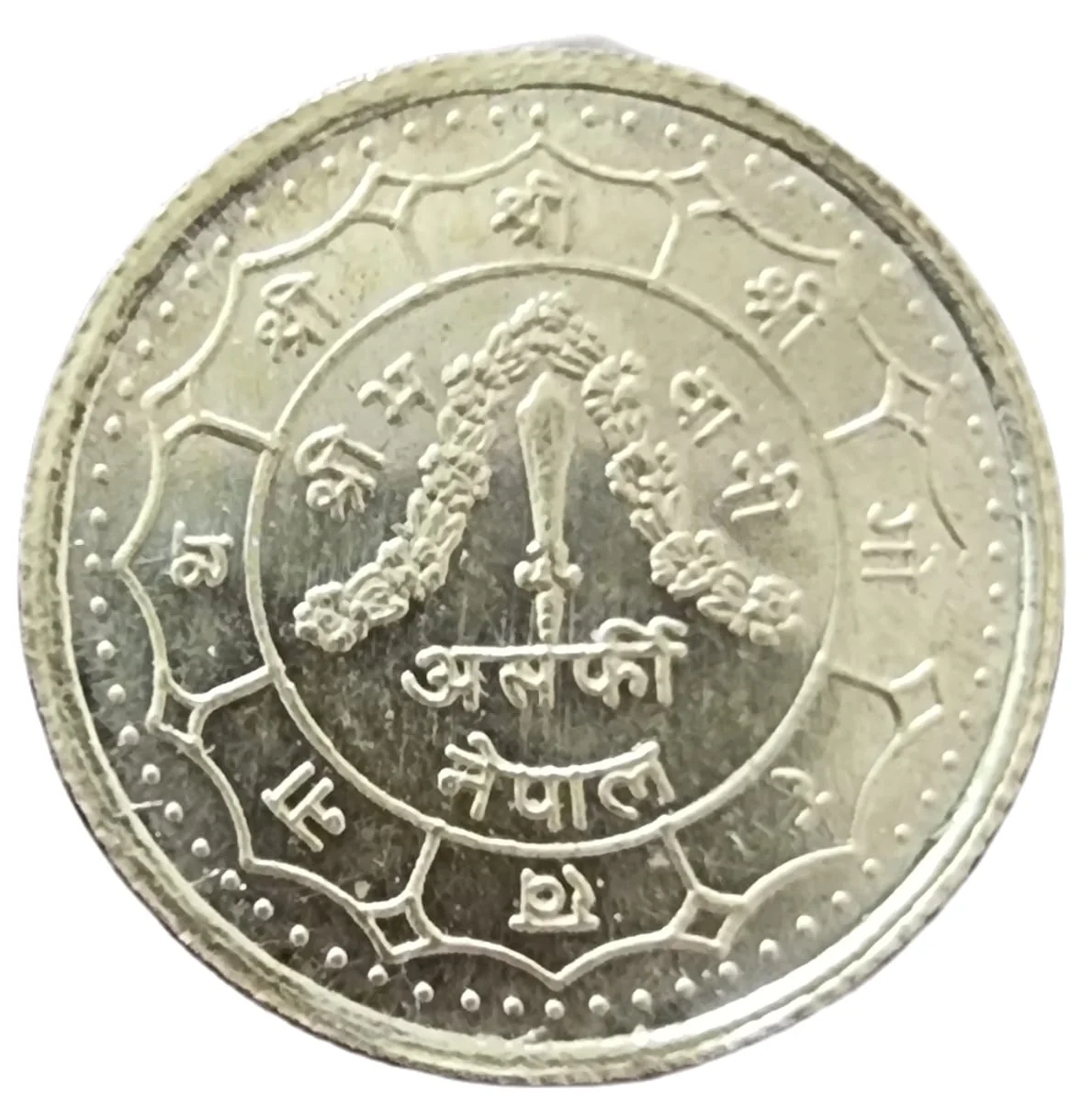
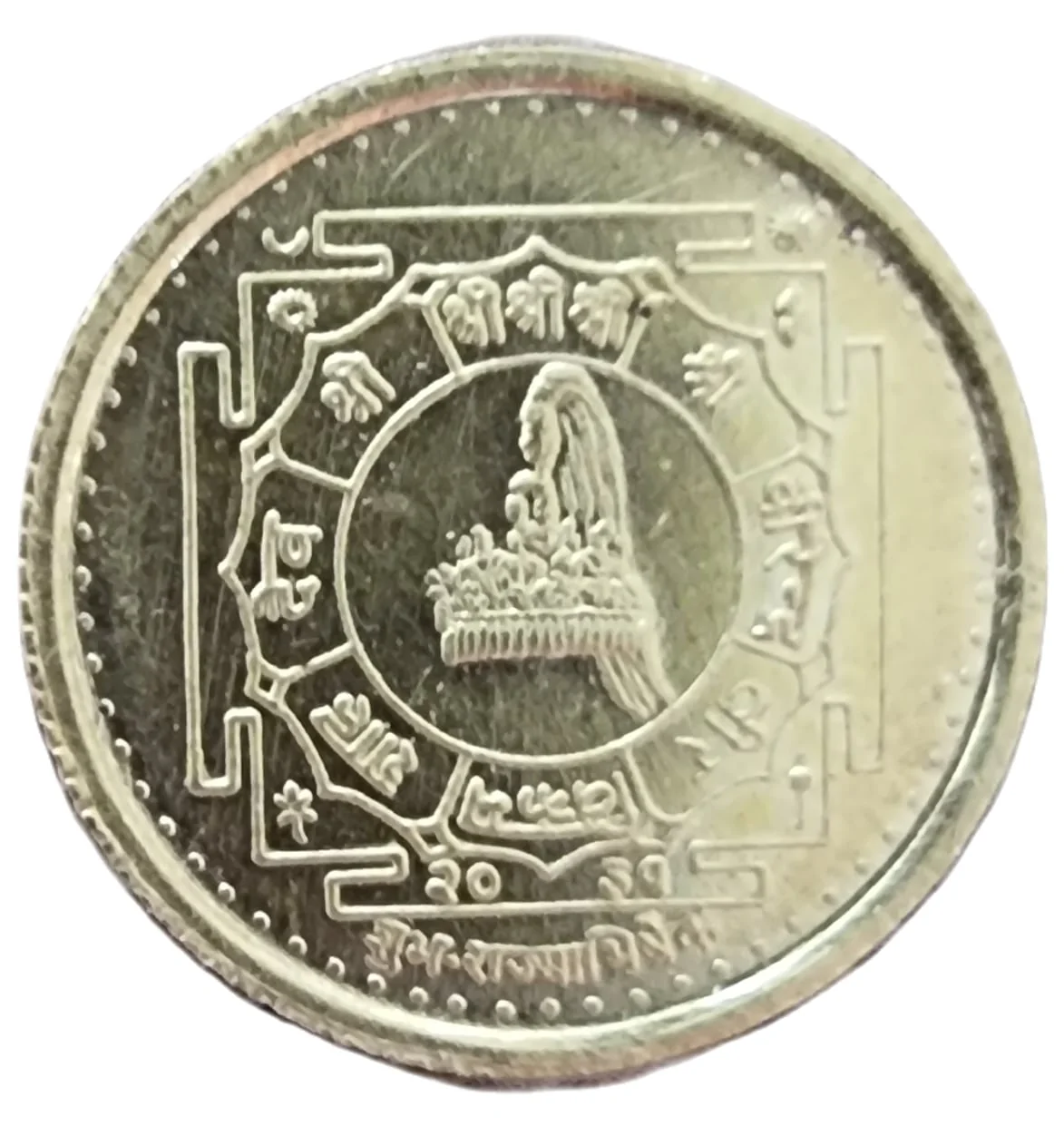
2.5g Asarphi – Nepal
Non-circulating coins
Commemoration: Coronation of King Birendra
Nepal
Context

Material
References
KM: #Click to copy to clipboard822a
Numista: #367403
Value
Bullion value: $416.41
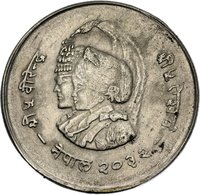
Obverse
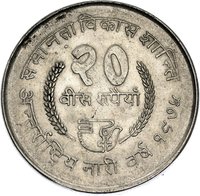
Reverse
Edge
Mintings
| Year | Mint Mark | Mintage | Quality | Collection |
|---|---|---|---|---|
| 1975 | — | — |
Historical background
In 1975, Nepal's currency situation was characterized by its entrenched dependence on the Indian rupee and a fixed exchange rate regime. The Nepalese rupee (NRs) was pegged to the Indian rupee (INR) at a rate of 1:1.25, a parity established in 1960. This close linkage was a legacy of the 1950 Treaty of Peace and Friendship and subsequent trade and transit treaties, which created an open border and made the Indian rupee legal tender in Nepal. Consequently, India dominated Nepal's foreign trade and monetary policy, limiting Kathmandu's independent control over its currency and economic levers.
Domestically, the currency system was under the authority of the Nepal Rastra Bank (NRB), the central bank established in 1956. However, the economy remained largely cash-based and underbanked, with limited financial infrastructure outside urban centers. The fixed peg provided stability for cross-border trade, which was vital for the landlocked nation, but it also meant Nepal had to shadow India's monetary policy, importing inflation or deflation based on economic conditions in India. This period fell within the later years of the partyless Panchayat system, where state-led development plans prioritized infrastructure but struggled with low domestic revenue and a narrow industrial base.
The year 1975 did not see a major currency crisis or reform, but it existed within a growing narrative of seeking greater monetary sovereignty. Economic planners were increasingly aware of the constraints posed by the rigid peg, particularly its impact on managing the balance of payments and fostering independent economic planning. This simmering desire for autonomy would eventually lead to significant changes, including the demonetization of high-value Indian rupee notes in Nepal in 1978 and a subsequent shift to a basket-of-currencies peg in the early 1980s, marking the beginning of a deliberate move away from sole dependence on the Indian rupee.
Domestically, the currency system was under the authority of the Nepal Rastra Bank (NRB), the central bank established in 1956. However, the economy remained largely cash-based and underbanked, with limited financial infrastructure outside urban centers. The fixed peg provided stability for cross-border trade, which was vital for the landlocked nation, but it also meant Nepal had to shadow India's monetary policy, importing inflation or deflation based on economic conditions in India. This period fell within the later years of the partyless Panchayat system, where state-led development plans prioritized infrastructure but struggled with low domestic revenue and a narrow industrial base.
The year 1975 did not see a major currency crisis or reform, but it existed within a growing narrative of seeking greater monetary sovereignty. Economic planners were increasingly aware of the constraints posed by the rigid peg, particularly its impact on managing the balance of payments and fostering independent economic planning. This simmering desire for autonomy would eventually lead to significant changes, including the demonetization of high-value Indian rupee notes in Nepal in 1978 and a subsequent shift to a basket-of-currencies peg in the early 1980s, marking the beginning of a deliberate move away from sole dependence on the Indian rupee.
✨ Legendary