

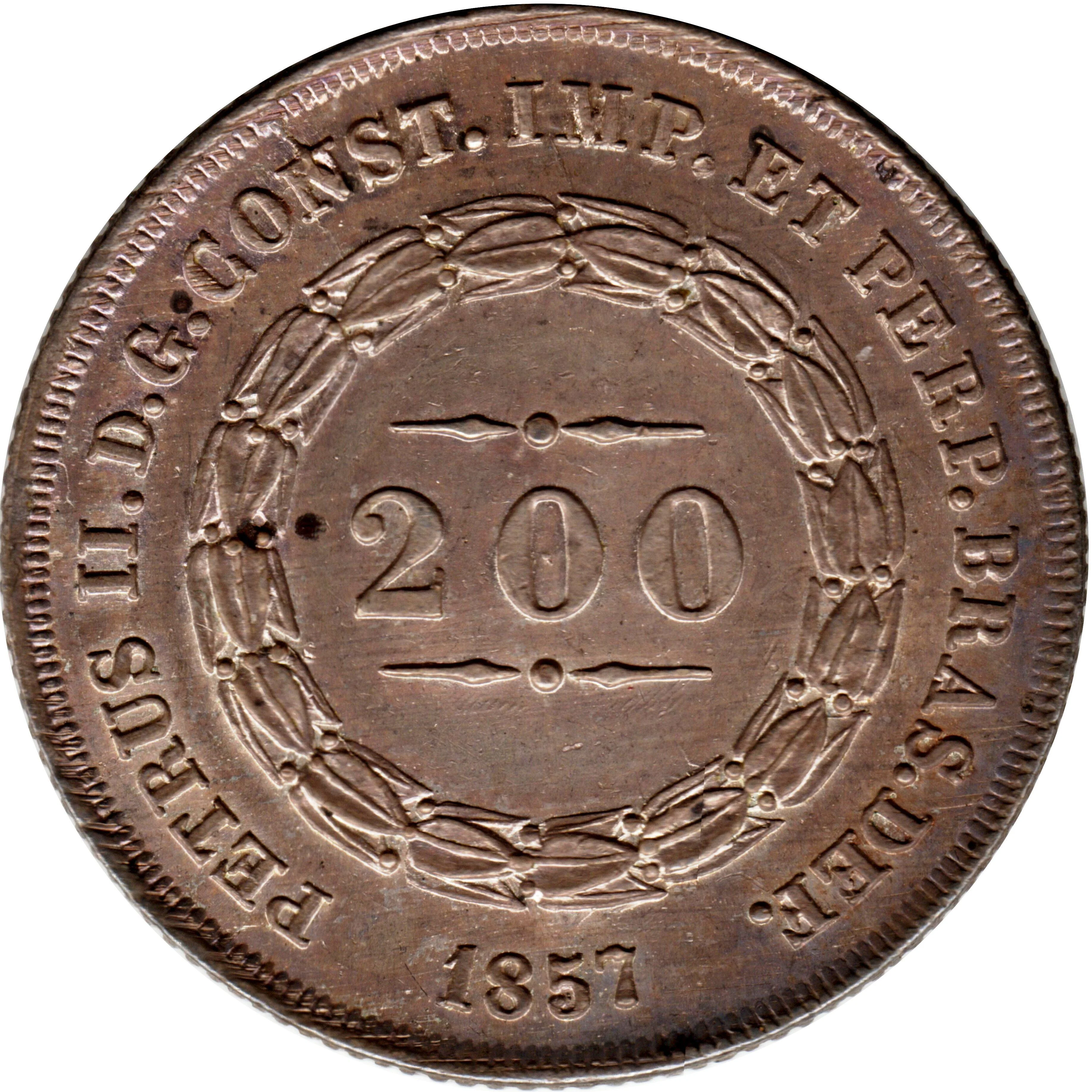
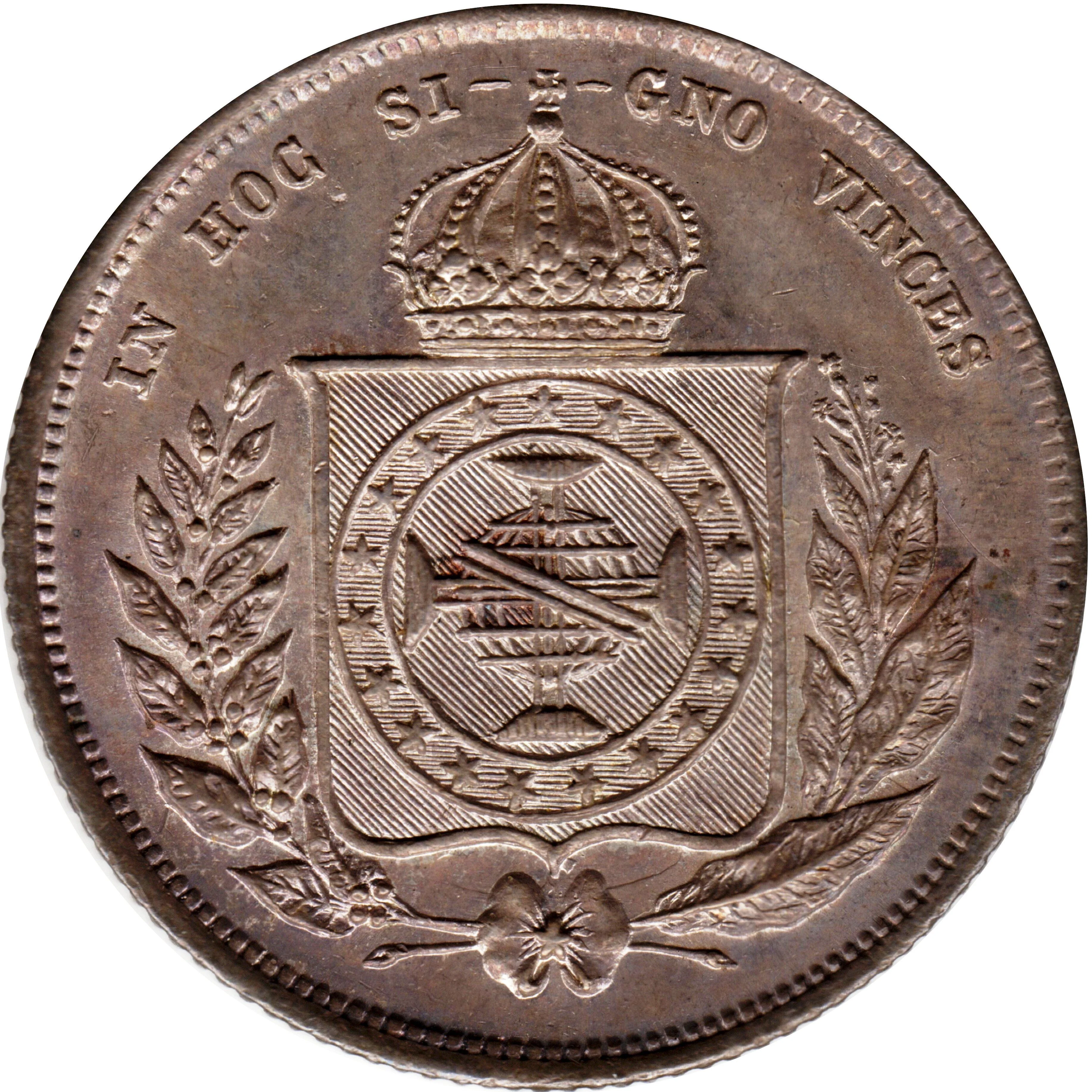
200 Réis – Brazil
Brazil
Context
Years: 1854–1867
Issuer: Brazil 
Issuing organization: National Treasury
Ruler: Peter II
Currency:
(1799—1942)
Demonetized: Yes
Total mintage: 920,586
Material
References
KM: #Click to copy to clipboard469
Numista: #3674
Value
Bullion value: $6.64
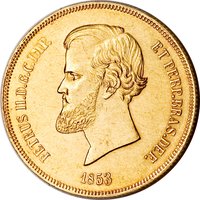
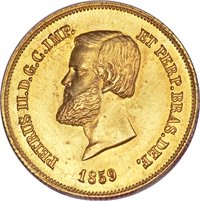
Obverse
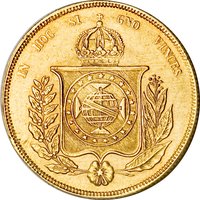
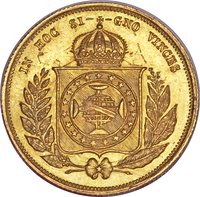
Reverse
Edge
Reeded
Mints
| Name | Mark |
|---|---|
| Casa da Moeda do Brasil | — |
Mintings
| Year | Mint Mark | Mintage | Quality | Collection |
|---|---|---|---|---|
| 1854 | — | 37,000 | ||
| 1855 | — | 228,000 | ||
| 1856 | — | 103,000 | ||
| 1857 | — | 128,000 | ||
| 1858 | — | 245,000 | ||
| 1859 | — | 151,586 | ||
| 1860 | — | 28,000 | ||
| 1861 | — | — | ||
| 1862 | — | — | ||
| 1863 | — | — | ||
| 1864 | — | — | ||
| 1865 | — | — | ||
| 1866 | — | — | ||
| 1867 | — | — |
Historical background
In 1854, Brazil's currency system was a complex and unstable patchwork, reflecting the economic strains of the post-independence era. The official unit was the mil-réis, but the circulating medium was a chaotic mix of copper and low-quality silver coins, alongside a vast array of privately issued paper notes from numerous regional banks. This proliferation of banknotes, without adequate metallic backing, led to severe inflation and a deep loss of public confidence. The situation was exacerbated by a chronic shortage of small change for daily transactions, causing significant inconvenience and economic distortion.
The root of the crisis lay in the Law of 1846, which aimed to adopt a gold standard but failed to address the oversupply of paper money. Instead, it created a dislocated system where the value of gold coins was tied to international markets while depreciating paper and copper dominated domestic trade. By 1854, the exchange rate between copper coins and the mil-réis had become wildly volatile, and the paper money from many banks was heavily discounted or even refused. This monetary fragmentation hindered national commerce and underscored the weakness of the central government's financial authority.
Recognizing the urgent need for reform, the Brazilian government took a pivotal step in 1854 with the creation of the Caixa de Amortização (Amortization Fund). This entity was tasked with gradually withdrawing the depreciated paper notes from circulation and stabilizing the currency. While a full resolution was still years away, 1854 marked a critical turning point, initiating the first concerted state-led effort to impose order, curb inflationary emissions, and move toward a unified, reliable national currency—a necessary foundation for Brazil's later imperial economic projects.
The root of the crisis lay in the Law of 1846, which aimed to adopt a gold standard but failed to address the oversupply of paper money. Instead, it created a dislocated system where the value of gold coins was tied to international markets while depreciating paper and copper dominated domestic trade. By 1854, the exchange rate between copper coins and the mil-réis had become wildly volatile, and the paper money from many banks was heavily discounted or even refused. This monetary fragmentation hindered national commerce and underscored the weakness of the central government's financial authority.
Recognizing the urgent need for reform, the Brazilian government took a pivotal step in 1854 with the creation of the Caixa de Amortização (Amortization Fund). This entity was tasked with gradually withdrawing the depreciated paper notes from circulation and stabilizing the currency. While a full resolution was still years away, 1854 marked a critical turning point, initiating the first concerted state-led effort to impose order, curb inflationary emissions, and move toward a unified, reliable national currency—a necessary foundation for Brazil's later imperial economic projects.
🌱 Common