

5 hryven – Ukraine
Add to wishlist
Non-circulating coins
Commemoration: Born in Ukraine
Ukraine
Context
Year: 2023
Issuer: Ukraine
Issuing organization: National Bank of Ukraine
Period:
(since 1991)
Currency:
(since 1996)
Total mintage: 75,000
Material
Diameter: 35 mm
Weight: 16.54 g
Shape: Round
Composition: Nickel brass
Magnetic: No
Technique: Milled
Alignment: Medal alignment
flip
References
KM: #
Numista: #367015
Value
Exchange value: 5 UAH
Obverse
Description:
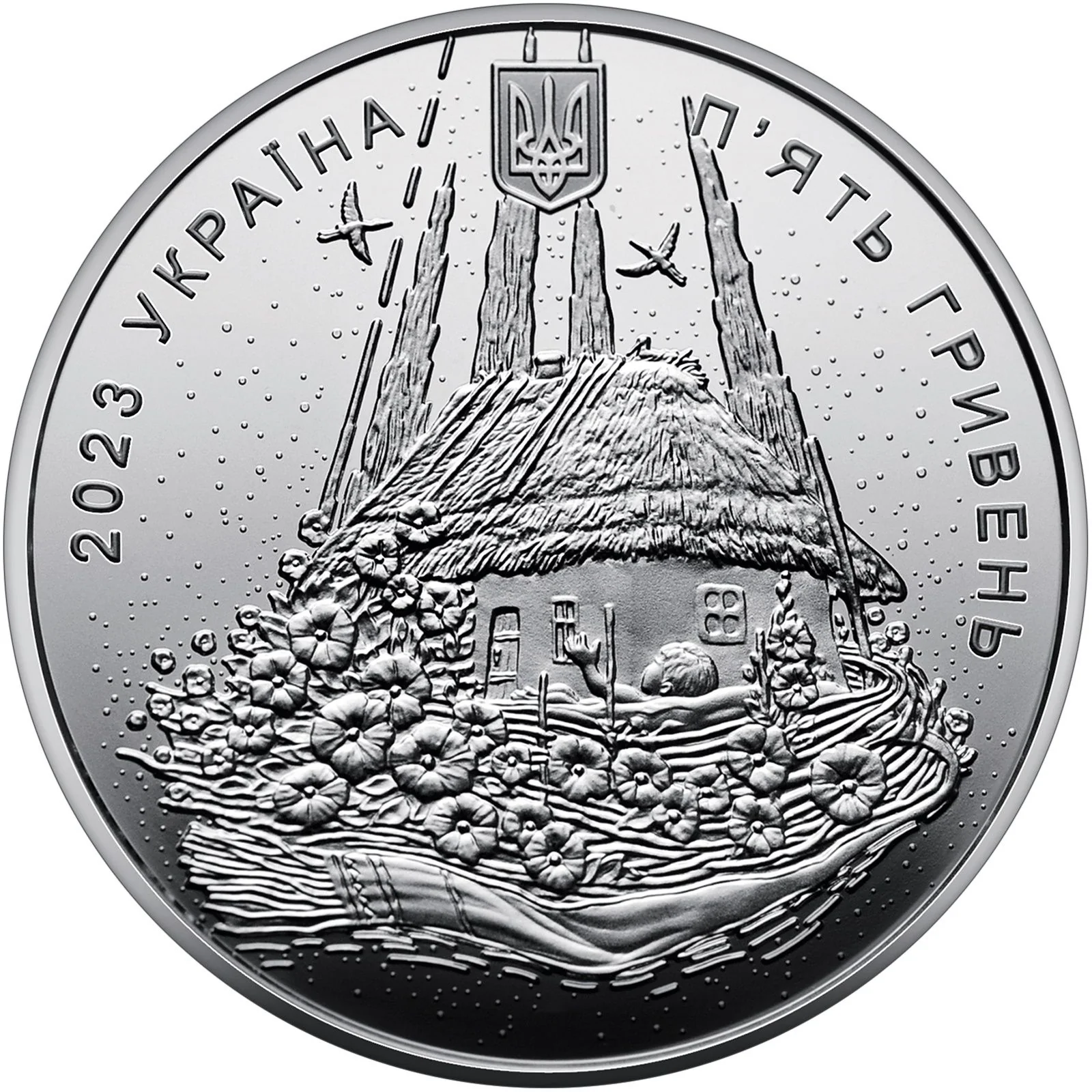
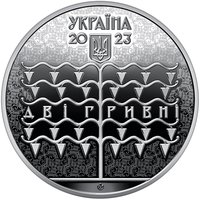
Ukrainian coat of arms with УКРАЇНА and 2023 above; П’ЯТЬ ГРИВЕНЬ below. Central image: Oleg Shupliak's folk painting "Cradle," depicting the archetypal parental home as a nest adorned with hollyhocks and a towel, symbolizing family continuity.
Inscription:
2023 УКРАЇНА П’ЯТЬ ГРИВЕНЬ
Translation:
2023 UKRAINE FIVE HRYVEN
Script: Cyrillic
Language: Ukrainian
Engravers: Anatolii Demianenko, Volodymyr Atamanchuk
Designer: Oleg Shupliak
Reverse
Description:
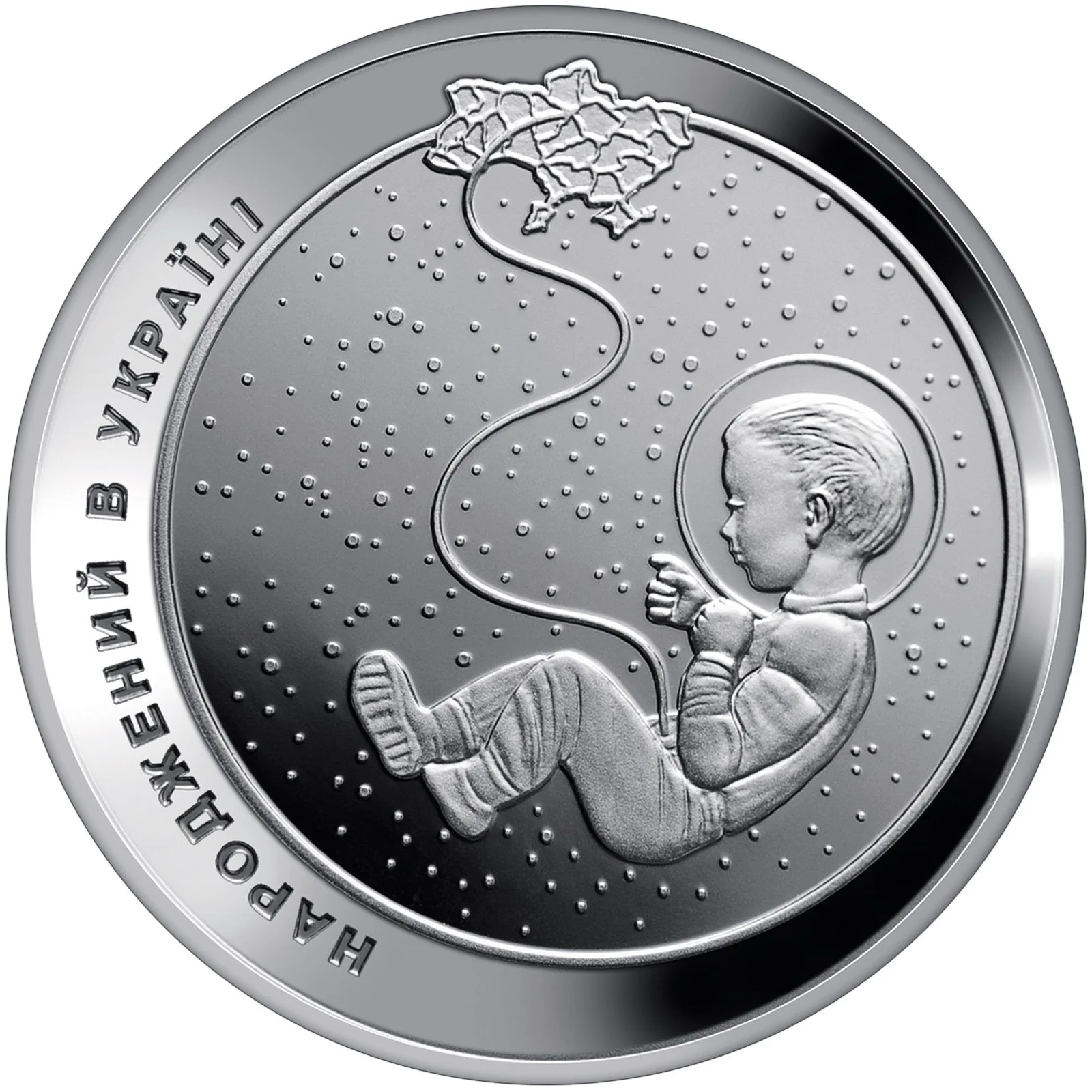
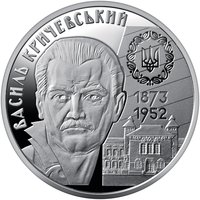
Oleg Shupliak's "Connection": A baby cosmonaut, against a stylized universe, is linked by an umbilical cord to a map of Ukraine. The mirrored inscription "НАРОДЖЕНИЙ В УКРАЇНІ" arcs beside them.
Inscription:
НАРОДЖЕНИЙ В УКРАЇНІ
Translation:
Born in Ukraine
Script: Cyrillic
Language: Ukrainian
Engravers: Anatolii Demianenko, Volodymyr Atamanchuk
Designer: Oleg Shupliak
Edge
Reeded
Mints
| Name | Mark |
|---|---|
| National Bank of Ukraine Banknote Printing and Minting Works | — |
Mintings
| Year | Mint Mark | Mintage | Quality | Collection |
|---|---|---|---|---|
| 2023 | — | 75,000 | Special Uncirculated |
Historical background
In 2023, Ukraine's currency, the hryvnia (UAH), demonstrated remarkable resilience despite the ongoing full-scale war with Russia. The National Bank of Ukraine (NBU) maintained a fixed exchange rate of UAH 36.57 to the US dollar, a policy enacted in July 2022 to ensure macroeconomic stability during the crisis. This peg was supported by substantial international financial assistance, strict capital controls, and the NBU's prioritization of price and financial stability over growth. While the official rate held firm, a modest gap persisted with the slightly weaker exchange rate available on the cash market, reflecting the realities of a war economy.
The stability was underpinned by a consistent inflow of foreign aid from Western partners, including the IMF, EU, and United States, which helped finance the massive budget deficit and bolster foreign exchange reserves. These reserves grew significantly throughout the year, exceeding $40 billion by the end of 2023, providing a critical buffer. However, this stability came with trade-offs, including high inflation (which moderated to 5.1% year-on-year by December from over 26% in 2022) and a reliance on administrative measures like restrictions on cross-border transactions and mandatory sales of foreign currency by exporters.
Looking ahead, key challenges and discussions centered on the sustainability of the fixed exchange rate regime. The NBU and international lenders acknowledged that moving toward greater exchange rate flexibility would eventually be necessary to absorb shocks and support long-term recovery, but such a transition was deemed premature while the war continued. The overarching economic outlook remained heavily contingent on the duration of the conflict, the continuity of foreign financial support, and the need to manage a significant debt burden, with the currency's fate inextricably linked to these broader factors.
The stability was underpinned by a consistent inflow of foreign aid from Western partners, including the IMF, EU, and United States, which helped finance the massive budget deficit and bolster foreign exchange reserves. These reserves grew significantly throughout the year, exceeding $40 billion by the end of 2023, providing a critical buffer. However, this stability came with trade-offs, including high inflation (which moderated to 5.1% year-on-year by December from over 26% in 2022) and a reliance on administrative measures like restrictions on cross-border transactions and mandatory sales of foreign currency by exporters.
Looking ahead, key challenges and discussions centered on the sustainability of the fixed exchange rate regime. The NBU and international lenders acknowledged that moving toward greater exchange rate flexibility would eventually be necessary to absorb shocks and support long-term recovery, but such a transition was deemed premature while the war continued. The overarching economic outlook remained heavily contingent on the duration of the conflict, the continuity of foreign financial support, and the need to manage a significant debt burden, with the currency's fate inextricably linked to these broader factors.


⭐ Rare